• HOME
  • NEWS
  • EXPLORE
    • CAREER
      • Companies
      • Jobs
    • EVENTS
    • iGEM
      • News
      • Team
    • PHOTOS
    • VIDEO
    • WIKI
  • BLOG
  • COMMUNITY
    • FACEBOOK
    • INSTAGRAM
    • TWITTER
Thursday, May 21, 2026
BIOENGINEER.ORG
No Result
View All Result
  • Login
  • HOME
  • NEWS
  • EXPLORE
    • CAREER
      • Companies
      • Jobs
        • Lecturer
        • PhD Studentship
        • Postdoc
        • Research Assistant
    • EVENTS
    • iGEM
      • News
      • Team
    • PHOTOS
    • VIDEO
    • WIKI
  • BLOG
  • COMMUNITY
    • FACEBOOK
    • INSTAGRAM
    • TWITTER
  • HOME
  • NEWS
  • EXPLORE
    • CAREER
      • Companies
      • Jobs
        • Lecturer
        • PhD Studentship
        • Postdoc
        • Research Assistant
    • EVENTS
    • iGEM
      • News
      • Team
    • PHOTOS
    • VIDEO
    • WIKI
  • BLOG
  • COMMUNITY
    • FACEBOOK
    • INSTAGRAM
    • TWITTER
No Result
View All Result
Bioengineer.org
No Result
View All Result
Home NEWS Science News Chemistry

Researchers develop sustainable method for extracting vanillin from wood processing waste

Bioengineer by Bioengineer
June 3, 2020
in Chemistry
Reading Time: 3 mins read
0
IMAGE
Share on FacebookShare on TwitterShare on LinkedinShare on RedditShare on Telegram

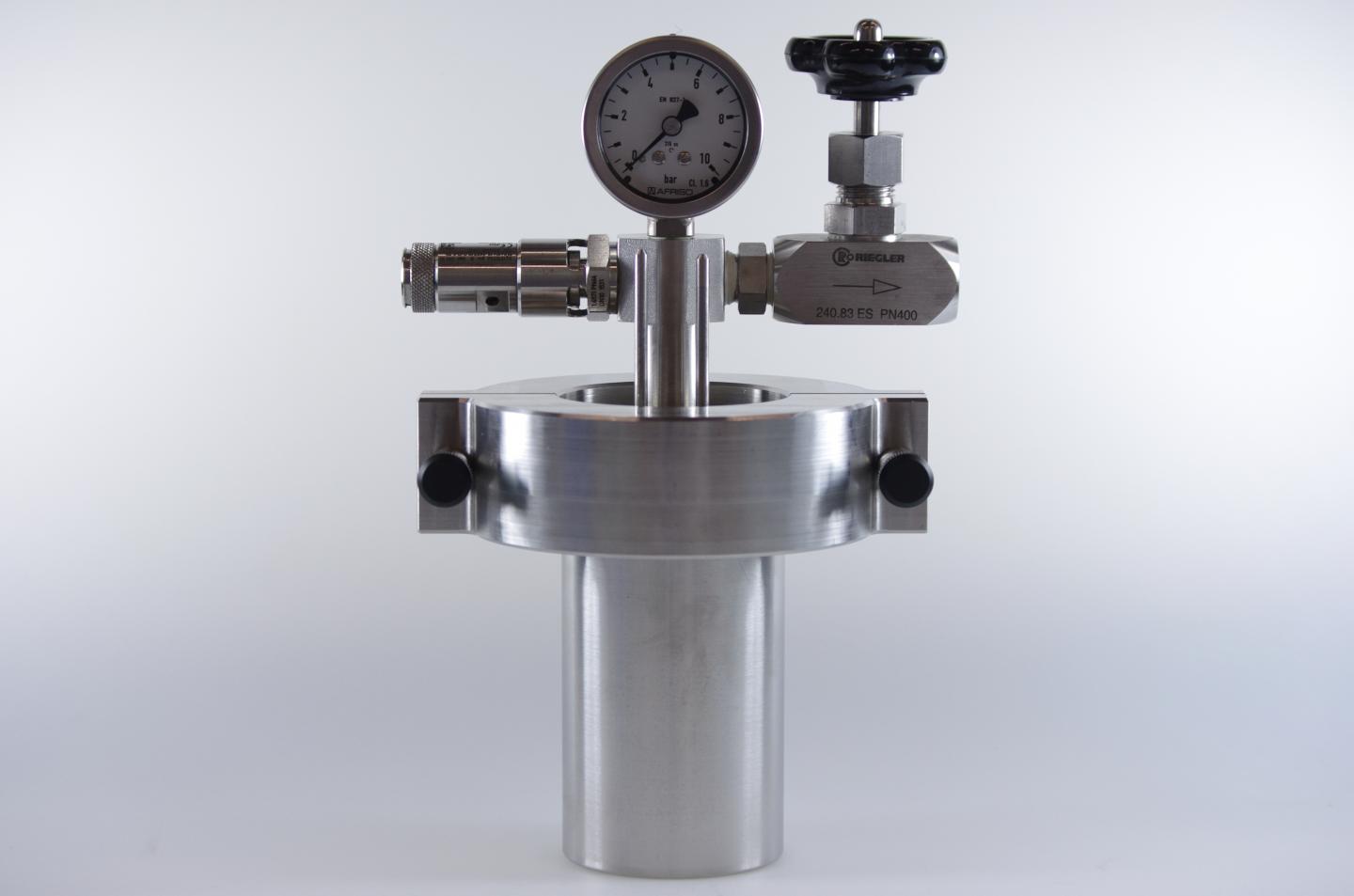
Electrolytic depolymerization of lignin in caustic soda could replace the existing environmentally harmful process for producing the most widely used flavoring and aroma agent in the world
IMAGE

Credit: photo/©: Michael Zirbes, JGU

Scientists at Johannes Gutenberg University Mainz (JGU) in Germany have developed a new sustainable method of extracting the flavoring agent vanillin from lignin, a component of wood. Large quantities of waste lignin accumulate during the production of pulp, an important raw material for making paper. The process the researchers describe in their article in ACS Sustainable Chemistry & Engineering involves dissolving the lignin in caustic soda and heating this mixture to 160 degrees Celsius in a simple electrolysis cell with nickel electrodes to which a current is applied. This oxidizes and breaks down the lignin to produce vanillin of such a high quality in a reagent-less process that it can be officially declared natural vanillin. “After many years of intensive research, we have now made a real breakthrough,” said Prof. Siegfried Waldvogel, coordinator of the SusInnoScience (Sustainable Chemistry as the Key to Innovation in Resource-efficient Science in the Anthropocene) research focus at JGU, who developed the project. To date, vanillin has been predominantly made from petroleum, a process which, in contrast to this new method, produces toxic waste difficult to dispose of. There is in fact already a process for producing vanillin from lignin. However, according to Waldvogel, this is much more expensive, not least as it requires the use of copper. Furthermore, only a small proportion of the waste stream of lignin from pulp production can be processed using this method.

In terms of quantity, vanillin is the most important flavoring and aroma agent in the world. Many tens of thousands of tons of it are used every year in the production of food and cosmetics as well as in the synthesis of pharmaceuticals. On the other hand, more than 100 million tons of lignin is generated as waste in pulp production each year to be then mainly thermally exploited. “Because our method has a vanillin yield of around four percent of the lignin used, it could theoretically meet the global demand for vanillin very easily,” said Waldvogel. He is convinced that the new process is “significantly better” than the previous methods of vanillin extraction – not only because no toxic waste is produced, but also because it is more commercially viable – and he is already in discussions with relevant business partners. As part of the LIBERATE project funded by the European Union (EU), the method, which has so far only been used in the laboratory, will soon be tested on an industrial scale. A pilot plant is currently being built for this very purpose at the Norwegian research institute SINTEF, with which JGU is cooperating. In addition, Waldvogel wants to determine whether the new method can be further improved by producing vanillin not only from pure lignin, but directly from the so-called black liquor, a byproduct of wood processing in pulp mills also containing lignin.

###

Related link:

  • https://susinnoscience.uni-mainz.de/ – SusInnoScience (Sustainable Chemistry as the Key to Innovation in Resource-efficient Science in the Anthropocene) research focus at JGU

Read more:

  • https://www.uni-mainz.de/presse/aktuell/8934_ENG_HTML.php – press release “Research on the sustainable conversion of lignin into valuable chemical compounds is attracting further funding” (3 July 2019)
  • https://www.uni-mainz.de/presse/aktuell/6739_ENG_HTML.php – press release “EU funding to promote the utilization of lignin” (24 October 2018)

Media Contact
Professor Dr. Siegfried R. Waldvogel
[email protected]

Original Source

https://www.uni-mainz.de/presse/aktuell/11412_ENG_HTML.php

Related Journal Article

http://dx.doi.org/10.1021/acssuschemeng.0c00162

Tags: BiochemistryBiomedical/Environmental/Chemical EngineeringChemistry/Physics/Materials SciencesResearch/DevelopmentTechnology/Engineering/Computer Science
Share12Tweet8Share2ShareShareShare2

Related Posts

Scientists Achieve Breakthrough in Molecular ‘Sandwich’ Assembly — Chemistry

Scientists Achieve Breakthrough in Molecular ‘Sandwich’ Assembly

May 21, 2026
Advancing In Vivo and In Situ Monitoring: Science Bulletin Highlights Host-Based Antifouling Gold Nanotube Sensor for Selective Detection of Mechanically Sensitive Serotonin Release in Intestinal Mucosa — Chemistry

Advancing In Vivo and In Situ Monitoring: Science Bulletin Highlights Host-Based Antifouling Gold Nanotube Sensor for Selective Detection of Mechanically Sensitive Serotonin Release in Intestinal Mucosa

May 20, 2026

How Magnetic Orientation Could Influence the Building Blocks of Life

May 20, 2026

Breaking a 200-Year-Old Belief: Novel Surface Design Achieves Two Distinct Wetting States on One Substrate

May 20, 2026
Please login to join discussion

POPULAR NEWS

  • blank

    New Study Reveals Plants Can Detect the Sound of Rain

    733 shares
    Share 292 Tweet 183
  • ESMO 2025: mRNA COVID Vaccines Enhance Efficacy of Cancer Immunotherapy

    304 shares
    Share 122 Tweet 76
  • Research Indicates Potential Connection Between Prenatal Medication Exposure and Elevated Autism Risk

    846 shares
    Share 338 Tweet 212
  • Breastmilk Balances E. coli and Beneficial Bacteria in Infant Gut Microbiomes

    58 shares
    Share 23 Tweet 15

About

We bring you the latest biotechnology news from best research centers and universities around the world. Check our website.

Follow us

Recent News

Label-Free Super-Resolution Imaging of Live Cells

Genetic Insights from 619,372 Metabolic Profiles

Bacterial STIs Hit Record Levels in Europe as Congenital Syphilis Cases Nearly Double

Subscribe to Blog via Email

Enter your email address to subscribe to this blog and receive notifications of new posts by email.

Join 82 other subscribers
  • Contact Us

Bioengineer.org © Copyright 2023 All Rights Reserved.

Welcome Back!

Login to your account below

Forgotten Password?

Retrieve your password

Please enter your username or email address to reset your password.

Log In
No Result
View All Result
  • Homepages
    • Home Page 1
    • Home Page 2
  • News
  • National
  • Business
  • Health
  • Lifestyle
  • Science

Bioengineer.org © Copyright 2023 All Rights Reserved.