• HOME
  • NEWS
  • EXPLORE
    • CAREER
      • Companies
      • Jobs
    • EVENTS
    • iGEM
      • News
      • Team
    • PHOTOS
    • VIDEO
    • WIKI
  • BLOG
  • COMMUNITY
    • FACEBOOK
    • INSTAGRAM
    • TWITTER
Saturday, February 7, 2026
BIOENGINEER.ORG
No Result
View All Result
  • Login
  • HOME
  • NEWS
  • EXPLORE
    • CAREER
      • Companies
      • Jobs
        • Lecturer
        • PhD Studentship
        • Postdoc
        • Research Assistant
    • EVENTS
    • iGEM
      • News
      • Team
    • PHOTOS
    • VIDEO
    • WIKI
  • BLOG
  • COMMUNITY
    • FACEBOOK
    • INSTAGRAM
    • TWITTER
  • HOME
  • NEWS
  • EXPLORE
    • CAREER
      • Companies
      • Jobs
        • Lecturer
        • PhD Studentship
        • Postdoc
        • Research Assistant
    • EVENTS
    • iGEM
      • News
      • Team
    • PHOTOS
    • VIDEO
    • WIKI
  • BLOG
  • COMMUNITY
    • FACEBOOK
    • INSTAGRAM
    • TWITTER
No Result
View All Result
Bioengineer.org
No Result
View All Result
Home NEWS Science News

UTA researchers optimize performance of networks of human-operated and autonomous vehicles

Bioengineer by Bioengineer
June 1, 2020
in Science News
Reading Time: 2 mins read
0
IMAGE
Share on FacebookShare on TwitterShare on LinkedinShare on RedditShare on Telegram

Better performance of autonomous vehicles
IMAGE

Credit: UT Arlington

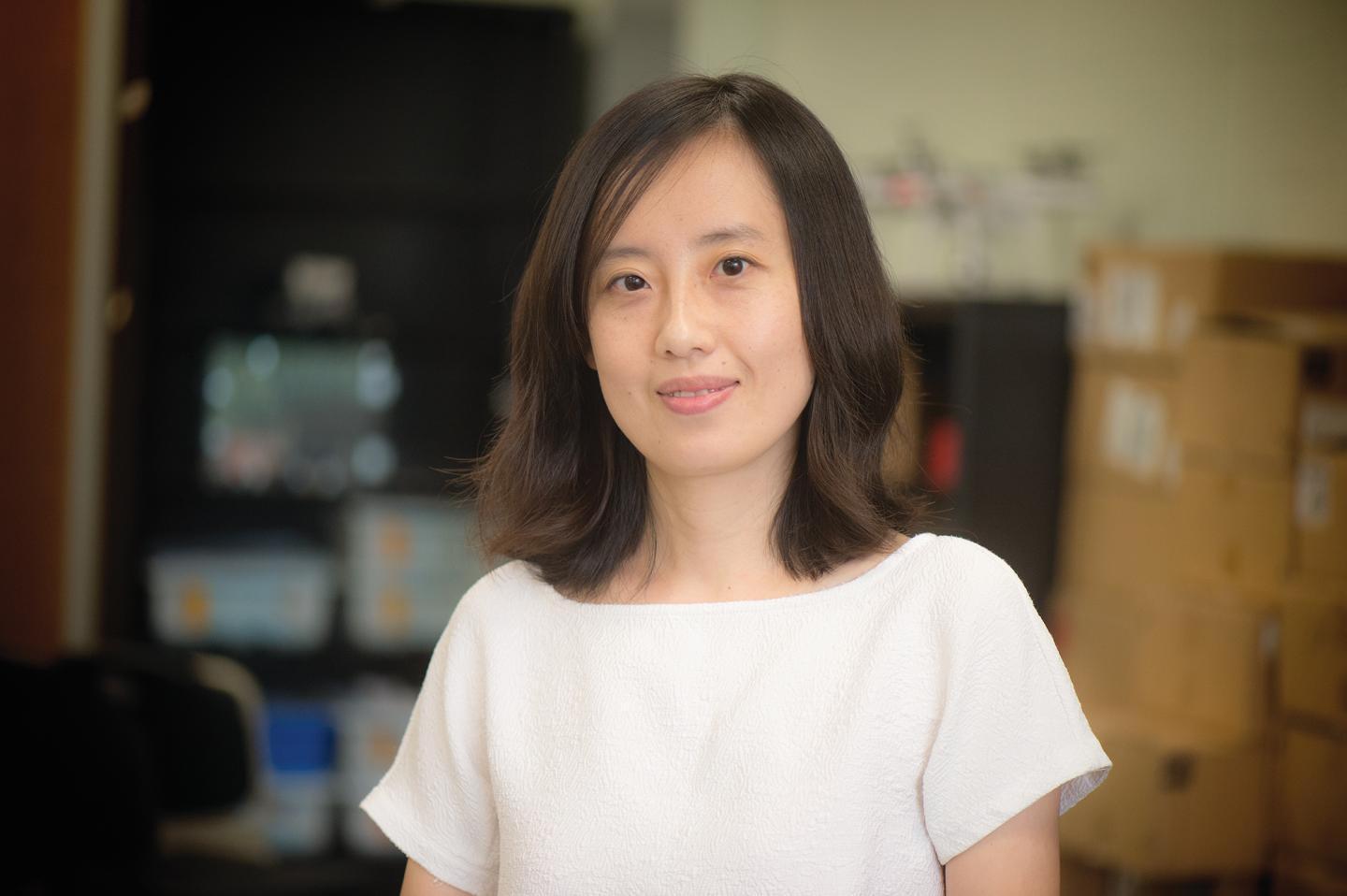
A trio of electrical engineering faculty members from The University of Texas at Arlington has received a three-year, $750,000 grant to improve control of networked convoys that include autonomous vehicles and those operated by humans.

The Army Research Office recently awarded the funding to Professor Frank Lewis and Associate Professors Yan Wan and Ali Davoudi.
Autonomous vehicles often operate in complex dynamic networked environments that feature spatiotemporal diverse threats generated by malicious attacks, functional failures and human errors. The team will develop bio-inspired learning methods that can learn optimal control solutions by observing the behaviors of neighbors in real time.

When aircraft fly in formation as part of a networked convoy, for example, each aircraft has an objective that will allow the group to accomplish certain goals, such as saving fuel, maintaining specific distances from other aircraft or maintaining specific airspeeds. At the same time, they may also be subject to attacks from malicious aircraft.

New reinforcement learning constructs will allow observation of the actions taken by malicious agents, predictions of worst-case scenarios and development of optimal defensive responses.

“The desired result is to get the entire group to perform as a single entity that improves the behavior of each individual agent,” Lewis said. “This will also help individual agents and the group to reject the negative effects of adversaries, because each agent can adjust and learn from its neighbors if there is suspicious behavior.”

The group will use fundamental science and mathematics theories to investigate interactions of humans, communication topologies, autonomous agents, adversarial agents and uncertain environments to develop adaptive and optimal solutions.

“Our work will make robots more intelligent,” Wan said. “They can improve their decisions through interactions with their peers and the environments in which they are operating.”

The group has three other contracts for related research in controls and reinforcement learning–two from the National Science Foundation and the Office of Naval Research totaling $1.48 million and one from the Ford Motor Co. for $150,000.

“Drs. Lewis, Wan and Davoudi continue to apply the knowledge they have gained from previous research to expand knowledge around autonomous behavior and controls,” said Peter Crouch, dean of the College of Engineering. “This latest grant is an example of the importance of fundamental research to our understanding of autonomous controls and reinforcement learning.”

###

Written by Jeremy Agor, College of Engineering

Media Contact
Herb Booth
[email protected]

Original Source

https://www.uta.edu/news/news-releases/2020/05/29/autonomous-vehicles

Tags: Algorithms/ModelsCalculations/Problem-SolvingComputer ScienceElectrical Engineering/ElectronicsMechanical EngineeringMultimedia/Networking/Interface DesignTechnology/Engineering/Computer ScienceTelecommunicationsVehicles
Share12Tweet8Share2ShareShareShare2

Related Posts

Evaluating Pediatric Emergency Care Quality in Ethiopia

February 7, 2026

TPMT Expression Predictions Linked to Azathioprine Side Effects

February 7, 2026

Improving Dementia Care with Enhanced Activity Kits

February 7, 2026

Decoding Prostate Cancer Origins via snFLARE-seq, mxFRIZNGRND

February 7, 2026
Please login to join discussion

POPULAR NEWS

  • Robotic Ureteral Reconstruction: A Novel Approach

    Robotic Ureteral Reconstruction: A Novel Approach

    82 shares
    Share 33 Tweet 21
  • Digital Privacy: Health Data Control in Incarceration

    63 shares
    Share 25 Tweet 16
  • Study Reveals Lipid Accumulation in ME/CFS Cells

    57 shares
    Share 23 Tweet 14
  • Breakthrough in RNA Research Accelerates Medical Innovations Timeline

    53 shares
    Share 21 Tweet 13

About

We bring you the latest biotechnology news from best research centers and universities around the world. Check our website.

Follow us

Recent News

Evaluating Pediatric Emergency Care Quality in Ethiopia

TPMT Expression Predictions Linked to Azathioprine Side Effects

Improving Dementia Care with Enhanced Activity Kits

Subscribe to Blog via Email

Success! An email was just sent to confirm your subscription. Please find the email now and click 'Confirm' to start subscribing.

Join 73 other subscribers
  • Contact Us

Bioengineer.org © Copyright 2023 All Rights Reserved.

Welcome Back!

Login to your account below

Forgotten Password?

Retrieve your password

Please enter your username or email address to reset your password.

Log In
No Result
View All Result
  • Homepages
    • Home Page 1
    • Home Page 2
  • News
  • National
  • Business
  • Health
  • Lifestyle
  • Science

Bioengineer.org © Copyright 2023 All Rights Reserved.