• HOME
  • NEWS
  • EXPLORE
    • CAREER
      • Companies
      • Jobs
    • EVENTS
    • iGEM
      • News
      • Team
    • PHOTOS
    • VIDEO
    • WIKI
  • BLOG
  • COMMUNITY
    • FACEBOOK
    • INSTAGRAM
    • TWITTER
Wednesday, December 31, 2025
BIOENGINEER.ORG
No Result
View All Result
  • Login
  • HOME
  • NEWS
  • EXPLORE
    • CAREER
      • Companies
      • Jobs
        • Lecturer
        • PhD Studentship
        • Postdoc
        • Research Assistant
    • EVENTS
    • iGEM
      • News
      • Team
    • PHOTOS
    • VIDEO
    • WIKI
  • BLOG
  • COMMUNITY
    • FACEBOOK
    • INSTAGRAM
    • TWITTER
  • HOME
  • NEWS
  • EXPLORE
    • CAREER
      • Companies
      • Jobs
        • Lecturer
        • PhD Studentship
        • Postdoc
        • Research Assistant
    • EVENTS
    • iGEM
      • News
      • Team
    • PHOTOS
    • VIDEO
    • WIKI
  • BLOG
  • COMMUNITY
    • FACEBOOK
    • INSTAGRAM
    • TWITTER
No Result
View All Result
Bioengineer.org
No Result
View All Result
Home NEWS Science News Chemistry

CSIC researchers use whole living cells as ‘templates’ to seek for bioactive molecules

Bioengineer by Bioengineer
May 27, 2020
in Chemistry
Reading Time: 2 mins read
0
IMAGE
Share on FacebookShare on TwitterShare on LinkedinShare on RedditShare on Telegram

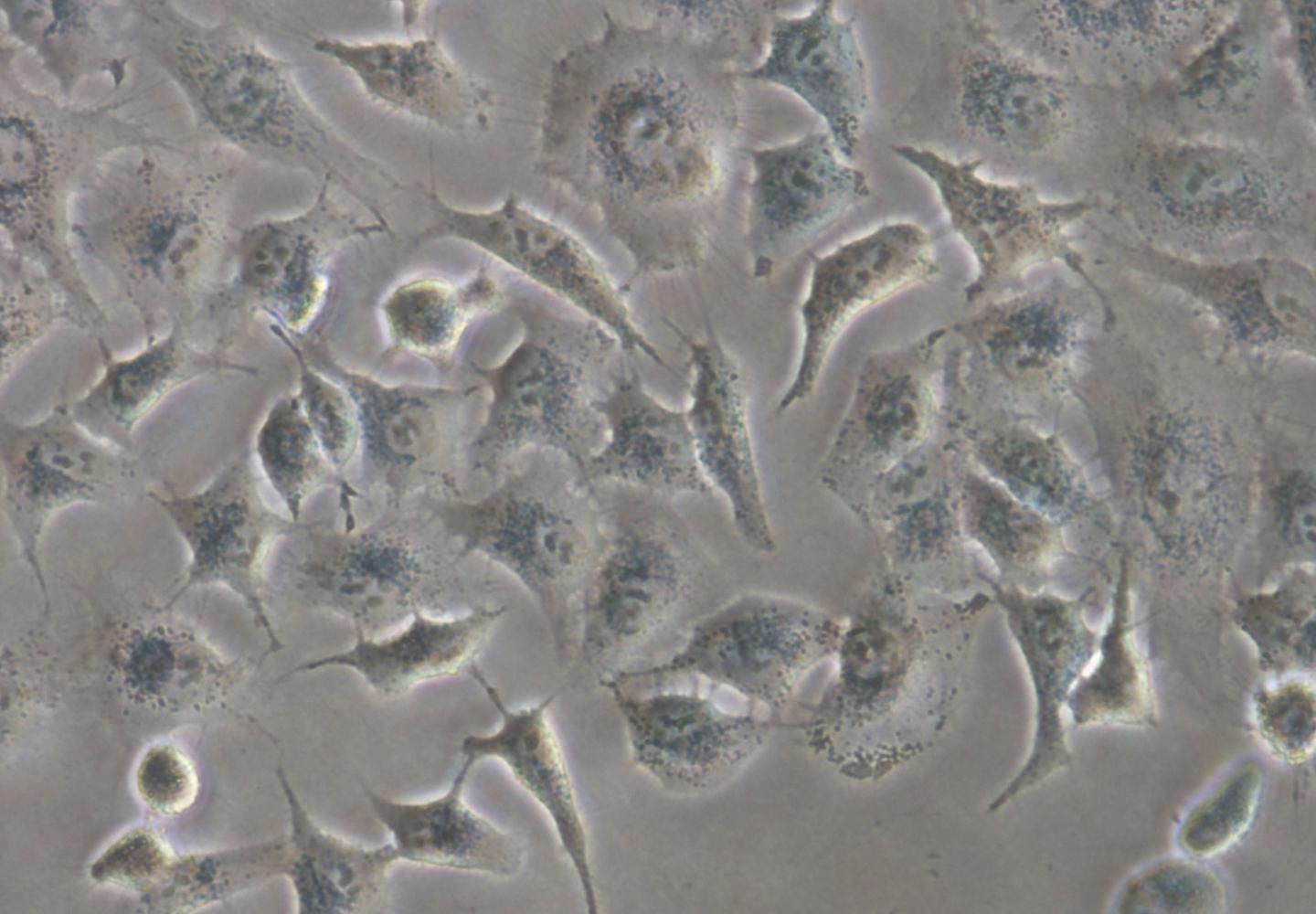
Lung cancer cells were used to design a methodology that could help in the future to differentiate healthy versus cancerous cells
IMAGE

Credit: Daniel Carbajo

A study performed by researchers at the Institute for Advanced Chemistry of Catalonia (IQAC) from the Spanish National Research Council (CSIC) pioneers the use of whole living cells (human lung adenocarcinoma) in dynamic combinatorial chemistry systems. This research, published in the journal Angewandte Chemie International Edition, proposes a new methodology to discover new bioactive molecules in a realistic biological medium. This methodology could help in the future to develop methods to differentiate healthy versus cancer cells, or to protect the extracellular matrix against pathogens.

This new methodology is based on Dynamic Combinatorial Chemistry (DCC), which combines in a single process the selection, identification and preparation of molecules for a given application, accelerating the development of new functional compounds. Therefore, this methodology has a great potential in the rapid identification of new molecules with potential biological activity. In the present work, the group led by Ignacio Alfonso, from the Institute of Advanced Chemistry of Catalonia, pioneers the use of ‘live templates’ for the identification and optimization of new ligands (simple synthetic molecules) for biological targets.

“In our study we have worked with cancer cells used as a ‘templates’, so the molecule able to interact with the outside of these cells (templates), will increase its concentration over the mixture of molecules that integrate the dynamic combinatorial library. The extracellular matrix is closely related to cellular communication and signaling, and it is essential in processes such as cancer metastasis or cellular infection by pathogens. Besides, it is the first barrier that a drug has to cross to enter our cells”, explains the researcher. “Another hurdle is the difficulty to design molecules able to interact with the extracellular matrix due to its complex structure. But the results of our study allow us to identify and quantify the ligands for the extracellular matrix directly using living cells, which opens up multiple development possibilities in this field of research”.

The next step was to synthesize the amplified molecule. Later, the interaction between these molecules and the extracellular matrix of the living cells was confirmed by means of Nuclear Magnetic Resonance. Finally, after these studies with cells, assays between the identified molecules and chondroitin sulfate, the major component of the glycosaminoglycans in the extracellular matrix of this type of cells, were carried out. “We also used molecular dynamics simulations to understand the molecular recognition process that explains our results from a chemical point of view”, explains Alfonso.

The methodology used in this study is an excellent research tool with potential applications in disease characterization and diagnosis. “It could lead to the faster discovery of bioactive molecules, since the selection is made in a medium that is more similar to the biological medium in which these biomolecules will act”, concludes the researcher.

###

Media Contact
Ana Sotres
[email protected]

Related Journal Article

http://dx.doi.org/10.1002/anie.202004745

Tags: BiochemistryCell BiologyChemical/Biological WeaponsChemistry/Physics/Materials Sciences
Share12Tweet8Share2ShareShareShare2

Related Posts

Cutting Electrolyte Reduction Boosts High-Energy Battery Performance

Cutting Electrolyte Reduction Boosts High-Energy Battery Performance

December 19, 2025
Microenvironment Shapes Gold-Catalysed CO2 Electroreduction

Microenvironment Shapes Gold-Catalysed CO2 Electroreduction

December 11, 2025

Photoswitchable Olefins Enable Controlled Polymerization

December 11, 2025

Cation Hydration Entropy Controls Chloride Ion Diffusion

December 10, 2025
Please login to join discussion

POPULAR NEWS

  • blank

    PTSD, Depression, Anxiety in Childhood Cancer Survivors, Parents

    101 shares
    Share 40 Tweet 25
  • NSF funds machine-learning research at UNO and UNL to study energy requirements of walking in older adults

    71 shares
    Share 28 Tweet 18
  • Exploring Audiology Accessibility in Johannesburg, South Africa

    52 shares
    Share 21 Tweet 13
  • Nurses’ Views on Online Learning: Effects on Performance

    71 shares
    Share 28 Tweet 18

About

We bring you the latest biotechnology news from best research centers and universities around the world. Check our website.

Follow us

Recent News

Study Reveals Neonatal MIS-N Linked to Maternal COVID-19

TP53-LGALS4 Axis Enhances Anti-PD-L1 Colorectal Cancer Therapy

Rethinking Gender Inference in Health Algorithms

Subscribe to Blog via Email

Enter your email address to subscribe to this blog and receive notifications of new posts by email.

Join 71 other subscribers
  • Contact Us

Bioengineer.org © Copyright 2023 All Rights Reserved.

Welcome Back!

Login to your account below

Forgotten Password?

Retrieve your password

Please enter your username or email address to reset your password.

Log In
No Result
View All Result
  • Homepages
    • Home Page 1
    • Home Page 2
  • News
  • National
  • Business
  • Health
  • Lifestyle
  • Science

Bioengineer.org © Copyright 2023 All Rights Reserved.