• HOME
  • NEWS
  • EXPLORE
    • CAREER
      • Companies
      • Jobs
    • EVENTS
    • iGEM
      • News
      • Team
    • PHOTOS
    • VIDEO
    • WIKI
  • BLOG
  • COMMUNITY
    • FACEBOOK
    • INSTAGRAM
    • TWITTER
Tuesday, December 30, 2025
BIOENGINEER.ORG
No Result
View All Result
  • Login
  • HOME
  • NEWS
  • EXPLORE
    • CAREER
      • Companies
      • Jobs
        • Lecturer
        • PhD Studentship
        • Postdoc
        • Research Assistant
    • EVENTS
    • iGEM
      • News
      • Team
    • PHOTOS
    • VIDEO
    • WIKI
  • BLOG
  • COMMUNITY
    • FACEBOOK
    • INSTAGRAM
    • TWITTER
  • HOME
  • NEWS
  • EXPLORE
    • CAREER
      • Companies
      • Jobs
        • Lecturer
        • PhD Studentship
        • Postdoc
        • Research Assistant
    • EVENTS
    • iGEM
      • News
      • Team
    • PHOTOS
    • VIDEO
    • WIKI
  • BLOG
  • COMMUNITY
    • FACEBOOK
    • INSTAGRAM
    • TWITTER
No Result
View All Result
Bioengineer.org
No Result
View All Result
Home NEWS Science News Biology

Peculiar behavior of the beetle Toramus larvae

Bioengineer by Bioengineer
May 22, 2020
in Biology
Reading Time: 2 mins read
0
IMAGE
Share on FacebookShare on TwitterShare on LinkedinShare on RedditShare on Telegram

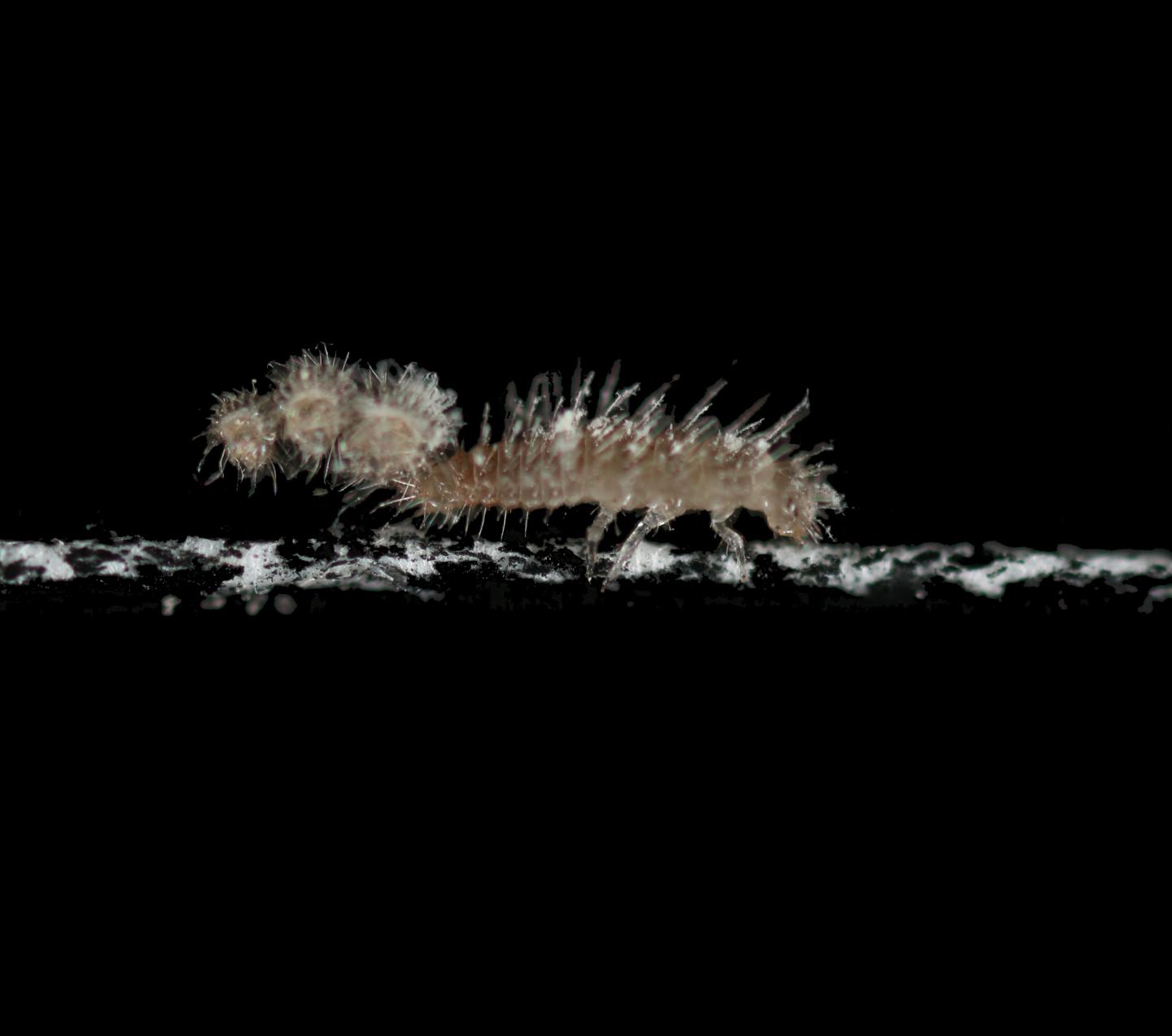
How and why do they carry their exuviae?
IMAGE

Credit: The Coleopterists Society

The beetles of family Erotylidae (Coleoptera: Cucujoidea) are morphologically and biologically diversified into six subfamilies, 10 tribes, and over 3,500 species. The tribe Toramini includes 4 genera and is distributed worldwide. Although, the biology of this group is poorly investigated, Leschen (2003) reported that larvae of Toramus and Loberoschema retain exuviae on their abdomen throughout larval development.

In this study, the toramine larvae of 3 species of Toramus and 1 species of Loberoschema are fully described (Fig. 1), and the morphological character states of larval Toramini and within Toramus are discussed. We found that larvae of the genus Toramus attach their exuviae to their distal abdomen, with each exuvia from the preceding instar attached to the next. In live condition, they retain all exuviae, and these exuviae are piled vertically and directed posteriorly as seen in Fig. 2. The exuvial attachment is facilitated by modified hook-like setae with flattened shafts on abdominal tergite VIII, which are inserted into the posterior end of the ecdysial line of the exuvia of the previous instar (Fig. 3).

Why do they carry their exuviae? Among insects, debris-cloaking with feces, exuviae and/or other debris gathered from the habitat occurs in immature insects belonging to assassin bugs (Reduviidae: Hemiptera), lacewings (Chrysopidae: Neuroptera), two families of small beetles (Derodontidae and Anamorphidae: Coleoptera), tortoise beetles (Cassidinae: Chrysomelidae: Coleoptera), geometer moths (Geometridae: Lepidopter) and owlet moths (Noctuidae: Lepidoptera). There have been few studies on the function of debris-cloaking and the exuvial retention of Toramus and anamorphines is distinctive in forming a vertical pile-like “tail” (Fig. 2). We hypothesized that the exuvial attachment of Toramus serves as a kind of autotomy, whereby the exuviae are removed by a predator, thus leaving the body of the larva unharmed — “exuvial autotomy”.

The loss of a tail (caudal autotomy) is well known in lizards, and the loss of an appendage in arthropods (appendage autotomy) has evolved independently and several times within each group. In general, “true” autotomy occurs along a weakened portion, called the breakage plane, to shed body parts. Although we observed no such specific areas of weakness on the hook-like setae, exuvial autotomy, if it exists in these beetles, may not require breakage planes because the anchoring setae of such small beetle larvae may be fragile enough and easily broken, either by moving through the environment or under attack by potential predators. Actually, among the larvae we examined, some larvae with fractured hook-like setae were observed.

In behavioral tests using the Toramus larvae and spiders as potential predators, the preliminary results provide little support for the hypothesis that exuvial retainment acts as a predatory deterrence. Proper assessment of its defensive function in toramines requires more comprehensive observational studies involving larvae and potential predators.

###

Media Contact
Public Relations Division
[email protected]

Related Journal Article

http://dx.doi.org/10.1649/0010-065X-74.1.1

Tags: BiodiversityBiologyEcology/EnvironmentEntomology
Share12Tweet8Share2ShareShareShare2

Related Posts

Impact of Wildlife on Livestock Production in Zimbabwe

Impact of Wildlife on Livestock Production in Zimbabwe

December 30, 2025
Dictyostelium discoideum Adapts Gene Expression to Hypoxia

Dictyostelium discoideum Adapts Gene Expression to Hypoxia

December 30, 2025

Impact of Sex and Gender on Clinical Outcomes: Review

December 29, 2025

Thousands of Lytic Phages Found in Bacterial Genomes

December 29, 2025
Please login to join discussion

POPULAR NEWS

  • Robotic Waist Tether for Research Into Metabolic Cost of Walking

    NSF funds machine-learning research at UNO and UNL to study energy requirements of walking in older adults

    71 shares
    Share 28 Tweet 18
  • Exploring Audiology Accessibility in Johannesburg, South Africa

    52 shares
    Share 21 Tweet 13
  • Nurses’ Views on Online Learning: Effects on Performance

    71 shares
    Share 28 Tweet 18
  • PTSD, Depression, Anxiety in Childhood Cancer Survivors, Parents

    48 shares
    Share 19 Tweet 12

About

We bring you the latest biotechnology news from best research centers and universities around the world. Check our website.

Follow us

Recent News

GM-CSF Boosts Thin Endometrium Growth in Mice, Humans

Derazantinib Boosts Gemcitabine by Blocking MUC5AC

Carrying Capacity Alert Index Gauges African Grassland Sustainability

Subscribe to Blog via Email

Enter your email address to subscribe to this blog and receive notifications of new posts by email.

Join 71 other subscribers
  • Contact Us

Bioengineer.org © Copyright 2023 All Rights Reserved.

Welcome Back!

Login to your account below

Forgotten Password?

Retrieve your password

Please enter your username or email address to reset your password.

Log In
No Result
View All Result
  • Homepages
    • Home Page 1
    • Home Page 2
  • News
  • National
  • Business
  • Health
  • Lifestyle
  • Science

Bioengineer.org © Copyright 2023 All Rights Reserved.