Scientists investigate epigenetic mechanisms of blood cell differentiation
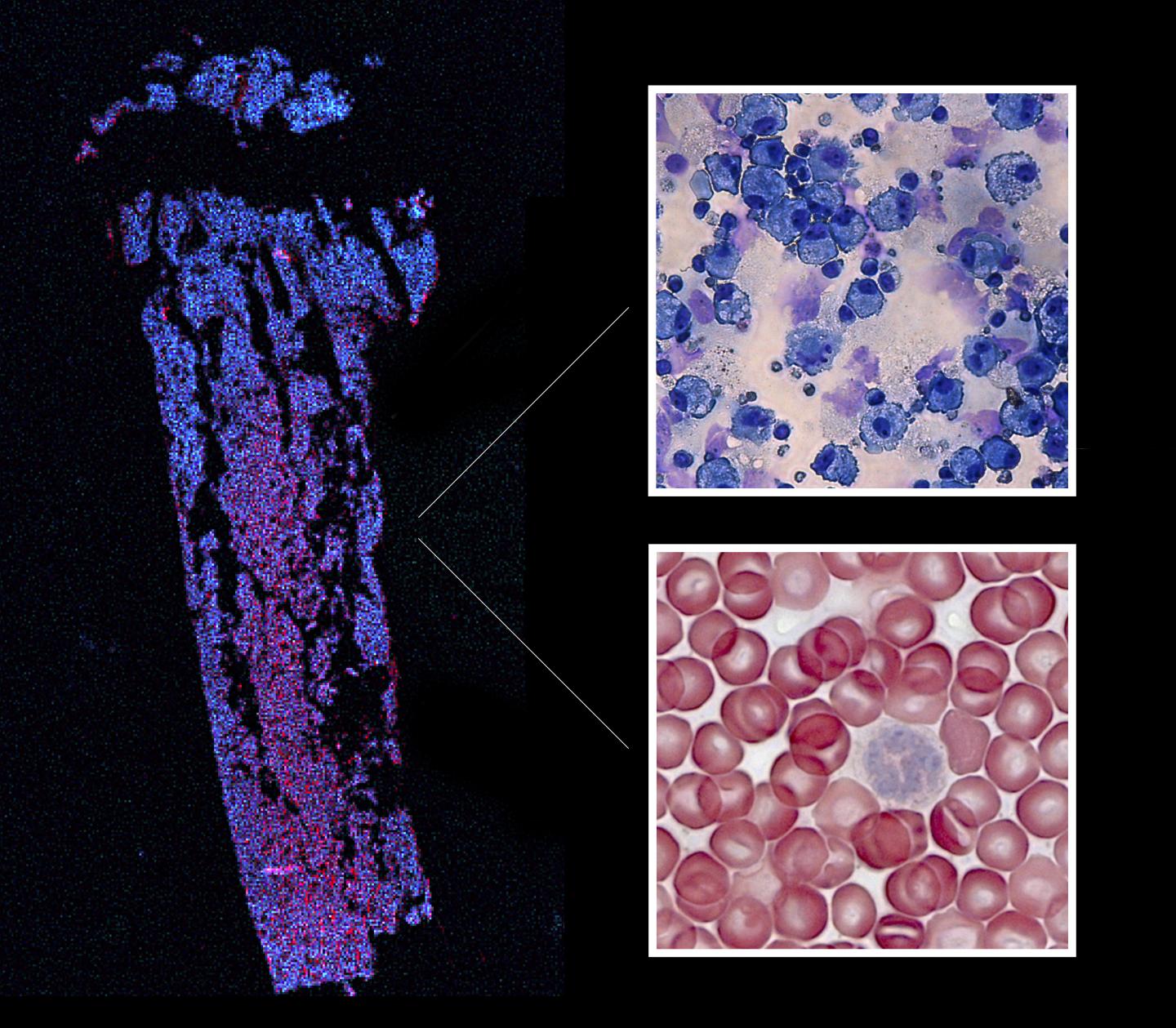
Credit: © MPI of Immunobiology and Epigenetics, C.Pessoa Rodrigues, Freiburg
On average, the human body contains 35 trillion red blood cells (RBCs). Approximately three million of these small disc-shaped cells die in one second. But in this second, the same number is also produced to maintain the level of active RBCs. Interestingly, all of these cells undergo a multi-level differentiation process called erythropoiesis. They start from hematopoietic stem cells (HSCs), the precursors to every blood cell including all types of immune cells, and differentiate then, firstly, into multipotent progenitor cells (MPPs) followed by a gradual process of specialization into mature red blood cells.
If this differentiation process fails, it can be detrimental to our health. For instance, if fewer HSCs choose to follow the RBCs roadmap, the individual will be prone to develop anemia. Abnormalities in the immune cell roadmap, on the other hand, have been associated with the onset of leukemia.
Epigenetic modulation in early hematopoiesis
The lab of Asifa Akhtar at the MPI of Immunobiology and Epigenetics in Freiburg investigates what governs the differentiation process of blood cells. Now, the teams has identified how the enzyme MOF, an epigenetic regulator, orchestrate the HSC fate in erythropoiesis.
“One of the most important intrinsic cues governing cell developmental processes is the modulation of the chromatin landscape,” says Asifa Akhtar. In our cells, DNA is packaged around histone proteins to make the chromatin structure. This packaging plays a crucial role in cell type-specific gene regulation and, of course, also in erythroid differentiation. In its default state chromatin is not “permissive”, meaning genes are switched off. But shifting histones opens the chromatin and promotes gene expression.
Epigenetic regulator guides HSCs on the right path
The enzyme MOF is known to directly trigger the “opening” of chromatin by acetylating the H4 histone on one specific site (K16ac). When the lab tracked the MOF occupancy during the erythropoiesis in mice, they found that the enzyme dynamically orchestrates erythropoiesis by regulating chromatin accessibility of HSCs and RBC progenitors. “Our data shows that the correct dosage and timing of Mof during blood cell development is essential to prime the chromatin for activation of the erythroid development program. This process ensures the correct transcription factor network that will be pivotal for the erythroid branch,” says first-author Cecilia Pessoa Rodrigues.
The Max Planck researchers are convinced that these findings could mean considerable progress in our understanding of the erythroid lineage commitment and may give rise to new therapeutic approaches in diseases such as leukemia or anemia. Although the precise consequence of MOF depletion in humans remains unanswered, it is already known that a balanced and controlled activity of epigenetic regulators is essential for the normal development of hematopoietic cells. “It is not surprising that low levels of MOF are linked to acute myeloid leukemia (AML). We anticipate this could be explained by chromatin acetylation imbalance that is critical for relevant factors required for normal hematopoiesis. Revealing the right levels of chromatin accessibility and, subsequently, the gene regulatory mechanisms that fine-tune the differentiation trajectories will be insightful for further understanding of hematopoiesis in healthy and diseased states,” says Asifa Akhtar.
###
Media Contact
Marcus Rockoff
[email protected]
Related Journal Article
http://dx.