• HOME
  • NEWS
  • EXPLORE
    • CAREER
      • Companies
      • Jobs
    • EVENTS
    • iGEM
      • News
      • Team
    • PHOTOS
    • VIDEO
    • WIKI
  • BLOG
  • COMMUNITY
    • FACEBOOK
    • INSTAGRAM
    • TWITTER
Saturday, February 7, 2026
BIOENGINEER.ORG
No Result
View All Result
  • Login
  • HOME
  • NEWS
  • EXPLORE
    • CAREER
      • Companies
      • Jobs
        • Lecturer
        • PhD Studentship
        • Postdoc
        • Research Assistant
    • EVENTS
    • iGEM
      • News
      • Team
    • PHOTOS
    • VIDEO
    • WIKI
  • BLOG
  • COMMUNITY
    • FACEBOOK
    • INSTAGRAM
    • TWITTER
  • HOME
  • NEWS
  • EXPLORE
    • CAREER
      • Companies
      • Jobs
        • Lecturer
        • PhD Studentship
        • Postdoc
        • Research Assistant
    • EVENTS
    • iGEM
      • News
      • Team
    • PHOTOS
    • VIDEO
    • WIKI
  • BLOG
  • COMMUNITY
    • FACEBOOK
    • INSTAGRAM
    • TWITTER
No Result
View All Result
Bioengineer.org
No Result
View All Result
Home NEWS Science News

Computer science student builds website to track COVID-19 in India

Bioengineer by Bioengineer
May 20, 2020
in Science News
Reading Time: 2 mins read
0
IMAGE
Share on FacebookShare on TwitterShare on LinkedinShare on RedditShare on Telegram

IMAGE

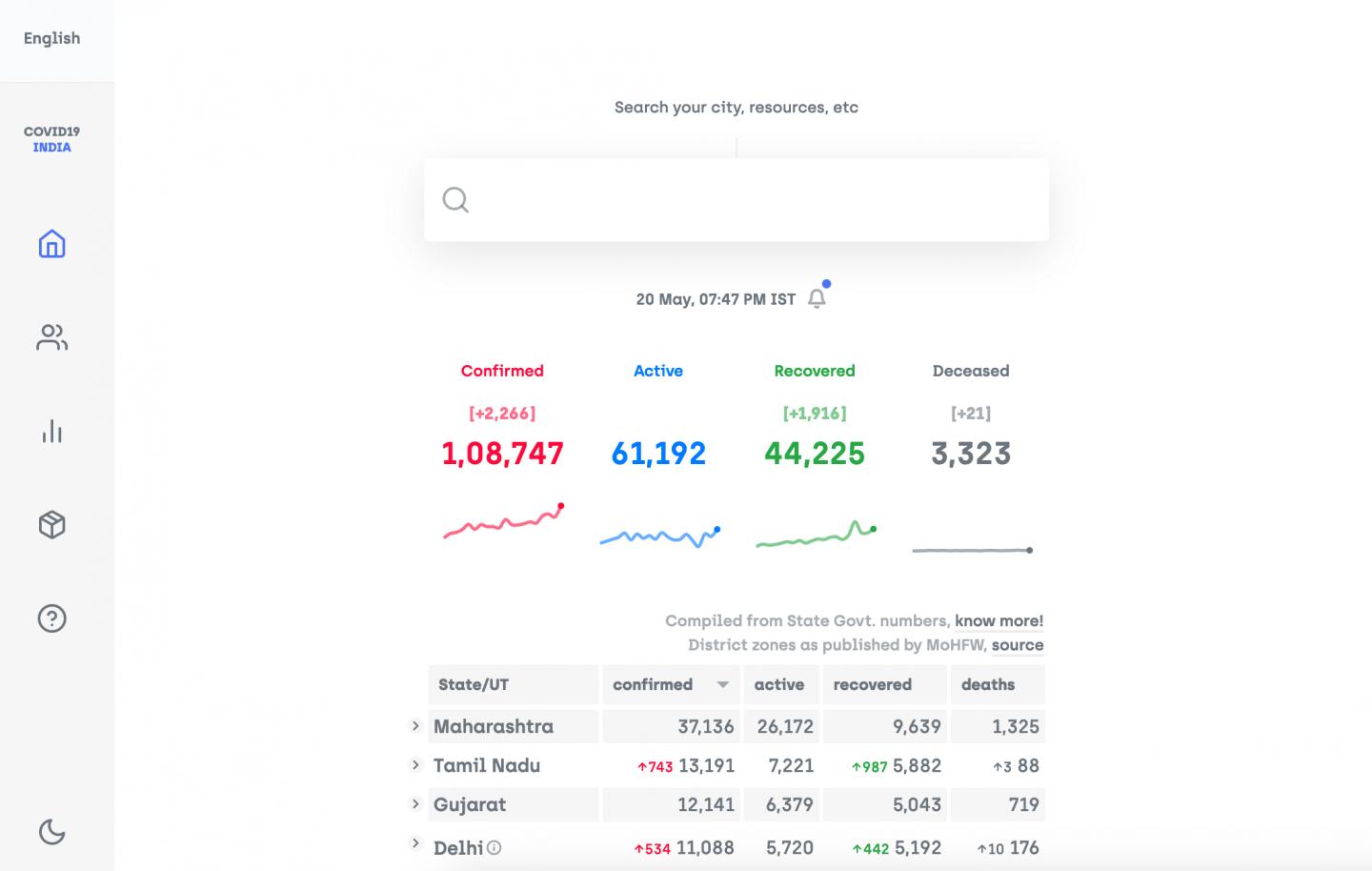
Credit: covid19india.org

BINGHAMTON, NY — In the midst of the global pandemic, a student at Binghamton University, State University of New York is helping India keep track of COVID-19 infection rates.

Binghamton University computer science major Jeremy Philemon is a 2+2 student splitting his education between the Vellore Institute of Technology in India and Binghamton’s Thomas J. Watson School of Engineering and Applied Science. He has applied his skills in the creation and updating of covid19india.org, a website that aggregates data from every part of the country of 1.35 billion people. Over the past two months, covid19india.org has received more than 1.75 billion page views.

Philemon started the website in early March 2020 when India saw a sudden jump in positive COVID-19 cases. He realized there was no central place for residents and officials to find data on infection rates.

“Each of the 28 states and eight union territories had their separate channels of communication and reporting, each of them with varying degrees of granularity,” said Philemon. “It got a lot harder for an average person or even a data scientist to get hold of all the information in one place.”

He connected with a team of researchers who were tracking the novel coronavirus through state-released bulletins and news sources reporting on behalf of medical institutions. The covid19india.org website presents a “tracker” based on that database of up-to-date numbers entered by hundreds of volunteers.

“Apart from the ordinary people using it to be aware of the current situation of the country, we’ve had a few states’ task forces also monitoring the website to keep up with their reports,” Philemon said. “We’ve also had researchers and data analysts working on the dataset to figure out where we might be headed in the coming days.”

The skills he learned at VIT and Binghamton have guided his programming for this project. He also open-sourced the website on the software development platform GitHub, which helped to patch bugs and to introduce new features and improvements.

“Keeping the website small, easily accessible on slower network speeds and compatible on almost all devices across different browsers has been quite challenging,” he said.

Designing covid19india.org also has taught him more about tailoring website design with users in mind. He wanted to make sure that the COVID-19 infection rates were presented in a way that was not overwhelming and desensitizing to those who visited the website.

“I’ve had both fun and exhausting hours of development during the decision-making on features, accessibility and design,” Philemon said. “It’s been quite an enlightening experience whenever I had to spend time researching about visualizations and attempts at humanizing them.”

###

Media Contact
John Brhel
[email protected]

Tags: BiologyComputer ScienceInternetMathematics/StatisticsTechnology/Engineering/Computer ScienceVirology
Share12Tweet8Share2ShareShareShare2

Related Posts

Personalized Guide to Understanding and Reducing Chemicals

February 7, 2026

Inflammasome Protein ASC Drives Pancreatic Cancer Metabolism

February 7, 2026

Phage-Antibiotic Combo Beats Resistant Peritoneal Infection

February 7, 2026

Boosting Remote Healthcare: Stepped-Wedge Trial Insights

February 7, 2026
Please login to join discussion

POPULAR NEWS

  • Robotic Ureteral Reconstruction: A Novel Approach

    Robotic Ureteral Reconstruction: A Novel Approach

    82 shares
    Share 33 Tweet 21
  • Digital Privacy: Health Data Control in Incarceration

    63 shares
    Share 25 Tweet 16
  • Study Reveals Lipid Accumulation in ME/CFS Cells

    57 shares
    Share 23 Tweet 14
  • Breakthrough in RNA Research Accelerates Medical Innovations Timeline

    53 shares
    Share 21 Tweet 13

About

We bring you the latest biotechnology news from best research centers and universities around the world. Check our website.

Follow us

Recent News

Personalized Guide to Understanding and Reducing Chemicals

Inflammasome Protein ASC Drives Pancreatic Cancer Metabolism

Phage-Antibiotic Combo Beats Resistant Peritoneal Infection

Subscribe to Blog via Email

Enter your email address to subscribe to this blog and receive notifications of new posts by email.

Join 73 other subscribers
  • Contact Us

Bioengineer.org © Copyright 2023 All Rights Reserved.

Welcome Back!

Login to your account below

Forgotten Password?

Retrieve your password

Please enter your username or email address to reset your password.

Log In
No Result
View All Result
  • Homepages
    • Home Page 1
    • Home Page 2
  • News
  • National
  • Business
  • Health
  • Lifestyle
  • Science

Bioengineer.org © Copyright 2023 All Rights Reserved.