• HOME
  • NEWS
  • EXPLORE
    • CAREER
      • Companies
      • Jobs
    • EVENTS
    • iGEM
      • News
      • Team
    • PHOTOS
    • VIDEO
    • WIKI
  • BLOG
  • COMMUNITY
    • FACEBOOK
    • INSTAGRAM
    • TWITTER
Saturday, February 7, 2026
BIOENGINEER.ORG
No Result
View All Result
  • Login
  • HOME
  • NEWS
  • EXPLORE
    • CAREER
      • Companies
      • Jobs
        • Lecturer
        • PhD Studentship
        • Postdoc
        • Research Assistant
    • EVENTS
    • iGEM
      • News
      • Team
    • PHOTOS
    • VIDEO
    • WIKI
  • BLOG
  • COMMUNITY
    • FACEBOOK
    • INSTAGRAM
    • TWITTER
  • HOME
  • NEWS
  • EXPLORE
    • CAREER
      • Companies
      • Jobs
        • Lecturer
        • PhD Studentship
        • Postdoc
        • Research Assistant
    • EVENTS
    • iGEM
      • News
      • Team
    • PHOTOS
    • VIDEO
    • WIKI
  • BLOG
  • COMMUNITY
    • FACEBOOK
    • INSTAGRAM
    • TWITTER
No Result
View All Result
Bioengineer.org
No Result
View All Result
Home NEWS Science News Biology

A new epigenetic editing tool is developed to activate silenced genes

Bioengineer by Bioengineer
May 18, 2020
in Biology
Reading Time: 2 mins read
0
IMAGE
Share on FacebookShare on TwitterShare on LinkedinShare on RedditShare on Telegram

IMAGE

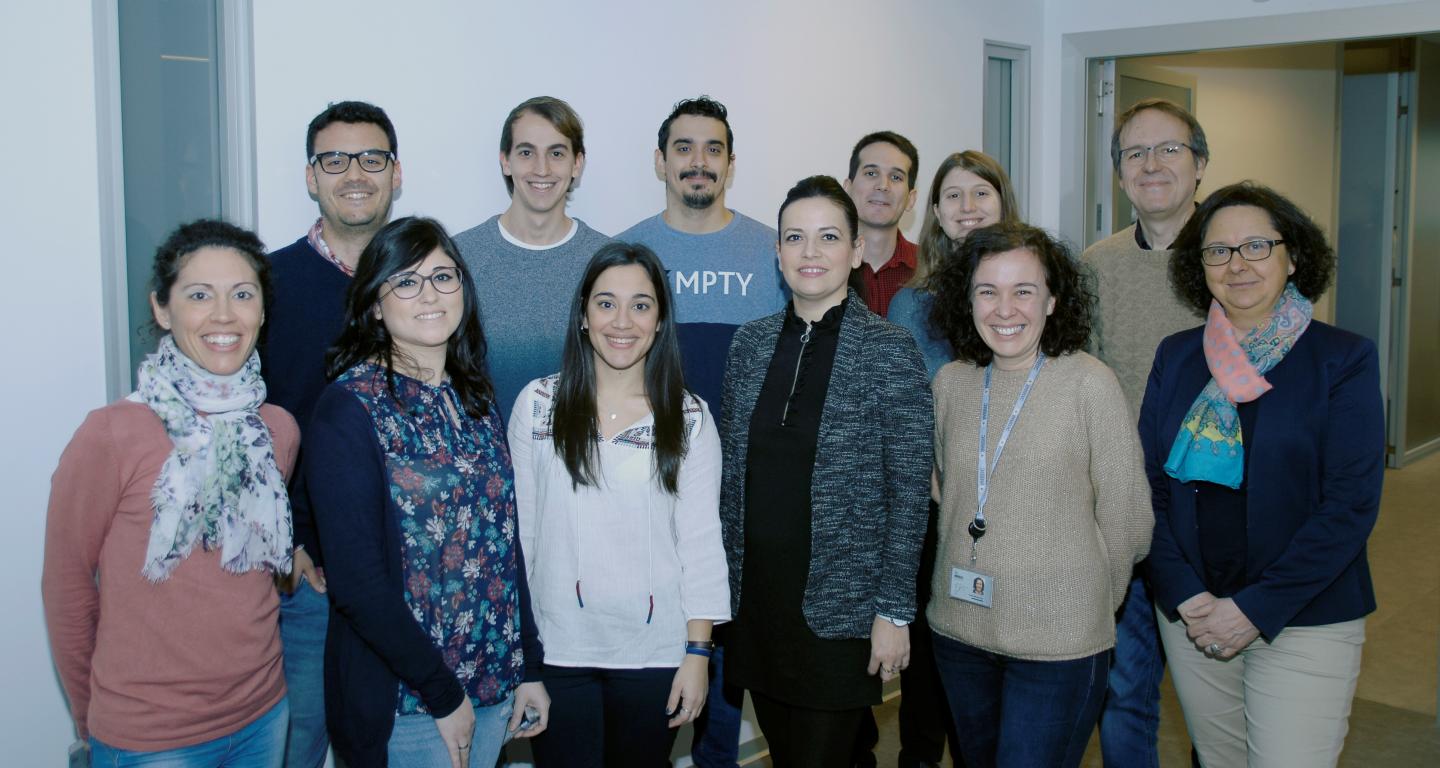
Credit: University of Córdoba

Although all cells in an organism have the same genetic information, not all perform the same function, being as not all of them have the same active genes. Part of these differences in gene activity is due to DNA methylation, a process of silencing that labels genes in order to keep them “off” when they are not necessary. These labels are key epigenetic marks for the organism and are related to diseases such as cancer, since when they are uncontrolled, they can end up silencing important genes for normal cell activity.

A research team at the University of Cordoba established just that: a new way to reactivate silenced genes and has developed a tool that allows for advancing in epigenome editing. The epigenome is the name for the set of epigenetic marks that regulates gene expression and acts as an on/off switch for genes.

The research, carried out by the Epigenetics and DNA Repair research group, led by Genetics Professor María Teresa Roldán Arjona, focused on 5-methylcytosine, the methylated DNA form that causes gene silencing. “Our aim was to design a system that eliminates this methylcytosine from specific places in the genome and susbstitutes it for unmethylated cytosine, so as to once again turn on those silenced genes”, points out Genetics Professor Rafael Rodríguez Ariza, member of the research team.

Specifically, the study used the tool known as CRISPR, a genetic editing technique that uses RNA guides to direct a protein (Cas9) to specific places on DNA and stop it. “In this case, an inactive version of the Cas9 protein was used, given that our aim was not to eliminate a DNA sequence, but rather to remove some of the labels responsible for gene silencing”, says the researcher.

To do so, the research project used a plant enzyme called ROS1 that erases these molecular labels. This is a protein that is only present in plants and that releases DNA from these marks directly, something that differentiates it from animal proteins that only work indirectly and in a more complex way. The strategy consists of inserting ROS1 into in-vitro cells, along with RNA and inactive Cas9 protein, to guide it to the gene that is to be reactivated.

The new tool, along with other previously existing ones, is another step further in epigenetic editing and in understanding DNA methylation, the action that translates into silencing genes and is linked to important pathological processes.

###

References:
Devesa-Guerra, Iván & Morales-Ruiz, Teresa & Pérez-Roldán, Juan & Parrilla, Jara & Dorado-León, Macarena & García-Ortiz, María & Ariza, Rafael & Roldan Arjona, Teresa. (2020). DNA methylation editing by CRISPR-guided excision of 5-methylcytosine. Journal of Molecular Biology. 10.1016/j.jmb.2020.02.007.

Media Contact
Elena Lázaro Real
[email protected]

Related Journal Article

http://dx.doi.org/10.1016/j.jmb.2020.02.007

Tags: BiologyGenes
Share12Tweet8Share2ShareShareShare2

Related Posts

Florida Cane Toad: Complex Spread and Selective Evolution

Florida Cane Toad: Complex Spread and Selective Evolution

February 7, 2026
New Study Uncovers Mechanism Behind Burn Pit Particulate Matter–Induced Lung Inflammation

New Study Uncovers Mechanism Behind Burn Pit Particulate Matter–Induced Lung Inflammation

February 6, 2026

DeepBlastoid: Advancing Automated and Efficient Evaluation of Human Blastoids with Deep Learning

February 6, 2026

Navigating the Gut: The Role of Formic Acid in the Microbiome

February 6, 2026
Please login to join discussion

POPULAR NEWS

  • Robotic Ureteral Reconstruction: A Novel Approach

    Robotic Ureteral Reconstruction: A Novel Approach

    82 shares
    Share 33 Tweet 21
  • Digital Privacy: Health Data Control in Incarceration

    63 shares
    Share 25 Tweet 16
  • Study Reveals Lipid Accumulation in ME/CFS Cells

    57 shares
    Share 23 Tweet 14
  • Breakthrough in RNA Research Accelerates Medical Innovations Timeline

    53 shares
    Share 21 Tweet 13

About

We bring you the latest biotechnology news from best research centers and universities around the world. Check our website.

Follow us

Recent News

Personalized Guide to Understanding and Reducing Chemicals

Inflammasome Protein ASC Drives Pancreatic Cancer Metabolism

Phage-Antibiotic Combo Beats Resistant Peritoneal Infection

Subscribe to Blog via Email

Enter your email address to subscribe to this blog and receive notifications of new posts by email.

Join 73 other subscribers
  • Contact Us

Bioengineer.org © Copyright 2023 All Rights Reserved.

Welcome Back!

Login to your account below

Forgotten Password?

Retrieve your password

Please enter your username or email address to reset your password.

Log In
No Result
View All Result
  • Homepages
    • Home Page 1
    • Home Page 2
  • News
  • National
  • Business
  • Health
  • Lifestyle
  • Science

Bioengineer.org © Copyright 2023 All Rights Reserved.