• HOME
  • NEWS
  • EXPLORE
    • CAREER
      • Companies
      • Jobs
    • EVENTS
    • iGEM
      • News
      • Team
    • PHOTOS
    • VIDEO
    • WIKI
  • BLOG
  • COMMUNITY
    • FACEBOOK
    • INSTAGRAM
    • TWITTER
Saturday, February 7, 2026
BIOENGINEER.ORG
No Result
View All Result
  • Login
  • HOME
  • NEWS
  • EXPLORE
    • CAREER
      • Companies
      • Jobs
        • Lecturer
        • PhD Studentship
        • Postdoc
        • Research Assistant
    • EVENTS
    • iGEM
      • News
      • Team
    • PHOTOS
    • VIDEO
    • WIKI
  • BLOG
  • COMMUNITY
    • FACEBOOK
    • INSTAGRAM
    • TWITTER
  • HOME
  • NEWS
  • EXPLORE
    • CAREER
      • Companies
      • Jobs
        • Lecturer
        • PhD Studentship
        • Postdoc
        • Research Assistant
    • EVENTS
    • iGEM
      • News
      • Team
    • PHOTOS
    • VIDEO
    • WIKI
  • BLOG
  • COMMUNITY
    • FACEBOOK
    • INSTAGRAM
    • TWITTER
No Result
View All Result
Bioengineer.org
No Result
View All Result
Home NEWS Science News Biology

Early experiences determine how birds build their first nest

Bioengineer by Bioengineer
May 12, 2020
in Biology
Reading Time: 2 mins read
0
IMAGE
Share on FacebookShare on TwitterShare on LinkedinShare on RedditShare on Telegram

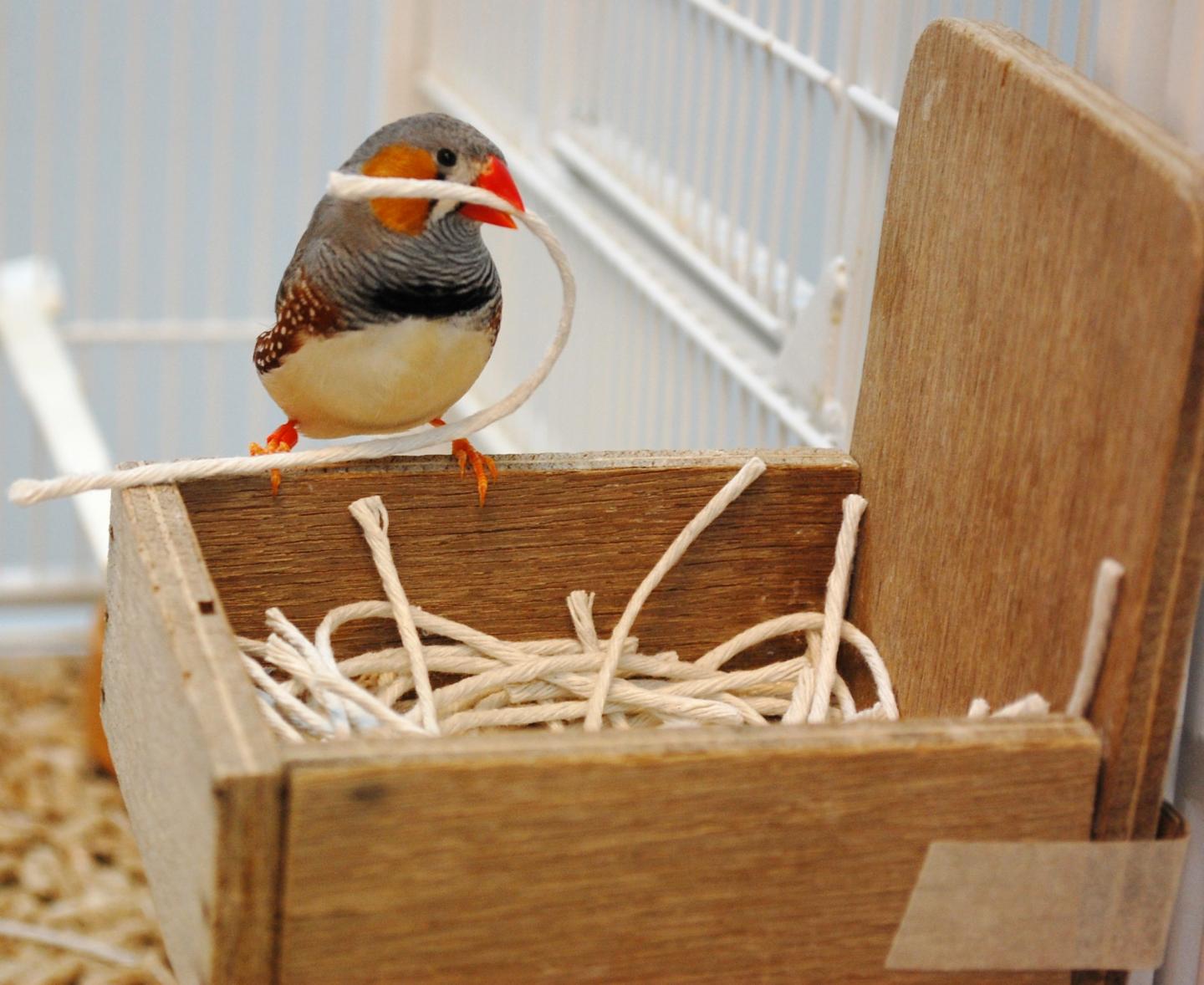
Materials used and speed of nest construction depend on who and what was around during adolescence for zebra finches
IMAGE

Credit: Alexis Breen.

Early life experiences of zebra finches have a big effect on the construction of their first homes, according to a new study by researchers at the University of Alberta’s Faculty of Science and the University of St Andrews’ School of Biology.

The study shows that the presence of an adult bird as well as the types of materials available in early adolescence influence two key aspects of first-time nest building: material preference and construction speed.

“Interestingly, we noted that the preference for different materials, differentiated by colour in our study, is shaped by the juvenile experience of this material–but only in the presence of an adult,” said Lauren Guillette, assistant professor in the Department of Psychology and project lead.

“This work is important because it debunks the long-held myth that birds build nests that look like the nest in which they hatched–making nest-building a useful model system to experimentally test how animals learn about physical properties of the world.”

In this study, the researchers controlled the environment in which zebra finches grew up. Each bird hatched into a nest of a specific colour–pink or orange. As the birds grew up, they were paired with another bird of the same age. Then, some pairs were grouped with an adult bird in an environment that contained a different colour of nest material than the colour in which they hatched. Other young pairs of birds experienced only an adult as company, or only nest material and no adult, other pairs just had each other.

Using these methods the researchers could determine if birds build their first nest with a colour that matches their natal nest, or the colour they experienced while growing up.

The results show that as juvenile zebra finches embarked on building their first nest, most birds preferred to use materials to which they’d had access to while growing up–but only if an adult had also been present during this time. Further, birds who had not had juvenile access to an adult or material were between three and four times slower at nest building.

“Together, these results show that juvenile zebra finches combine relevant social and ecological cues–here, adult presence and material colour–when developing their material preference,” explained Alexis Breen, lead author on the study who recently obtained a PhD at the University of St Andrews in Scotland.

The study, “Juvenile socio-ecological environment shapes material technology in nest-building birds,” was published in Behavioral Ecology (doi: 10.1093/beheco/araa027).

###

Media Contact
Katie Willis
[email protected]

Original Source

https://www.ualberta.ca/science/news/2020/may/birds-nest-construction.html

Related Journal Article

http://dx.doi.org/10.1093/beheco/araa027

Tags: BehaviorBiologyEcology/EnvironmentSocial/Behavioral Science
Share12Tweet8Share2ShareShareShare2

Related Posts

Florida Cane Toad: Complex Spread and Selective Evolution

Florida Cane Toad: Complex Spread and Selective Evolution

February 7, 2026
New Study Uncovers Mechanism Behind Burn Pit Particulate Matter–Induced Lung Inflammation

New Study Uncovers Mechanism Behind Burn Pit Particulate Matter–Induced Lung Inflammation

February 6, 2026

DeepBlastoid: Advancing Automated and Efficient Evaluation of Human Blastoids with Deep Learning

February 6, 2026

Navigating the Gut: The Role of Formic Acid in the Microbiome

February 6, 2026
Please login to join discussion

POPULAR NEWS

  • Robotic Ureteral Reconstruction: A Novel Approach

    Robotic Ureteral Reconstruction: A Novel Approach

    82 shares
    Share 33 Tweet 21
  • Digital Privacy: Health Data Control in Incarceration

    63 shares
    Share 25 Tweet 16
  • Study Reveals Lipid Accumulation in ME/CFS Cells

    57 shares
    Share 23 Tweet 14
  • Breakthrough in RNA Research Accelerates Medical Innovations Timeline

    53 shares
    Share 21 Tweet 13

About

We bring you the latest biotechnology news from best research centers and universities around the world. Check our website.

Follow us

Recent News

Phage-Antibiotic Combo Beats Resistant Peritoneal Infection

Boosting Remote Healthcare: Stepped-Wedge Trial Insights

Barriers and Boosters of Seniors’ Physical Activity in Karachi

Subscribe to Blog via Email

Enter your email address to subscribe to this blog and receive notifications of new posts by email.

Join 73 other subscribers
  • Contact Us

Bioengineer.org © Copyright 2023 All Rights Reserved.

Welcome Back!

Login to your account below

Forgotten Password?

Retrieve your password

Please enter your username or email address to reset your password.

Log In
No Result
View All Result
  • Homepages
    • Home Page 1
    • Home Page 2
  • News
  • National
  • Business
  • Health
  • Lifestyle
  • Science

Bioengineer.org © Copyright 2023 All Rights Reserved.