New insights represent a major step forward in the formation of a new glycopeptide antibiotic to fight superbugs
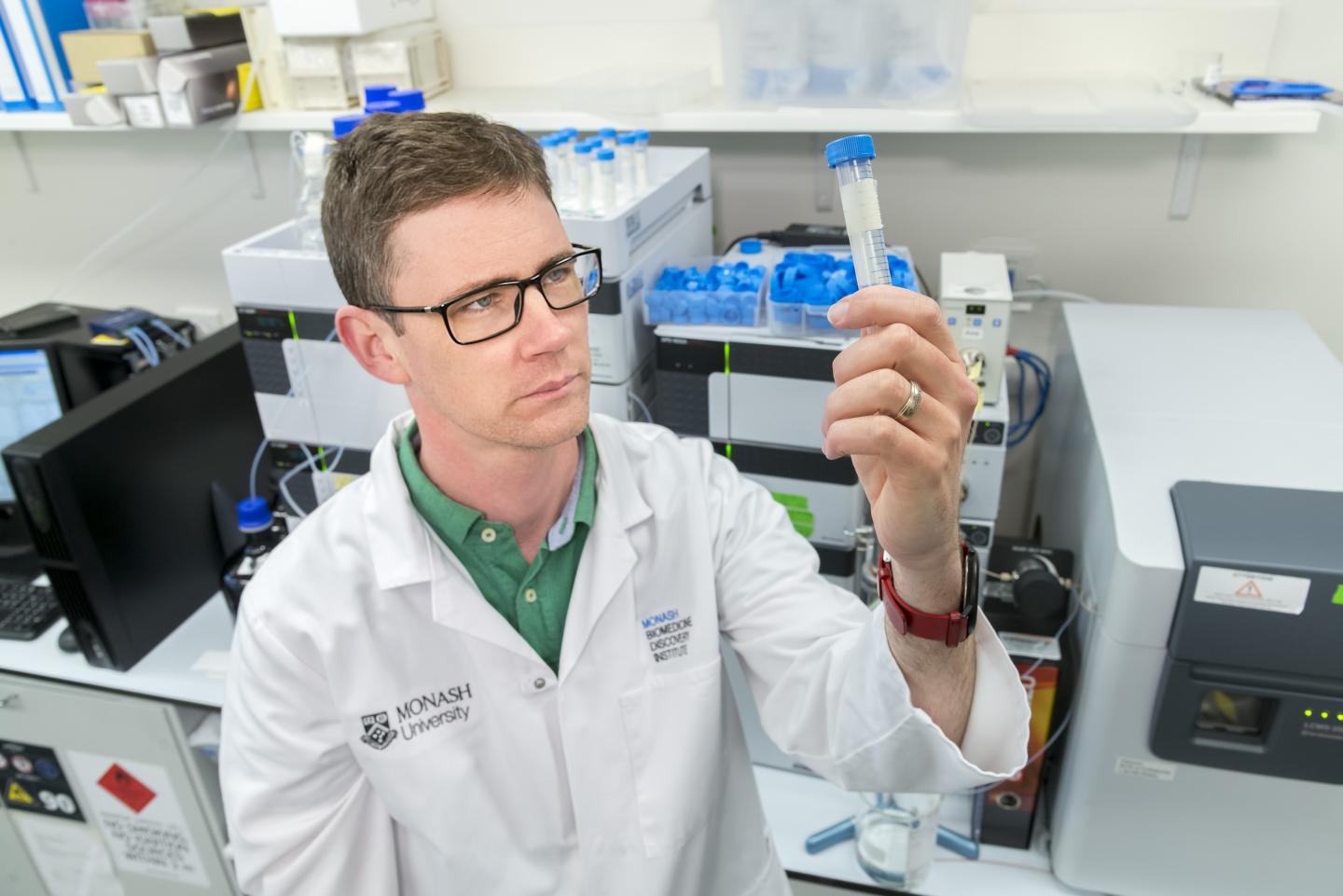
Credit: Max Cryle
A powerful new insight, linked to recent studies by Monash Biomedicine Discovery Institute (BDI), has provided a new understanding of Glycopeptide antibiotics (GPAs) biosynthesis that allows new GPAs to be made and tested in the laboratory. This is vital in the quest to develop new antibiotics to keep pace with the ever-evolving ‘superbugs’ that continue to pose a serious threat to global public health.
Led by Associate Professor Max Cryle, the recent finding, published in Angewandte Chemie International Edition, shows for the first time, how a wide range of new GPAs can be made by combining the natural biosynthesis machinery and chemical modifications. This will now enable the discovery and development of new antibiotics for clinical use and is an avenue being rapidly pursued.
This study builds on the results of two further studies published in The Journal of Organic Chemistry and Organic Letters, which first revealed how to effectively use the GPA enzymes in the artificial environment of the laboratory to make GPAs effectively and to explore the limits of these enzymes.
GPAs are an important class of antibiotics, often used as the last resort against resistant bacteria. Vancomycin, for example, is used to fight infection by the deadly Staphylococcus aureus (golden staph). These antibiotics are complex peptides that are naturally produced by bacteria, and are still commercially produced in this way due to the complexities with making these purely through chemical means. Up until now, this has placed limits on the changes that could be made to antibiotics, allowing for only minor modifications.
“Nature has evolved some highly effective antibiotics, but we have previously been limited in how we can change these to improve their activity and beat resistance. Now, by combining natural enzymes with synthetic chemistry we can explore new antibiotics that have never been made before. This gives us a vital advantage in the struggle to overcome resistant bacteria in this important antibiotic class,” said Associate Professor Cryle.
Closely related to this, a further collaboration published last year in Nature Communications, investigated the biosynthesis of kistamicin, an unusual GPA, which recently has been shown to be an effective antibiotic with a totally new mechanism of killing bacteria. This study highlights the importance of being able to change the structures of GPAs to be able to make new antibiotics and how new mechanisms of antibiotic activity can be found even with existing antibiotic classes.
To highlight this point, further pioneering work by the Cryle Lab has led to the development of a new type of antibiotic based on GPAs that works in a completely different way to these current clinical antibiotics. Now the subject of a recently filed provisional patent, these new antibiotics don’t act by directly killing bacteria – instead, they help to find superbug infections within a patient and, once they have found them, – then activate their immune system to effectively clear the infection.
###
Read the full paper in Angewandte Chemie International Edition, titled: A chemoenzymatic approach to the synthesis of glycopeptide antibiotic analogues
About the Monash Biomedicine Discovery Institute at Monash University
Committed to making the discoveries that will relieve the future burden of disease, the newly established Monash Biomedicine Discovery Institute at Monash University brings together more than 120 internationally-renowned research teams. Our researchers are supported by world-class technology and infrastructure, and partner with industry, clinicians and researchers internationally to enhance lives through discovery.
Media enquiries
Monash media
+61 (0) 425 725 836
[email protected]
Media Contact
Wendy Smith
[email protected]
Related Journal Article
http://dx.