• HOME
  • NEWS
  • EXPLORE
    • CAREER
      • Companies
      • Jobs
    • EVENTS
    • iGEM
      • News
      • Team
    • PHOTOS
    • VIDEO
    • WIKI
  • BLOG
  • COMMUNITY
    • FACEBOOK
    • INSTAGRAM
    • TWITTER
Saturday, September 26, 2026
BIOENGINEER.ORG
No Result
View All Result
  • Login
  • HOME
  • NEWS
  • EXPLORE
    • CAREER
      • Companies
      • Jobs
        • Lecturer
        • PhD Studentship
        • Postdoc
        • Research Assistant
    • EVENTS
    • iGEM
      • News
      • Team
    • PHOTOS
    • VIDEO
    • WIKI
  • BLOG
  • COMMUNITY
    • FACEBOOK
    • INSTAGRAM
    • TWITTER
  • HOME
  • NEWS
  • EXPLORE
    • CAREER
      • Companies
      • Jobs
        • Lecturer
        • PhD Studentship
        • Postdoc
        • Research Assistant
    • EVENTS
    • iGEM
      • News
      • Team
    • PHOTOS
    • VIDEO
    • WIKI
  • BLOG
  • COMMUNITY
    • FACEBOOK
    • INSTAGRAM
    • TWITTER
No Result
View All Result
Bioengineer.org
No Result
View All Result
Home NEWS Science News Chemistry

Fluorescent technique brings aging polymers to light

Bioengineer by Bioengineer
May 6, 2020
in Chemistry
Reading Time: 3 mins read
0
IMAGE
Share on FacebookShare on TwitterShare on LinkedinShare on RedditShare on Telegram

IMAGE

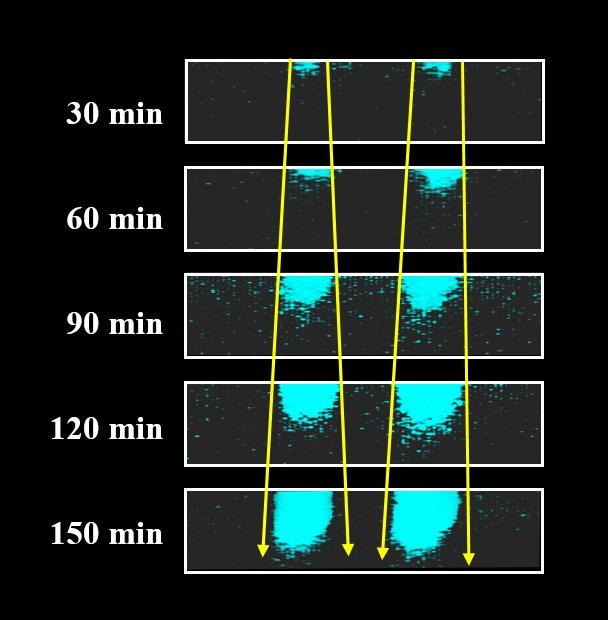
Credit: Adapted from ACS Central Science 2020, DOI: 10.1021/acscentsci.0c00133

Modern society relies on polymers, such as polypropylene or polyethylene plastic, for a wide range of applications, from food containers to automobile parts to medical devices. However, like people, polymers age, and when they do, the materials become prone to cracking or breaking. Now, researchers reporting in ACS Central Science have developed a method to visualize variations in polymers that arise with age.

Heat, sunlight, oxygen and humidity can all cause polymers to degrade over time. At early stages, polymer chains break, producing functional groups, such as hydroxyl groups, and generating free radicals that speed up the aging process. Scientists have developed methods to study more advanced signs of polymer aging, but these techniques don’t provide a microscopic 3D picture, and most aren’t sensitive enough to detect early aging. Rui Tian, Chao Lu and colleagues wanted to find a way to visualize the aging process of polypropylene and polyethylene polymers in 3D. Such a technique could be used to detect aged polymers so they can be repaired or replaced with new parts before they fail.

The researchers based their method on a commercially available fluorescent dye, called DBPA, that can specifically attach to hydroxyl groups in polymers as the chains break. The team heated a thin sheet of polypropylene or polyethylene at 140 F and then soaked the plastic in a DPBA solution to dye the aged sites with hydroxyl groups. When the researchers observed the sheets under a confocal microscope, they found that the aged sites in the polymers — as revealed by the fluorescently tagged hydroxyl groups — grew deeper, wider and more frequent with time. The method detected faster polymer aging when the sheets were exposed to higher temperatures. To the researchers’ knowledge, the fluorescent technique is the first that can sensitively monitor polymer aging in 3D, which will assist in identifying deteriorating polymers at the earliest stages.

###

The authors acknowledge funding from the National Natural Science Foundation of China.

The paper’s abstract will be available on May 6 at 8 a.m. Eastern time here: http://pubs.acs.org/doi/abs/10.1021/acscentsci.0c00133

The American Chemical Society (ACS) is a nonprofit organization chartered by the U.S. Congress. ACS’ mission is to advance the broader chemistry enterprise and its practitioners for the benefit of Earth and its people. The Society is a global leader in providing access to chemistry-related information and research through its multiple research solutions, peer-reviewed journals, scientific conferences, eBooks and weekly news periodical Chemical & Engineering News. ACS journals are among the most cited, most trusted and most read within the scientific literature; however, ACS itself does not conduct chemical research. As a specialist in scientific information solutions (including SciFinder® and STN®), its CAS division powers global research, discovery and innovation. ACS’ main offices are in Washington, D.C., and Columbus, Ohio.

To automatically receive news releases from the American Chemical Society, contact [email protected].

Follow us: Twitter | Facebook

Media Contact
Katie Cottingham
[email protected]

Tags: Chemistry/Physics/Materials SciencesPollution/RemediationPolymer Chemistry
Share12Tweet8Share2ShareShareShare2

Related Posts

How You Make a Catalyst Matters: Rhodium on Zirconia and the Art of Ring Opening

How You Make a Catalyst Matters: Rhodium on Zirconia and the Art of Ring Opening

September 26, 2026
Lipid Fingerprinting Reveals the Hidden Chemistry That Separates Organic Lettuce from Conventional

Lipid Fingerprinting Reveals the Hidden Chemistry That Separates Organic Lettuce from Conventional

September 26, 2026

Three-Year Campus Study Reveals How Bangkok’s Haze Season Seeps Into University Buildings

September 26, 2026

Pulsed Nickel Coating on Titanium Delivers a Durable, pH-Universal Hydrogen Catalyst

September 26, 2026
Please login to join discussion

POPULAR NEWS

  • When Should Cancer Patients Switch Treatment? Researchers Build a Standard Rulebook for a Key Clinical Milestone

    29 shares
    Share 12 Tweet 7
  • Weight-Loss Drugs Reshaped Obesity Care, But Surgery Refuses to Fade

    29 shares
    Share 12 Tweet 7
  • Hunger Hormone Receptor Emerges as Unexpected Lever Against Parasitic Liver Disease

    29 shares
    Share 12 Tweet 7
  • AI Framework Bridges the Knowledge Gap in Safer Medication Recommendations

    29 shares
    Share 12 Tweet 7

About

We bring you the latest biotechnology news from best research centers and universities around the world. Check our website.

Follow us

Recent News

When Should Cancer Patients Switch Treatment? Researchers Build a Standard Rulebook for a Key Clinical Milestone

Weight-Loss Drugs Reshaped Obesity Care, But Surgery Refuses to Fade

Hunger Hormone Receptor Emerges as Unexpected Lever Against Parasitic Liver Disease

Subscribe to Blog via Email

Enter your email address to subscribe to this blog and receive notifications of new posts by email.

Join 85 other subscribers
  • Contact Us

Bioengineer.org © Copyright 2023 All Rights Reserved.

Welcome Back!

Login to your account below

Forgotten Password?

Retrieve your password

Please enter your username or email address to reset your password.

Log In
No Result
View All Result
  • Homepages
    • Home Page 1
    • Home Page 2
  • News
  • National
  • Business
  • Health
  • Lifestyle
  • Science

Bioengineer.org © Copyright 2023 All Rights Reserved.