• HOME
  • NEWS
  • EXPLORE
    • CAREER
      • Companies
      • Jobs
    • EVENTS
    • iGEM
      • News
      • Team
    • PHOTOS
    • VIDEO
    • WIKI
  • BLOG
  • COMMUNITY
    • FACEBOOK
    • INSTAGRAM
    • TWITTER
Wednesday, May 20, 2026
BIOENGINEER.ORG
No Result
View All Result
  • Login
  • HOME
  • NEWS
  • EXPLORE
    • CAREER
      • Companies
      • Jobs
        • Lecturer
        • PhD Studentship
        • Postdoc
        • Research Assistant
    • EVENTS
    • iGEM
      • News
      • Team
    • PHOTOS
    • VIDEO
    • WIKI
  • BLOG
  • COMMUNITY
    • FACEBOOK
    • INSTAGRAM
    • TWITTER
  • HOME
  • NEWS
  • EXPLORE
    • CAREER
      • Companies
      • Jobs
        • Lecturer
        • PhD Studentship
        • Postdoc
        • Research Assistant
    • EVENTS
    • iGEM
      • News
      • Team
    • PHOTOS
    • VIDEO
    • WIKI
  • BLOG
  • COMMUNITY
    • FACEBOOK
    • INSTAGRAM
    • TWITTER
No Result
View All Result
Bioengineer.org
No Result
View All Result
Home NEWS Science News Biology

IKBFU scientists have discovered a way to increase wheat immunity

Bioengineer by Bioengineer
May 4, 2020
in Biology
Reading Time: 2 mins read
0
IMAGE
Share on FacebookShare on TwitterShare on LinkedinShare on RedditShare on Telegram

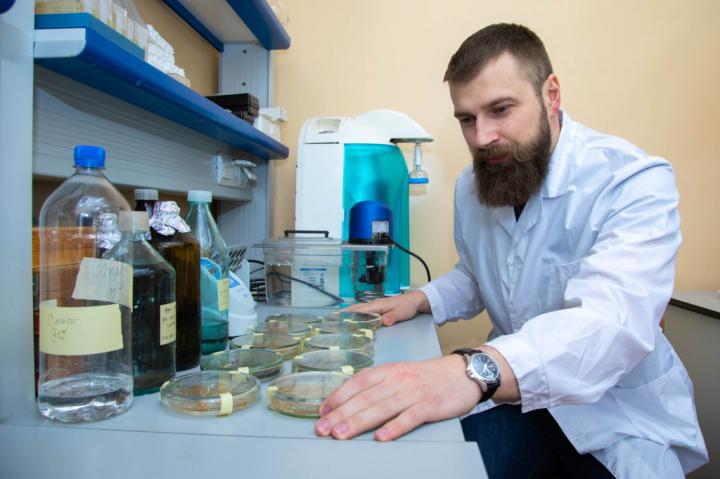
Wheat is one of the most common cereal crops. Scientists all over the world are looking for ways to increase yields.
IMAGE

Credit: Immanuel Kant Baltic Federal University

lts of the research, which were financed by the Russian Foundation for Basic Research and the government of the Kaliningrad region, were recently published in the Plants scientific journal.

Pavel Feduraev, project manager, PhD in Biology said:

“Cereal crops have bifunctional enzyme phenylalanine (tyrosine)-ammonia-liaise, which plays a very important role in the process of splitting metabolism into primary and secondary. It is important to understand that in the process of primary metabolism there is a synthesis of proteins, fats, carbohydrates, nucleic, and a number of organic acids, which are the basic resources of the cell. Secondary metabolism provides the cell with auxiliary, regulatory compounds, which largely determine the resistance of plants to adverse environmental factors. For example, one of the final products of secondary metabolism is a complex polymer – lignin, which consists of an additional protective shell of the cell. And the stronger this shell is, the more viable and resistant the plant will be. In particular, it is the lack of lignin that causes the wheat to die, which leads to the loss of a significant portion of the crop”.

In a sense, any secondary metabolism occurs at the expense of primary. But scientists of the IKBFU offer to stimulate this process as much as possible, providing secondary metabolism with additional material.

Pavel Feduraev continues:

“Simply put, phenylalanine (tyrosine)-ammonia-liase takes amino acids, detaches the amino group from them, and uses the rest of the secondary metabolism. In the course of our experiments, we selected the concentrations of inductors (i.e. amino acids, which are metabolized by this enzyme), which actively stimulate the biosynthesis of secondary metabolites. The results obtained form the basis of the research”.

According to the researcher, it will be possible to create a solution for the pre-sowing treatment of seeds, which will further stimulate the synthesis of secondary compounds as the plant grows.

###

Media Contact
Denis Zhigulin
[email protected]

Original Source

http://eng.kantiana.ru/news/261353/index.php?bitrix_include_areas=Y&clear_cache=Y

Related Journal Article

http://dx.doi.org/10.3390/plants9040476

Tags: Agricultural Production/EconomicsAgricultureFood/Food SciencePlant Sciences
Share12Tweet8Share2ShareShareShare2

Related Posts

Brookfield Zoo Chicago Achieves Major Milestone in Puerto Rican Crested Toad Conservation with Over 12,000 Tadpoles — Biology

Brookfield Zoo Chicago Achieves Major Milestone in Puerto Rican Crested Toad Conservation with Over 12,000 Tadpoles

May 19, 2026
Decoding p53 Vulnerability: Unraveling Why the Genome Guardian Often Fails — Biology

Decoding p53 Vulnerability: Unraveling Why the Genome Guardian Often Fails

May 19, 2026

New Imaging Technique Simultaneously Maps Brain Activity in Nine Cell Types — Over Four Times the Previous Limit

May 19, 2026

Decoding the Tumor Microenvironment Chemokine Network: From Immune Evasion to Innovative Multi-Target Therapies

May 19, 2026
Please login to join discussion

POPULAR NEWS

  • blank

    New Study Reveals Plants Can Detect the Sound of Rain

    732 shares
    Share 292 Tweet 183
  • Research Indicates Potential Connection Between Prenatal Medication Exposure and Elevated Autism Risk

    846 shares
    Share 338 Tweet 212
  • ESMO 2025: mRNA COVID Vaccines Enhance Efficacy of Cancer Immunotherapy

    262 shares
    Share 105 Tweet 66
  • Breastmilk Balances E. coli and Beneficial Bacteria in Infant Gut Microbiomes

    58 shares
    Share 23 Tweet 15

About

We bring you the latest biotechnology news from best research centers and universities around the world. Check our website.

Follow us

Recent News

Lab Fish Circadian Rhythms Misaligned with Natural Cycles

Trampoline Injuries: Risk, Context, and Prevention Explored

Early-Onset Sepsis: Calculator vs. Guidelines vs. Care

Subscribe to Blog via Email

Enter your email address to subscribe to this blog and receive notifications of new posts by email.

Join 82 other subscribers
  • Contact Us

Bioengineer.org © Copyright 2023 All Rights Reserved.

Welcome Back!

Login to your account below

Forgotten Password?

Retrieve your password

Please enter your username or email address to reset your password.

Log In
No Result
View All Result
  • Homepages
    • Home Page 1
    • Home Page 2
  • News
  • National
  • Business
  • Health
  • Lifestyle
  • Science

Bioengineer.org © Copyright 2023 All Rights Reserved.