• HOME
  • NEWS
  • EXPLORE
    • CAREER
      • Companies
      • Jobs
    • EVENTS
    • iGEM
      • News
      • Team
    • PHOTOS
    • VIDEO
    • WIKI
  • BLOG
  • COMMUNITY
    • FACEBOOK
    • INSTAGRAM
    • TWITTER
Thursday, March 26, 2026
BIOENGINEER.ORG
No Result
View All Result
  • Login
  • HOME
  • NEWS
  • EXPLORE
    • CAREER
      • Companies
      • Jobs
        • Lecturer
        • PhD Studentship
        • Postdoc
        • Research Assistant
    • EVENTS
    • iGEM
      • News
      • Team
    • PHOTOS
    • VIDEO
    • WIKI
  • BLOG
  • COMMUNITY
    • FACEBOOK
    • INSTAGRAM
    • TWITTER
  • HOME
  • NEWS
  • EXPLORE
    • CAREER
      • Companies
      • Jobs
        • Lecturer
        • PhD Studentship
        • Postdoc
        • Research Assistant
    • EVENTS
    • iGEM
      • News
      • Team
    • PHOTOS
    • VIDEO
    • WIKI
  • BLOG
  • COMMUNITY
    • FACEBOOK
    • INSTAGRAM
    • TWITTER
No Result
View All Result
Bioengineer.org
No Result
View All Result
Home NEWS Science News Biology

A milder hair dye based on synthetic melanin

Bioengineer by Bioengineer
April 29, 2020
in Biology
Reading Time: 3 mins read
0
IMAGE
Share on FacebookShare on TwitterShare on LinkedinShare on RedditShare on Telegram

IMAGE

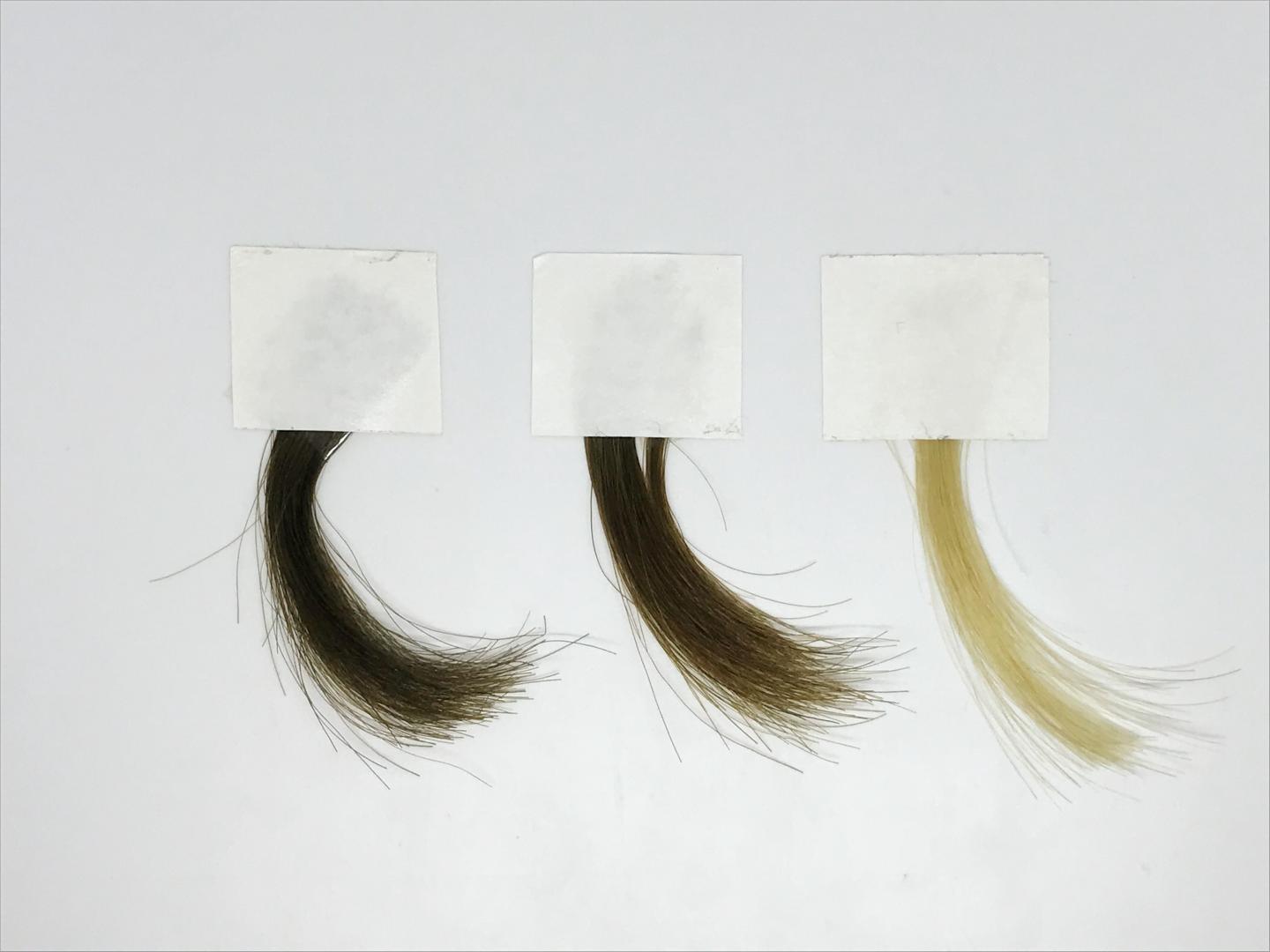
Credit: Adapted from ACS Central Science 2020, DOI: 10.1021/acscentsci.0c00068

With the coronavirus pandemic temporarily shuttering hair salons, many clients are appreciating, and missing, the ability of hair dye to cover up grays or touch up roots. However, frequent coloring, whether done at a salon or at home, can damage hair and might pose health risks from potentially cancer-causing dye components. Now, researchers reporting in ACS Central Science have developed a process to dye hair with synthetic melanin under milder conditions than traditional hair dyes.

Melanin is a group of natural pigments that give hair and skin their varied colors. With aging, melanin disappears from hair fibers, leading to color loss and graying. Most permanent hair dyes use ammonia, hydrogen peroxide, small-molecule dyes and other ingredients to penetrate the cuticle of the hair and deposit coloring. Along with being damaging to hair, these harsh substances could cause allergic reactions or other health problems in colorists and their clients. Recently, scientists have explored using synthetic melanin to color human hair, but the process required relatively high concentrations of potentially toxic heavy metals, such as copper and iron, and strong oxidants. Claudia Battistella, Nathan Gianneschi and colleagues at Northwestern University wanted to find a gentler, safer way to get long-lasting, natural-looking hair color with synthetic melanin.

The researchers tested different dyeing conditions for depositing synthetic melanin on hair, finding that they could substitute mild heat and a small amount of ammonium hydroxide for the heavy metals and strong oxidants used in prior methods. They could produce darker hues by increasing the concentration of ammonium hydroxide, or red and gold shades by adding a small amount of hydrogen peroxide. Overall, the conditions were similar to or milder than those used for commercially available hair dyes. And the natural-looking colors deposited on the hair surface, rather than penetrating the cuticle, which is less likely to cause damage. The colored layer persisted for at least 18 washes.

###

The authors acknowledge funding from the Swiss National Science Foundation and the Air Force Office of Scientific Research.

The paper’s abstract will be available on April 29 at 8 a.m. Eastern time here: http://pubs.acs.org/doi/abs/10.1021/acscentsci.0c00068

The American Chemical Society (ACS) is a nonprofit organization chartered by the U.S. Congress. ACS’ mission is to advance the broader chemistry enterprise and its practitioners for the benefit of Earth and its people. The Society is a global leader in providing access to chemistry-related information and research through its multiple research solutions, peer-reviewed journals, scientific conferences, eBooks and weekly news periodical Chemical & Engineering News. ACS journals are among the most cited, most trusted and most read within the scientific literature; however, ACS itself does not conduct chemical research. As a specialist in scientific information solutions (including SciFinder® and STN®), its CAS division powers global research, discovery and innovation. ACS’ main offices are in Washington, D.C., and Columbus, Ohio.

To automatically receive news releases from the American Chemical Society, contact [email protected].

Follow us: Twitter | Facebook

Media Contact
Katie Cottingham
[email protected]

Tags: AgingChemistry/Physics/Materials SciencesQuality of LifeToxicology
Share12Tweet8Share2ShareShareShare2

Related Posts

How to sway group opinions: Encourage opponents to stay undecided

How to sway group opinions: Encourage opponents to stay undecided

March 23, 2026
Deep Learning Model Maps How Individual Cells Shape Disease Outcomes

Deep Learning Model Maps How Individual Cells Shape Disease Outcomes

March 20, 2026

Removing only 15 female sharks annually could endanger the entire population, scientists warn

March 20, 2026

Scientists Urge Fragrance Industry to Transition from Sustainability Talk to Active Funding of Plant Conservation

March 20, 2026
Please login to join discussion

POPULAR NEWS

  • blank

    Revolutionary AI Model Enhances Precision in Detecting Food Contamination

    96 shares
    Share 38 Tweet 24
  • Imagine a Social Media Feed That Challenges Your Views Instead of Reinforcing Them

    1003 shares
    Share 397 Tweet 248
  • Uncovering Functions of Cavernous Malformation Proteins in Organoids

    54 shares
    Share 22 Tweet 14
  • Promising Outcomes from First Clinical Trials of Gene Regulation in Epilepsy

    51 shares
    Share 20 Tweet 13

About

We bring you the latest biotechnology news from best research centers and universities around the world. Check our website.

Follow us

Recent News

In-Sensor Cryptography Links Physical Process to Digital Identity

Can Psychosocial Factors Influence Cancer Risk?

Depression Factors in Elderly: Pre vs. Post-COVID Analysis

Subscribe to Blog via Email

Enter your email address to subscribe to this blog and receive notifications of new posts by email.

Join 78 other subscribers
  • Contact Us

Bioengineer.org © Copyright 2023 All Rights Reserved.

Welcome Back!

Login to your account below

Forgotten Password?

Retrieve your password

Please enter your username or email address to reset your password.

Log In
No Result
View All Result
  • Homepages
    • Home Page 1
    • Home Page 2
  • News
  • National
  • Business
  • Health
  • Lifestyle
  • Science

Bioengineer.org © Copyright 2023 All Rights Reserved.