• HOME
  • NEWS
  • EXPLORE
    • CAREER
      • Companies
      • Jobs
    • EVENTS
    • iGEM
      • News
      • Team
    • PHOTOS
    • VIDEO
    • WIKI
  • BLOG
  • COMMUNITY
    • FACEBOOK
    • INSTAGRAM
    • TWITTER
Sunday, March 29, 2026
BIOENGINEER.ORG
No Result
View All Result
  • Login
  • HOME
  • NEWS
  • EXPLORE
    • CAREER
      • Companies
      • Jobs
        • Lecturer
        • PhD Studentship
        • Postdoc
        • Research Assistant
    • EVENTS
    • iGEM
      • News
      • Team
    • PHOTOS
    • VIDEO
    • WIKI
  • BLOG
  • COMMUNITY
    • FACEBOOK
    • INSTAGRAM
    • TWITTER
  • HOME
  • NEWS
  • EXPLORE
    • CAREER
      • Companies
      • Jobs
        • Lecturer
        • PhD Studentship
        • Postdoc
        • Research Assistant
    • EVENTS
    • iGEM
      • News
      • Team
    • PHOTOS
    • VIDEO
    • WIKI
  • BLOG
  • COMMUNITY
    • FACEBOOK
    • INSTAGRAM
    • TWITTER
No Result
View All Result
Bioengineer.org
No Result
View All Result
Home NEWS Science News Chemistry

Why relying on new technology won’t save the planet

Bioengineer by Bioengineer
April 20, 2020
in Chemistry
Reading Time: 2 mins read
0
IMAGE
Share on FacebookShare on TwitterShare on LinkedinShare on RedditShare on Telegram

IMAGE

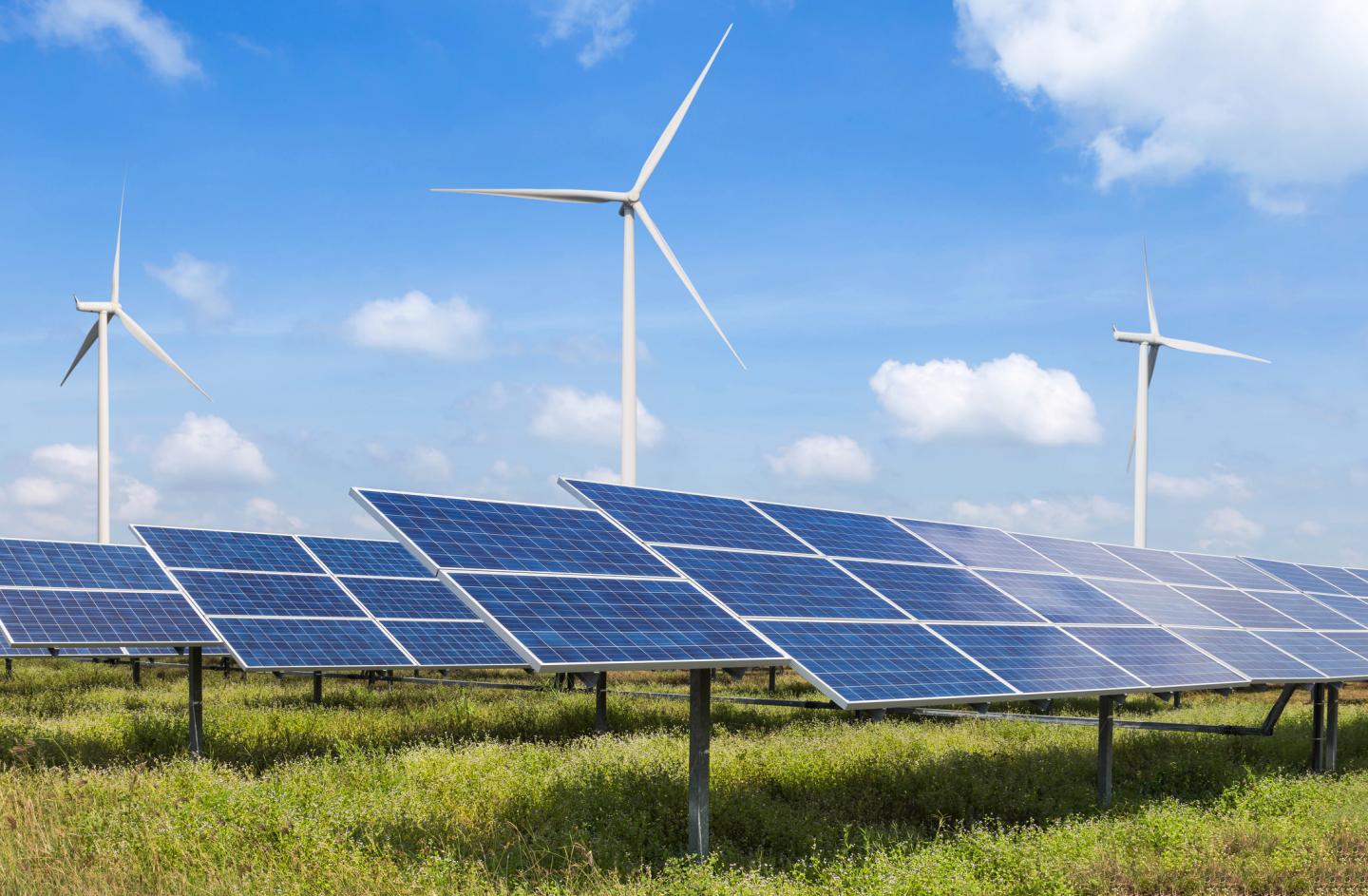
Credit: Lancaster University

Overreliance on promises of new technology to solve climate change is enabling delay, say researchers from Lancaster University.

Their research published in Nature Climate Change calls for an end to a longstanding cycle of technological promises and reframed climate change targets.

Contemporary technological proposals for responding to climate change include nuclear fusion power, giant carbon sucking machines, ice-restoration using millions of wind-powered pumps, and spraying particulates in the stratosphere.

Researchers Duncan McLaren and Nils Markusson from Lancaster Environment Centre say that: “For forty years, climate action has been delayed by technological promises. Contemporary promises are equally dangerous. Our work exposes how such promises have raised expectations of more effective policy options becoming available in the future, and thereby enabled a continued politics of prevarication and inadequate action.

“Prevarication is not necessarily intentional, but such promises can feed systemic ‘moral corruption’, in which current elites are enabled to pursue self-serving pathways, while passing off risk onto vulnerable people in the future and in the global South.

The article describes a history of such promises, showing how the overarching international goal of ‘avoiding dangerous climate change’ has been reinterpreted and differently represented in the light of new modelling methods, scenarios and technological promises.

The researchers argue that the targets, models and technologies have co-evolved in ways that enable delay: “Each novel promise not only competes with existing ideas, but also downplays any sense of urgency, enabling the repeated deferral of political deadlines for climate action and undermining societal commitment to meaningful responses.

They conclude: “Putting our hopes in yet more new technologies is unwise. Instead, cultural, social and political transformation is essential to enable widespread deployment of both behavioural and technological responses to climate change.”

The researchers map the history of climate targets in five phases: “stabilization”, followed by a focus on “percentage emissions reductions”, shifting to “atmospheric concentrations” (expressed in parts per million), “cumulative budgets” (in tonnes of carbon dioxide), and currently “outcome temperatures”.

  • In the first phase (around Rio, 1992) technological promises included improved energy efficiency, large-scale enhancement of carbon sinks, and nuclear power

  • In the second phase around the Kyoto summit (1997) policy promises focused on cutting emissions with efficiency, fuel switching and carbon capture and storage (CCS).

  • In the third phase (around Copenhagen, 2009), CCS became linked to bioenergy, while policy focused on atmospheric concentrations.

  • Phase four saw the development of sophisticated global carbon budgeting models and the emergence of a range of putative negative emissions technologies.

  • Policy in phase five focused increasingly on temperature outcomes, formalised with the Paris accord of 2015.

###

Media Contact
Gillian Whitworth
[email protected]

Related Journal Article

http://dx.doi.org/10.1038/s41558-020-0740-1

Tags: Climate ChangeEarth ScienceEnergy SourcesGuidelines/Treaties/AgreementsPolicy/EthicsTemperature-Dependent Phenomena
Share12Tweet8Share2ShareShareShare2

Related Posts

blank

Physicists Identify Electronic Drivers Behind Flat Band Quantum Materials

March 21, 2026
Würzburg Chemistry Professor Claudia Höbartner Receives Prestigious Honor

Würzburg Chemistry Professor Claudia Höbartner Receives Prestigious Honor

March 20, 2026

Scientists Reveal How Magnets Control Metamaterial Behavior

March 20, 2026

Gallium-Based Liquid Metals: Pioneering Cybernetic Bridges for Human-Machine Integration

March 20, 2026
Please login to join discussion

POPULAR NEWS

  • blank

    Revolutionary AI Model Enhances Precision in Detecting Food Contamination

    96 shares
    Share 38 Tweet 24
  • Imagine a Social Media Feed That Challenges Your Views Instead of Reinforcing Them

    1004 shares
    Share 397 Tweet 248
  • Uncovering Functions of Cavernous Malformation Proteins in Organoids

    54 shares
    Share 22 Tweet 14
  • Promising Outcomes from First Clinical Trials of Gene Regulation in Epilepsy

    51 shares
    Share 20 Tweet 13

About

We bring you the latest biotechnology news from best research centers and universities around the world. Check our website.

Follow us

Recent News

In-Sensor Cryptography Links Physical Process to Digital Identity

Can Psychosocial Factors Influence Cancer Risk?

Depression Factors in Elderly: Pre vs. Post-COVID Analysis

Subscribe to Blog via Email

Enter your email address to subscribe to this blog and receive notifications of new posts by email.

Join 78 other subscribers
  • Contact Us

Bioengineer.org © Copyright 2023 All Rights Reserved.

Welcome Back!

Login to your account below

Forgotten Password?

Retrieve your password

Please enter your username or email address to reset your password.

Log In
No Result
View All Result
  • Homepages
    • Home Page 1
    • Home Page 2
  • News
  • National
  • Business
  • Health
  • Lifestyle
  • Science

Bioengineer.org © Copyright 2023 All Rights Reserved.