• HOME
  • NEWS
  • EXPLORE
    • CAREER
      • Companies
      • Jobs
    • EVENTS
    • iGEM
      • News
      • Team
    • PHOTOS
    • VIDEO
    • WIKI
  • BLOG
  • COMMUNITY
    • FACEBOOK
    • INSTAGRAM
    • TWITTER
Saturday, February 7, 2026
BIOENGINEER.ORG
No Result
View All Result
  • Login
  • HOME
  • NEWS
  • EXPLORE
    • CAREER
      • Companies
      • Jobs
        • Lecturer
        • PhD Studentship
        • Postdoc
        • Research Assistant
    • EVENTS
    • iGEM
      • News
      • Team
    • PHOTOS
    • VIDEO
    • WIKI
  • BLOG
  • COMMUNITY
    • FACEBOOK
    • INSTAGRAM
    • TWITTER
  • HOME
  • NEWS
  • EXPLORE
    • CAREER
      • Companies
      • Jobs
        • Lecturer
        • PhD Studentship
        • Postdoc
        • Research Assistant
    • EVENTS
    • iGEM
      • News
      • Team
    • PHOTOS
    • VIDEO
    • WIKI
  • BLOG
  • COMMUNITY
    • FACEBOOK
    • INSTAGRAM
    • TWITTER
No Result
View All Result
Bioengineer.org
No Result
View All Result
Home NEWS Science News

Researchers to tag air flow of objects moving at previously inaccessible hypersonic speeds

Bioengineer by Bioengineer
April 17, 2020
in Science News
Reading Time: 2 mins read
0
IMAGE
Share on FacebookShare on TwitterShare on LinkedinShare on RedditShare on Telegram

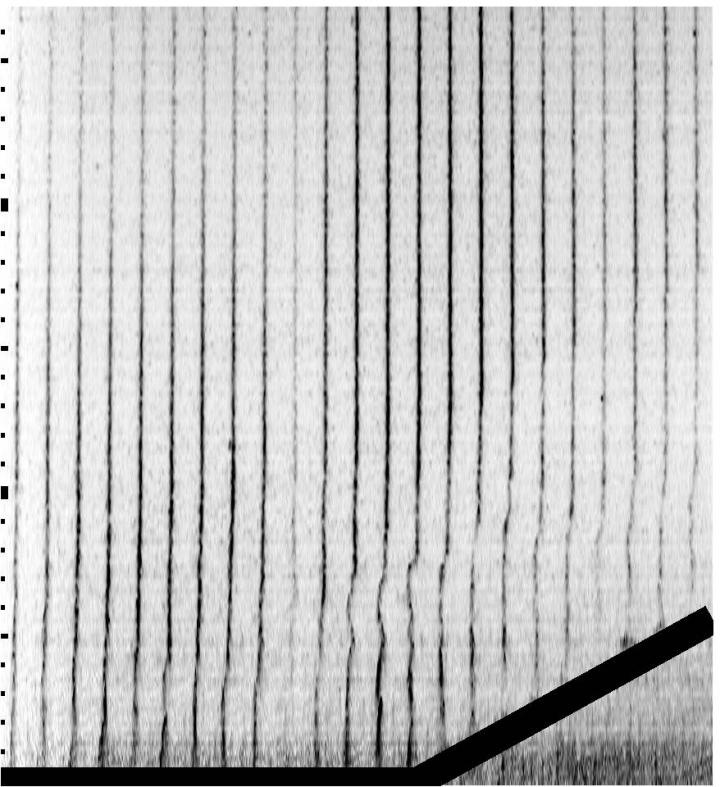
Stevens Institute of Technology will be using a wind tunnel to measure speeds that would make it possible to travel from Los Angeles to Tokyo in an hour
IMAGE

Credit: Stevens Institute of Technology

A day trip from Los Angeles to Tokyo could eventually be possible, but first, we need to be able to measure the flow of air at high speed – seven times the speed of sound (Mach 7), or higher – and understand the variables that impact them.

Nick Parziale, assistant professor in mechanical engineering at Stevens Institute of Technology, has received two awards from the Office of Naval Research, totaling $1,223,000, to support his research measuring transitional and turbulent hypervelocity flows. They include a 2020 Young Investigator Award and a FY20 Defense University Research Instrumentation Program, or DURIP, Award.

Parziale will use these awards to build upon his previous research that focused on developing measurement techniques to study hypersonic boundary layers, the thin gas or liquid layer near an object moving through a fluid. His group will measure how the boundary layer transitions from a well-ordered state to a chaotic one. Parziale will also study the structure of the chaotic state. A vehicle with a chaotic layer will have higher drag and heat transfer, slowing down the speed of an object and increasing the weight requirement of its heat shield. A vehicle with a boundary layer that remains in a well-ordered state can maintain a higher speed with less thermal protection.

“Once we are able to better understand how to measure and assess how and why the boundary layer transitions at hypersonic speeds, the possibilities are endless,” said Parziale. “That data can inform how we design aircraft and make it possible to take day trips across the world.”

Parziale will be conducting this research by taking photos a millionth of a second apart to show how the gas moves in a wind tunnel, by tagging and illuminating it with laser beams. This strategy is broadly called tagging velocimetry. A specific form of tagging velocimetry called krypton tagging velocimetry was developed in a collaborative effort between Arnold Engineering Development Complex and Parziale’s group through the Air Force Summer Faculty Fellowship Program.

“The concept is similar to if you took multiple photos of a stick moving down a creek,” Parziale explained. “You will be able to calculate how the object has moved based on how it shifts between photos. To make the “stick” in our hypersonic flows, we zap or “tag” the gas with a specialized laser.”

He is currently building a Mach 6 wind tunnel on the Stevens campus this year with the support of an FY19 ONR-DURIP Award, totaling $301,000. The research that made this work possible was performed as part of an award from the Air Force Office of Scientific Research, or AFOSR ,Young Investigator Research Program in 2016, an FY2015 AFOSR-DURIP and an FY2019 AFOSR-DURIP.

###

Media Contact
Thania Benios
[email protected]

Original Source

https://www.stevens.edu/news/researchers-tag-air-flow-objects-moving-previously-inaccessible-hypersonic-speeds

Tags: Mechanical EngineeringTechnology/Engineering/Computer ScienceVehicles
Share12Tweet8Share2ShareShareShare2

Related Posts

Evaluating Pediatric Emergency Care Quality in Ethiopia

February 7, 2026

TPMT Expression Predictions Linked to Azathioprine Side Effects

February 7, 2026

Improving Dementia Care with Enhanced Activity Kits

February 7, 2026

Decoding Prostate Cancer Origins via snFLARE-seq, mxFRIZNGRND

February 7, 2026
Please login to join discussion

POPULAR NEWS

  • Robotic Ureteral Reconstruction: A Novel Approach

    Robotic Ureteral Reconstruction: A Novel Approach

    82 shares
    Share 33 Tweet 21
  • Digital Privacy: Health Data Control in Incarceration

    63 shares
    Share 25 Tweet 16
  • Study Reveals Lipid Accumulation in ME/CFS Cells

    57 shares
    Share 23 Tweet 14
  • Breakthrough in RNA Research Accelerates Medical Innovations Timeline

    53 shares
    Share 21 Tweet 13

About

We bring you the latest biotechnology news from best research centers and universities around the world. Check our website.

Follow us

Recent News

Evaluating Pediatric Emergency Care Quality in Ethiopia

TPMT Expression Predictions Linked to Azathioprine Side Effects

Improving Dementia Care with Enhanced Activity Kits

Subscribe to Blog via Email

Success! An email was just sent to confirm your subscription. Please find the email now and click 'Confirm' to start subscribing.

Join 73 other subscribers
  • Contact Us

Bioengineer.org © Copyright 2023 All Rights Reserved.

Welcome Back!

Login to your account below

Forgotten Password?

Retrieve your password

Please enter your username or email address to reset your password.

Log In
No Result
View All Result
  • Homepages
    • Home Page 1
    • Home Page 2
  • News
  • National
  • Business
  • Health
  • Lifestyle
  • Science

Bioengineer.org © Copyright 2023 All Rights Reserved.