• HOME
  • NEWS
  • EXPLORE
    • CAREER
      • Companies
      • Jobs
    • EVENTS
    • iGEM
      • News
      • Team
    • PHOTOS
    • VIDEO
    • WIKI
  • BLOG
  • COMMUNITY
    • FACEBOOK
    • INSTAGRAM
    • TWITTER
Saturday, February 7, 2026
BIOENGINEER.ORG
No Result
View All Result
  • Login
  • HOME
  • NEWS
  • EXPLORE
    • CAREER
      • Companies
      • Jobs
        • Lecturer
        • PhD Studentship
        • Postdoc
        • Research Assistant
    • EVENTS
    • iGEM
      • News
      • Team
    • PHOTOS
    • VIDEO
    • WIKI
  • BLOG
  • COMMUNITY
    • FACEBOOK
    • INSTAGRAM
    • TWITTER
  • HOME
  • NEWS
  • EXPLORE
    • CAREER
      • Companies
      • Jobs
        • Lecturer
        • PhD Studentship
        • Postdoc
        • Research Assistant
    • EVENTS
    • iGEM
      • News
      • Team
    • PHOTOS
    • VIDEO
    • WIKI
  • BLOG
  • COMMUNITY
    • FACEBOOK
    • INSTAGRAM
    • TWITTER
No Result
View All Result
Bioengineer.org
No Result
View All Result
Home NEWS Science News Chemistry

Pushing the limits of 2D supramolecules

Bioengineer by Bioengineer
April 16, 2020
in Chemistry
Reading Time: 2 mins read
0
IMAGE
Share on FacebookShare on TwitterShare on LinkedinShare on RedditShare on Telegram

IMAGE

Credit: University of South Florida

Scientists at the University of South Florida have reached a new milestone in the development of two-dimensional supramolecules – the building blocks that make areas of nanotechnology and nanomaterial advancement possible.

Since the 2004 discovery of graphene, the world’s thinnest (one-atom-thick) and strongest (200 times stronger than steel) material, researchers have been working to further develop similar nanomaterials for industrial, pharmaceutical and other commercial uses. Thanks to its conductive properties and strength, graphene can be used in microelectronics to fortify mechanical materials and has recently enabled precise 3D imaging of nanoparticles.

While work to develop new supramolecules capable of further applications has seen some success, those molecular formations are either small – less than 10 nanometers in size – or arbitrarily assemble, limiting their potential use. But now, new research published in Nature Chemistry, outlines a profound leap forward in supramolecular progress.

“Our research team has been able to overcome one of the major supramolecular obstacles, developing a well-defined supramolecular structure that pushes the 20-nanometer scale,” said Xiaopeng Li, an associate professor in the USF Department of Chemistry and the study’s lead researcher. “It’s essentially a world record for this area of chemistry.”

Li, along with his USF research team, collaborated with Saw Wai Hia’s team at the Argonne National Laboratory and Ohio University, as well as several other U.S. and international research institutes on this effort.

Supramolecules are large molecular structures made up of individual molecules. Unlike traditional chemistry, which focuses on covalent bonds between atoms, supramolecular chemistry studies the noncovalent interactions between molecules themselves. Many times, these interactions lead to molecular self-assembly, naturally forming complex structures capable of performing a variety of functions.

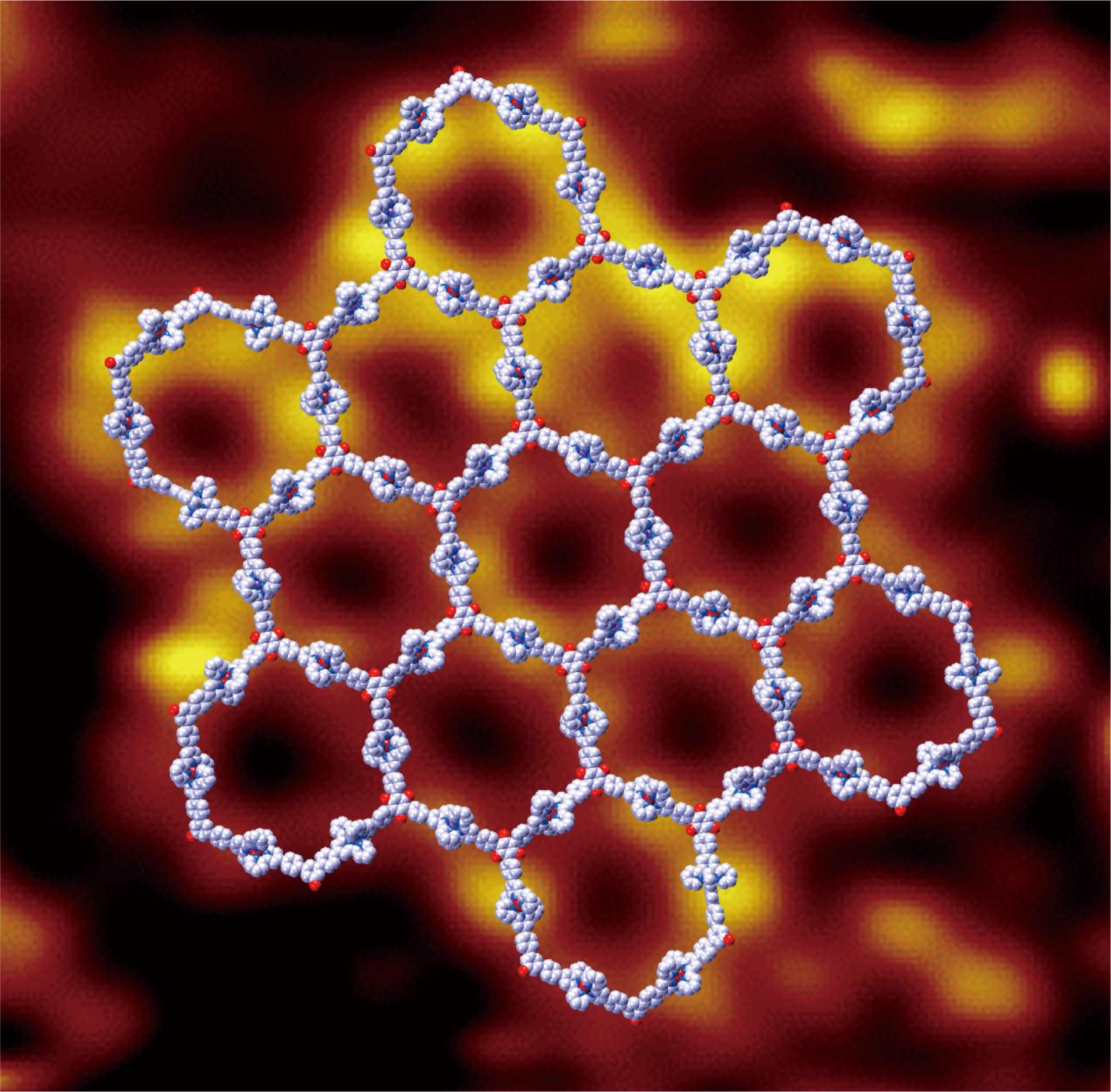
In this latest study, the team was able to build a 20-nm-wide metallo-supramolecular hexagonal grid by combining intra- and intermolecular self-assembly processes. Li says the success of this work will advance further understanding of the design principles governing these molecular formations and could one day lead to the development of new materials with yet-to-be-discovered functions and properties.

###

Media Contact
Tina Meketa
[email protected]

Original Source

https://www.usf.edu/news/2020/pushing-the-limits-of-2d-supramolecules.aspx

Tags: Chemistry/Physics/Materials Sciences
Share12Tweet8Share2ShareShareShare2

Related Posts

blank

Breakthrough in Environmental Cleanup: Scientists Develop Solar-Activated Biochar for Faster Remediation

February 7, 2026
blank

Cutting Costs: Making Hydrogen Fuel Cells More Affordable

February 6, 2026

Scientists Develop Hand-Held “Levitating” Time Crystals

February 6, 2026

Observing a Key Green-Energy Catalyst Dissolve Atom by Atom

February 6, 2026
Please login to join discussion

POPULAR NEWS

  • Robotic Ureteral Reconstruction: A Novel Approach

    Robotic Ureteral Reconstruction: A Novel Approach

    82 shares
    Share 33 Tweet 21
  • Digital Privacy: Health Data Control in Incarceration

    63 shares
    Share 25 Tweet 16
  • Study Reveals Lipid Accumulation in ME/CFS Cells

    57 shares
    Share 23 Tweet 14
  • Breakthrough in RNA Research Accelerates Medical Innovations Timeline

    53 shares
    Share 21 Tweet 13

About

We bring you the latest biotechnology news from best research centers and universities around the world. Check our website.

Follow us

Recent News

Evaluating Pediatric Emergency Care Quality in Ethiopia

TPMT Expression Predictions Linked to Azathioprine Side Effects

Improving Dementia Care with Enhanced Activity Kits

Subscribe to Blog via Email

Success! An email was just sent to confirm your subscription. Please find the email now and click 'Confirm' to start subscribing.

Join 73 other subscribers
  • Contact Us

Bioengineer.org © Copyright 2023 All Rights Reserved.

Welcome Back!

Login to your account below

Forgotten Password?

Retrieve your password

Please enter your username or email address to reset your password.

Log In
No Result
View All Result
  • Homepages
    • Home Page 1
    • Home Page 2
  • News
  • National
  • Business
  • Health
  • Lifestyle
  • Science

Bioengineer.org © Copyright 2023 All Rights Reserved.