On underwater recordings, over 90% of sounds were anthropogenic, with others made by fish and as-yet unidentified biological sources
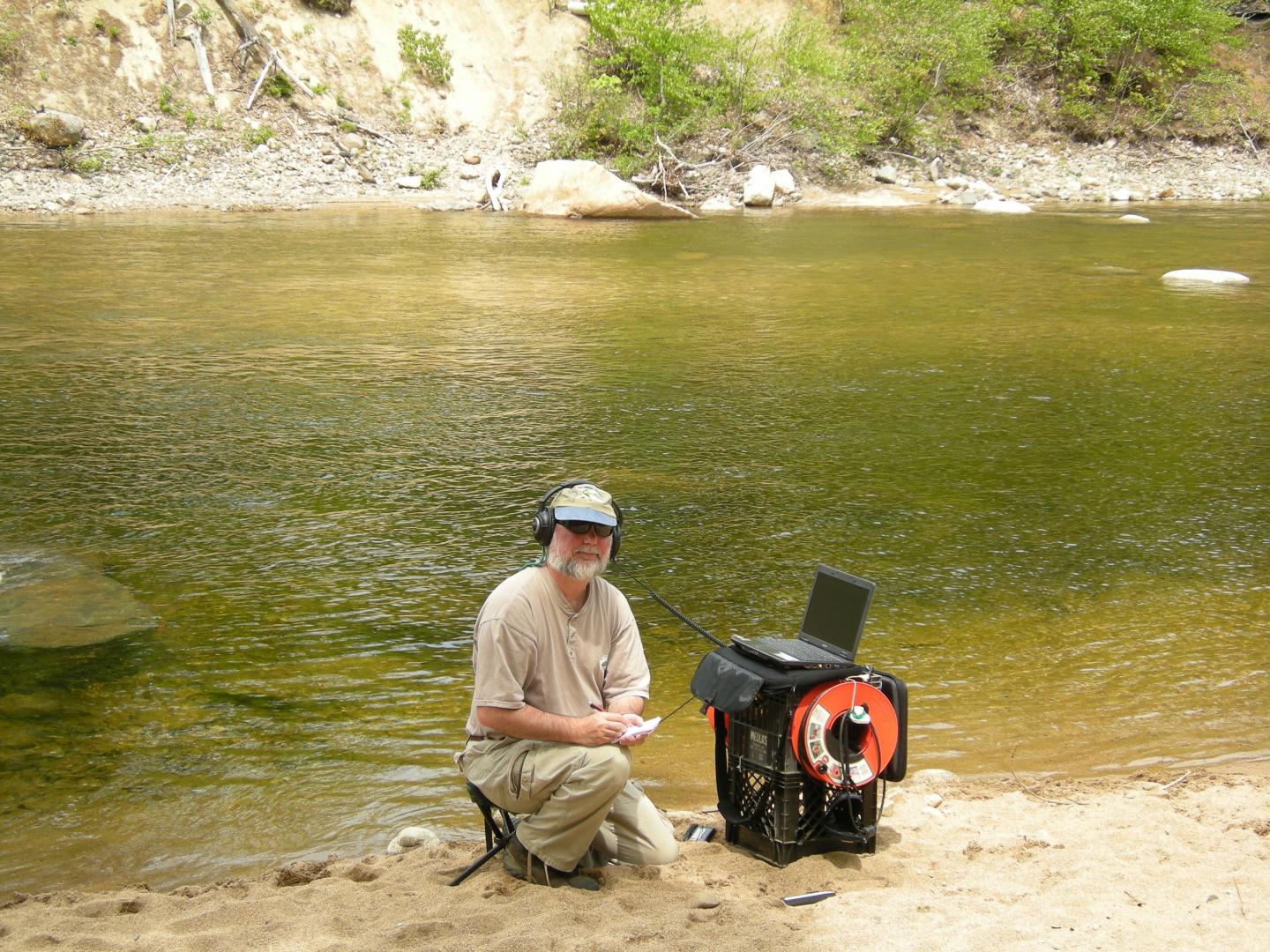
Credit: Rountree et al (2020)
Sounds produced by human activities–anthropogenic sounds–account for more than 90 percent of the underwater soundscape in major freshwater habitats of New England. Rodney Rountree of The Fish Listener in Massachusetts, and Adjunct Associate Professor at the University of Victoria, and colleagues present these findings in the open-access journal PLOS ONE on March 18, 2020.
Many organisms use sound to communicate or take cues from sounds in their ecosystem, including sounds produced by other organisms. For researchers, biological sounds can also serve as fingerprints of different species and behaviors. Anthropogenic sounds, such as those produced by boats, disrupt biological soundscapes. However, a lack of data on natural soundscapes hampers assessment of such threats in freshwater ecosystems.
To improve understanding of freshwater soundscapes, Rountree and colleagues recorded 2,750 minutes of underwater sounds in 173 locations across lakes, ponds, rivers, and streams representing five major river systems in New England. The scientists identified over 7,000 distinct sounds, which they categorized as anthropogenic, biological, or unknown in origin.
Most of the biological sounds recorded were from unknown sources but had acoustic features marking them as biological. The study was the first to document widespread occurrence of noises associated with movement of air within or released from fishes’ bodies such as farts, burps and coughs.
The researchers identified anthropogenic sources–such as boats, planes, and fishing activities, –as accounting for over 90 percent of the recorded sounds. They noted that areas with higher overall sound levels had a lower number and diversity of biological sounds, and that the timing and acoustic features of anthropogenic sounds often overlapped those of the biological sounds.
Together, these findings suggest the potential for anthropogenic sounds to negatively impact freshwater soundscapes. Further research will be needed to identify the still-unknown components of the freshwater biological soundscape, and to fully assess anthropogenic threats.
Lead author Rountree says: “We are amazed by the widespread occurrence of sounds in different freshwater habitats including unexpectedly abundant fish farts, burps and coughs. We also found that human-caused noise dominates the freshwater soundscape, which may have detrimental impacts on animals that have evolved in otherwise relative quiet environments.”
Co-author Francis Juanes adds: “Identifying biological and human-made sounds is a powerful way to study aquatic ecosystems and has important applications in conservation, fisheries management, and invasive species monitoring.”
Finally, co-author Marta Bolgan notes: “I think this study represents an important call to action for increasing our understanding of freshwater soundscapes’ composition and dynamics and for starting to fill the knowledge and legislative gaps regarding man-made noise monitoring and management in inland waters.”
###
In your coverage please use this URL to provide access to the freely available article in PLOS ONE: http://journals.
Citation: Rountree RA, Juanes F, Bolgan M (2020) Temperate freshwater soundscapes: A cacophony of undescribed biological sounds now threatened by anthropogenic noise. PLoS ONE 15(3): e0221842. https:/
Funding: This work was funded by The Eppley Foundation for Research to RR. The funder had no role in study design, data collection and analysis, decision to publish, or preparation of the manuscript.
Competing Interests: The authors have declared that no competing interests exist.
Media Contact
Jennifer Kwan
[email protected]
Related Journal Article
http://dx.