• HOME
  • NEWS
  • EXPLORE
    • CAREER
      • Companies
      • Jobs
    • EVENTS
    • iGEM
      • News
      • Team
    • PHOTOS
    • VIDEO
    • WIKI
  • BLOG
  • COMMUNITY
    • FACEBOOK
    • INSTAGRAM
    • TWITTER
Saturday, February 7, 2026
BIOENGINEER.ORG
No Result
View All Result
  • Login
  • HOME
  • NEWS
  • EXPLORE
    • CAREER
      • Companies
      • Jobs
        • Lecturer
        • PhD Studentship
        • Postdoc
        • Research Assistant
    • EVENTS
    • iGEM
      • News
      • Team
    • PHOTOS
    • VIDEO
    • WIKI
  • BLOG
  • COMMUNITY
    • FACEBOOK
    • INSTAGRAM
    • TWITTER
  • HOME
  • NEWS
  • EXPLORE
    • CAREER
      • Companies
      • Jobs
        • Lecturer
        • PhD Studentship
        • Postdoc
        • Research Assistant
    • EVENTS
    • iGEM
      • News
      • Team
    • PHOTOS
    • VIDEO
    • WIKI
  • BLOG
  • COMMUNITY
    • FACEBOOK
    • INSTAGRAM
    • TWITTER
No Result
View All Result
Bioengineer.org
No Result
View All Result
Home NEWS Science News Biology

The naming of the shrew

Bioengineer by Bioengineer
March 11, 2020
in Biology
Reading Time: 3 mins read
0
IMAGE
Share on FacebookShare on TwitterShare on LinkedinShare on RedditShare on Telegram

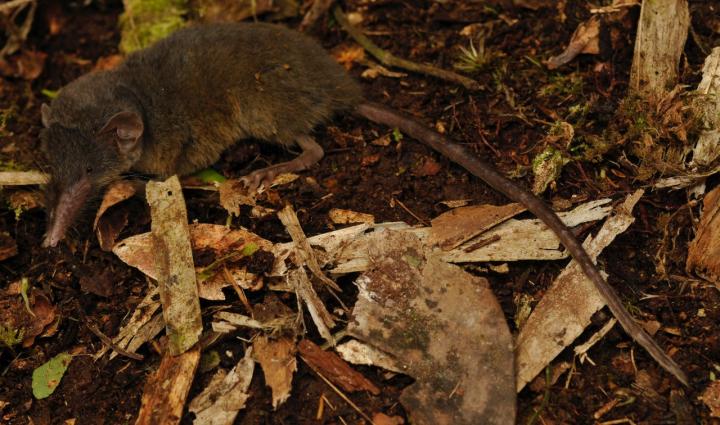
Researchers discover the Sulawesi hairy-tailed shrew
IMAGE

Credit: Kevin Rowe, Museums Victoria.


Researchers at Louisiana State University have discovered a new species of shrew, which they have named the hairy-tailed shrew, or Crocidura caudipilosa.

“There was no doubt that this was a new species,” said LSU Museum of Natural Science Mammal Curator Jake Esselstyn whose work on Sulawesi Island in Indonesia led to the discovery published in the Journal of Mammalogy. “There isn’t another species on the island that has as much hair on its tail, in terms of shrews.”

The newly discovered shrew is slender with gray-brown fur on its back and silver-gray fur on its belly. Its tail is slightly longer than the combined length of its head and body and is covered with long bristles and hair, which make the distinctive tail very hirsute. In fact, no other shrew species in Indonesia, Malaysia or the Philippines is known to have such thick, long hair on its tail; however, some shrew species in Africa have very hairy tails. The scientists were also surprised to discover that this shrew climbs trees whereas most shrews live primarily on the ground, as far as anyone knows.

The Sulawesi hairy-tailed shrew was found on nine mountains across Sulawesi at various elevations from 1,500 feet to 4,800 feet.

“Tropical diversity is still not well documented even for mammals with a wide distribution on this island. This discovery shows how little we still know about mammal diversity,” Esselstyn said.

Puzzling pieces

The real challenge was figuring out which shrew is its closest relative and how this new species fits into the shrew family tree. Shrews’ features do not change very much over time, which means closely related species tend to look very similar and are hard to distinguish from each other. This has posed a challenge for mammalogists in the past to discover new shrew species.

“Genetic data have revolutionized what we can distinguish between shrews. A lot of species are first recognized as being genetically distinct, then we look at its morphology, or physical features,” Esselstyn said.

Deforestation and degradation of natural habitats have also posed a challenge for discovering new species. For example, a few shrew specimens were collected in the early 20th century, but when scientists return to the same location where the early specimens were collected, the habitat is no longer a forest. It is a farm.

Despite these challenges, Esselstyn and his colleagues and students have also discovered several new mammals in Indonesia including the hog-nosed rat, the Sulawesi water rat and the slender root rat as well as the sky island moss shrew in the Philippines.

Meanwhile at the LSU Museum of Natural Science, they continue to search and analyze specimens for more new species and to help put the pieces of the large tree of life puzzle together.

###

Media Contact
Alison Satake
[email protected]
225-578-3870

Original Source

https://www.lsu.edu/mediacenter/news/2020/03/11mns_esselstyn_hairytailedshrew.php

Related Journal Article

http://dx.doi.org/10.1093/jmammal/gyz077

Tags: BiodiversityBiologyEcology/EnvironmentEvolutionGeneticsPopulation Biology
Share12Tweet8Share2ShareShareShare2

Related Posts

Florida Cane Toad: Complex Spread and Selective Evolution

Florida Cane Toad: Complex Spread and Selective Evolution

February 7, 2026
New Study Uncovers Mechanism Behind Burn Pit Particulate Matter–Induced Lung Inflammation

New Study Uncovers Mechanism Behind Burn Pit Particulate Matter–Induced Lung Inflammation

February 6, 2026

DeepBlastoid: Advancing Automated and Efficient Evaluation of Human Blastoids with Deep Learning

February 6, 2026

Navigating the Gut: The Role of Formic Acid in the Microbiome

February 6, 2026
Please login to join discussion

POPULAR NEWS

  • Robotic Ureteral Reconstruction: A Novel Approach

    Robotic Ureteral Reconstruction: A Novel Approach

    82 shares
    Share 33 Tweet 21
  • Digital Privacy: Health Data Control in Incarceration

    63 shares
    Share 25 Tweet 16
  • Study Reveals Lipid Accumulation in ME/CFS Cells

    57 shares
    Share 23 Tweet 14
  • Breakthrough in RNA Research Accelerates Medical Innovations Timeline

    53 shares
    Share 21 Tweet 13

About

We bring you the latest biotechnology news from best research centers and universities around the world. Check our website.

Follow us

Recent News

Phage-Antibiotic Combo Beats Resistant Peritoneal Infection

Boosting Remote Healthcare: Stepped-Wedge Trial Insights

Barriers and Boosters of Seniors’ Physical Activity in Karachi

Subscribe to Blog via Email

Enter your email address to subscribe to this blog and receive notifications of new posts by email.

Join 73 other subscribers
  • Contact Us

Bioengineer.org © Copyright 2023 All Rights Reserved.

Welcome Back!

Login to your account below

Forgotten Password?

Retrieve your password

Please enter your username or email address to reset your password.

Log In
No Result
View All Result
  • Homepages
    • Home Page 1
    • Home Page 2
  • News
  • National
  • Business
  • Health
  • Lifestyle
  • Science

Bioengineer.org © Copyright 2023 All Rights Reserved.