• HOME
  • NEWS
  • EXPLORE
    • CAREER
      • Companies
      • Jobs
    • EVENTS
    • iGEM
      • News
      • Team
    • PHOTOS
    • VIDEO
    • WIKI
  • BLOG
  • COMMUNITY
    • FACEBOOK
    • INSTAGRAM
    • TWITTER
Saturday, February 7, 2026
BIOENGINEER.ORG
No Result
View All Result
  • Login
  • HOME
  • NEWS
  • EXPLORE
    • CAREER
      • Companies
      • Jobs
        • Lecturer
        • PhD Studentship
        • Postdoc
        • Research Assistant
    • EVENTS
    • iGEM
      • News
      • Team
    • PHOTOS
    • VIDEO
    • WIKI
  • BLOG
  • COMMUNITY
    • FACEBOOK
    • INSTAGRAM
    • TWITTER
  • HOME
  • NEWS
  • EXPLORE
    • CAREER
      • Companies
      • Jobs
        • Lecturer
        • PhD Studentship
        • Postdoc
        • Research Assistant
    • EVENTS
    • iGEM
      • News
      • Team
    • PHOTOS
    • VIDEO
    • WIKI
  • BLOG
  • COMMUNITY
    • FACEBOOK
    • INSTAGRAM
    • TWITTER
No Result
View All Result
Bioengineer.org
No Result
View All Result
Home NEWS Science News Biology

The enemy within: How a killer hijacked one of nature’s oldest relationships

Bioengineer by Bioengineer
February 28, 2020
in Biology
Reading Time: 2 mins read
0
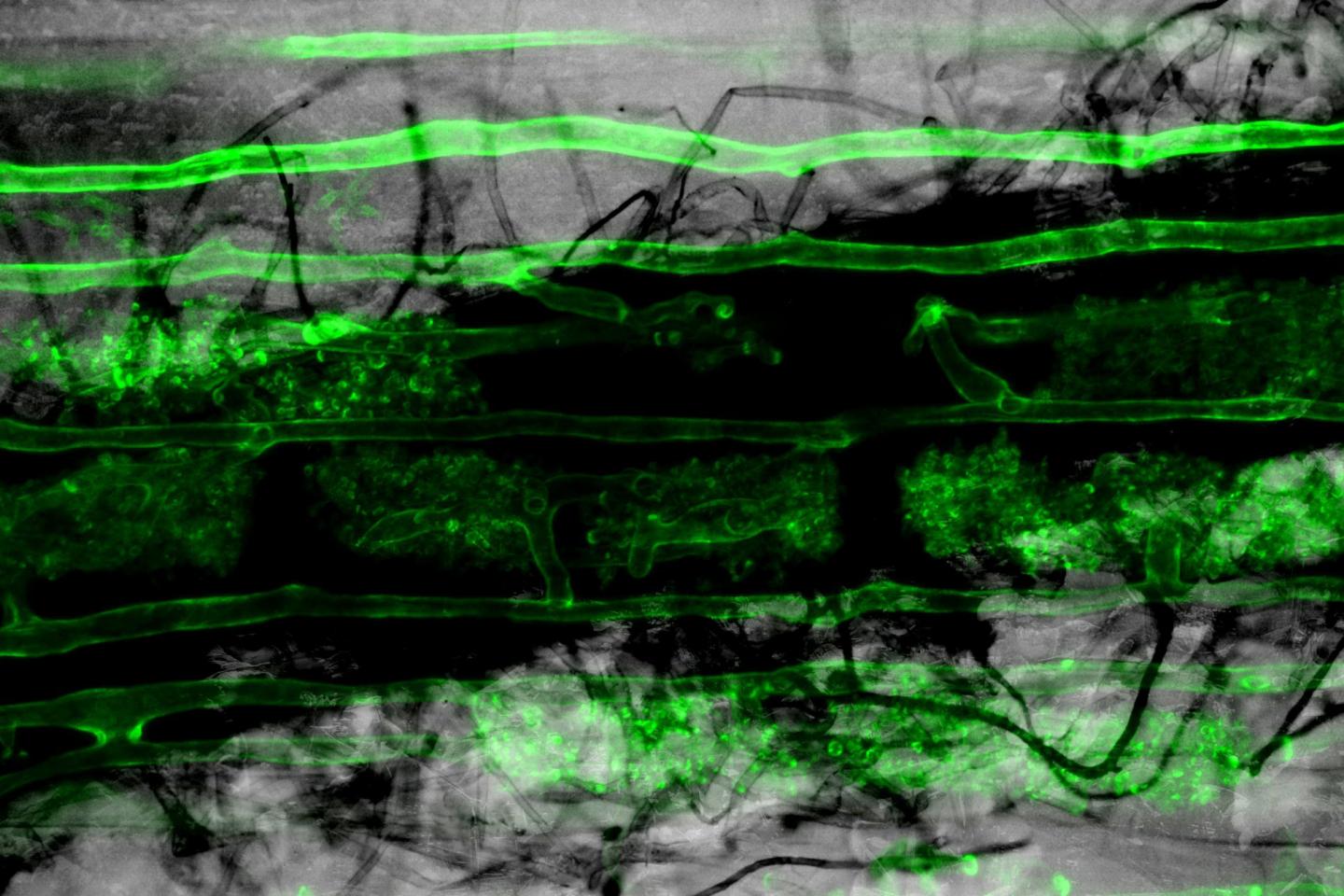
IMAGE
Share on FacebookShare on TwitterShare on LinkedinShare on RedditShare on Telegram

IMAGE

Credit: Henry Driver (commissioned by Essex County Council).

Researchers have discovered how a notorious pathogen may have hijacked one of nature’s most enduring mutual relationships.

The work sheds new light on a long-standing enigma about why plants possess genes that appear to be detrimental to their well-being.

It’s long been known that the Mildew Locus O (MLO) gene causes the majority of major crops to be susceptible to the fungal leaf pathogen powdery mildew. Loss of the gene causes durable and robust resistance to the pathogen.

But if this gene is disadvantageous to the host, why has it been conserved throughout evolutionary history? Does this susceptibility factor also fulfil some other beneficial role?

In a joint project between the John Innes Centre and the Shanghai Institute of Plant Physiology and Ecology, scientists found that the MLO gene needed by the powdery mildew pathogens is also used by symbiotic mycorrhizal fungi that help plants obtain nutrients from the soil.

Mycorrhizal fungi are beneficial soil microorganisms that establish symbiotic interactions in plant roots and contribute to nutrient uptake. Powdery mildews are serious leaf fungal pathogens that infect many different plant genera and cause significant crop losses in agriculture.

Importantly, the MLO gene and mycorrhizal symbiosis appeared very early in the evolution of land plants, millions of years before the occurrence of powdery mildew fungi.

In this study, experiments showed that mycorrhizal colonisation was reduced in mutant plants of barley, wheat and Medicago truncatula which did not express the MLO gene. This was accompanied by a pronounced decrease in the expression of many key genes required for accommodation of arbuscular mycorrhizal fungi inside plant cells. The findings suggest the primary role for MLO in flowering plants is in colonisation by the arbuscular mycorrhizal fungi, and that this role has been appropriated by powdery mildew.

The MLO gene is present in a wide variety of plants including important crops such as rice, wheat and legumes. The results have important implications for crop improvement and for sustainable agriculture to enhance beneficial mycorrhizal interactions while reducing losses from disease.

“The MLO gene has been widely studied for its role in powdery mildew resistance, although its ancestral role has remained elusive,” explains first author Dr Catherine Jacott.

“Since mycorrhizal fungi and powdery mildew respectively infect root and shoot, it may be possible to generate cereals that could fully support mycorrhiza while remaining non-hosts for powdery mildew.”

The study: Mildew Locus O facilitates colonization by arbuscular mycorrhiza in angiosperms, appears in New Phytologist journal.

###

Media Contact
Adrian Galvin
[email protected]
01-603-450-238

Related Journal Article

http://dx.doi.org/10.1111/nph.16465

Tags: Agricultural Production/EconomicsAgricultureBiologyFertilizers/Pest ManagementGenesGeneticsMicrobiologyMolecular BiologyParasitology
Share12Tweet8Share2ShareShareShare2

Related Posts

Florida Cane Toad: Complex Spread and Selective Evolution

Florida Cane Toad: Complex Spread and Selective Evolution

February 7, 2026
New Study Uncovers Mechanism Behind Burn Pit Particulate Matter–Induced Lung Inflammation

New Study Uncovers Mechanism Behind Burn Pit Particulate Matter–Induced Lung Inflammation

February 6, 2026

DeepBlastoid: Advancing Automated and Efficient Evaluation of Human Blastoids with Deep Learning

February 6, 2026

Navigating the Gut: The Role of Formic Acid in the Microbiome

February 6, 2026
Please login to join discussion

POPULAR NEWS

  • Robotic Ureteral Reconstruction: A Novel Approach

    Robotic Ureteral Reconstruction: A Novel Approach

    82 shares
    Share 33 Tweet 21
  • Digital Privacy: Health Data Control in Incarceration

    63 shares
    Share 25 Tweet 16
  • Study Reveals Lipid Accumulation in ME/CFS Cells

    57 shares
    Share 23 Tweet 14
  • Breakthrough in RNA Research Accelerates Medical Innovations Timeline

    53 shares
    Share 21 Tweet 13

About

We bring you the latest biotechnology news from best research centers and universities around the world. Check our website.

Follow us

Recent News

Personalized Guide to Understanding and Reducing Chemicals

Inflammasome Protein ASC Drives Pancreatic Cancer Metabolism

Phage-Antibiotic Combo Beats Resistant Peritoneal Infection

Subscribe to Blog via Email

Enter your email address to subscribe to this blog and receive notifications of new posts by email.

Join 73 other subscribers
  • Contact Us

Bioengineer.org © Copyright 2023 All Rights Reserved.

Welcome Back!

Login to your account below

Forgotten Password?

Retrieve your password

Please enter your username or email address to reset your password.

Log In
No Result
View All Result
  • Homepages
    • Home Page 1
    • Home Page 2
  • News
  • National
  • Business
  • Health
  • Lifestyle
  • Science

Bioengineer.org © Copyright 2023 All Rights Reserved.