• HOME
  • NEWS
  • EXPLORE
    • CAREER
      • Companies
      • Jobs
    • EVENTS
    • iGEM
      • News
      • Team
    • PHOTOS
    • VIDEO
    • WIKI
  • BLOG
  • COMMUNITY
    • FACEBOOK
    • INSTAGRAM
    • TWITTER
Saturday, February 7, 2026
BIOENGINEER.ORG
No Result
View All Result
  • Login
  • HOME
  • NEWS
  • EXPLORE
    • CAREER
      • Companies
      • Jobs
        • Lecturer
        • PhD Studentship
        • Postdoc
        • Research Assistant
    • EVENTS
    • iGEM
      • News
      • Team
    • PHOTOS
    • VIDEO
    • WIKI
  • BLOG
  • COMMUNITY
    • FACEBOOK
    • INSTAGRAM
    • TWITTER
  • HOME
  • NEWS
  • EXPLORE
    • CAREER
      • Companies
      • Jobs
        • Lecturer
        • PhD Studentship
        • Postdoc
        • Research Assistant
    • EVENTS
    • iGEM
      • News
      • Team
    • PHOTOS
    • VIDEO
    • WIKI
  • BLOG
  • COMMUNITY
    • FACEBOOK
    • INSTAGRAM
    • TWITTER
No Result
View All Result
Bioengineer.org
No Result
View All Result
Home NEWS Science News Biology

Deaf moths evolved noise-cancelling scales to evade prey

Bioengineer by Bioengineer
February 26, 2020
in Biology
Reading Time: 2 mins read
0
IMAGE
Share on FacebookShare on TwitterShare on LinkedinShare on RedditShare on Telegram

Scales shown to be more efficient than today’s sound engineering technology
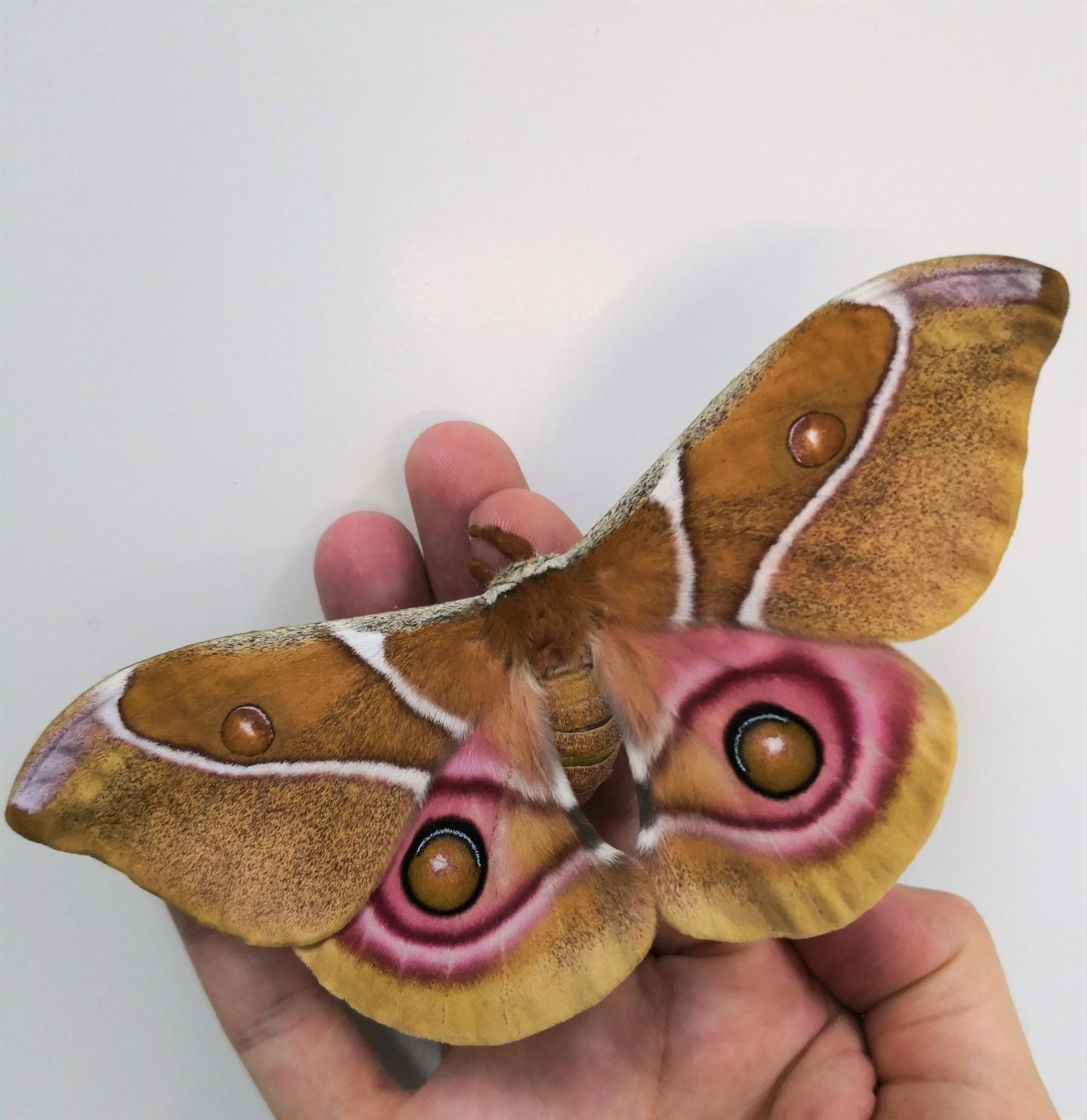
IMAGE

Credit: Thomas R. Neil


Some species of deaf moths can absorb as much as 85 per cent of the incoming sound energy from predatory bats — who use echolocation to detect them. The findings, published in Royal Society Interface today [25 February], reveal the moths, who are unable to hear the ultrasonic calls of bats, have evolved this clever defensive strategy to help it survive.

Bats hunt at night using echolocation. The technique, which is also known as biological sonar, first evolved around 65 million years ago and enables bats to search for and find prey putting huge predation pressure on nocturnal insects. One defence that many nocturnal insects evolved is the ability to hear the ultrasonic calls of bats, which allows them to actively evade approaching bats.

Many moth species, however, cannot hear. The team of researchers from the University of Bristol wanted to investigate the alternative defences against bats that some species of deaf moths might have evolved.

Using scanning electron microscopy, the team from Bristol’s School of Biological Sciences discovered that the thorax scales of the moths Antherina suraka and Callosamia promethea looked structurally similar to fibres that are used as noise insulation, so wanted to explore whether the thorax scales of moths might be acting in some way to absorb the ultrasonic clicks of bats and dampen the echoes returning to the bat, offering the moths a type of acoustic camouflage.

The team measured that the scales on the body of a moth absorb as much as 85 per cent of the incoming sound energy and that the scales can reduce the distance a bat would be able to detect a moth by almost 25 per cent, potentially offering the moth a significant increase in its survival chances.

Dr Thomas Neil, Research Associate from Bristol’s School of Biological Sciences and lead author, said: “We were amazed to see that these extraordinary insects were able to achieve the same levels of sound absorption as commercially available technical sound absorbers, whilst at the same time being much thinner and lighter.

“We are now looking at ways in which we can use these biological systems to inspire new solutions to sound insulating technology and analyse the scaling on a moth’s wing to explore whether they too have sound absorbing properties.”

###

The study was funded by the Biotechnology and Biological Sciences Research Council (BBSRC) and the Engineering and Physical Sciences Research Council (EPSRC).

Paper

‘Thoracic scales of moths as a stealth coating against bat biosonar’ by Thomas R. Neil, Zhiyuan Shen, Daniel Robert, Bruce W. Drinkwater and Marc W. Holderied in Royal Society Interface

Media Contact
Joanne Fryer
[email protected]
44-011-739-40227

Related Journal Article

http://dx.doi.org/10.1098/rsif.2019.0692

Tags: BiologyEntomologyEvolution
Share12Tweet8Share2ShareShareShare2

Related Posts

Florida Cane Toad: Complex Spread and Selective Evolution

Florida Cane Toad: Complex Spread and Selective Evolution

February 7, 2026
New Study Uncovers Mechanism Behind Burn Pit Particulate Matter–Induced Lung Inflammation

New Study Uncovers Mechanism Behind Burn Pit Particulate Matter–Induced Lung Inflammation

February 6, 2026

DeepBlastoid: Advancing Automated and Efficient Evaluation of Human Blastoids with Deep Learning

February 6, 2026

Navigating the Gut: The Role of Formic Acid in the Microbiome

February 6, 2026
Please login to join discussion

POPULAR NEWS

  • Robotic Ureteral Reconstruction: A Novel Approach

    Robotic Ureteral Reconstruction: A Novel Approach

    82 shares
    Share 33 Tweet 21
  • Digital Privacy: Health Data Control in Incarceration

    63 shares
    Share 25 Tweet 16
  • Study Reveals Lipid Accumulation in ME/CFS Cells

    57 shares
    Share 23 Tweet 14
  • Breakthrough in RNA Research Accelerates Medical Innovations Timeline

    53 shares
    Share 21 Tweet 13

About

We bring you the latest biotechnology news from best research centers and universities around the world. Check our website.

Follow us

Recent News

Evaluating Pediatric Emergency Care Quality in Ethiopia

TPMT Expression Predictions Linked to Azathioprine Side Effects

Improving Dementia Care with Enhanced Activity Kits

Subscribe to Blog via Email

Enter your email address to subscribe to this blog and receive notifications of new posts by email.

Join 73 other subscribers
  • Contact Us

Bioengineer.org © Copyright 2023 All Rights Reserved.

Welcome Back!

Login to your account below

Forgotten Password?

Retrieve your password

Please enter your username or email address to reset your password.

Log In
No Result
View All Result
  • Homepages
    • Home Page 1
    • Home Page 2
  • News
  • National
  • Business
  • Health
  • Lifestyle
  • Science

Bioengineer.org © Copyright 2023 All Rights Reserved.