• HOME
  • NEWS
  • EXPLORE
    • CAREER
      • Companies
      • Jobs
    • EVENTS
    • iGEM
      • News
      • Team
    • PHOTOS
    • VIDEO
    • WIKI
  • BLOG
  • COMMUNITY
    • FACEBOOK
    • INSTAGRAM
    • TWITTER
Saturday, February 7, 2026
BIOENGINEER.ORG
No Result
View All Result
  • Login
  • HOME
  • NEWS
  • EXPLORE
    • CAREER
      • Companies
      • Jobs
        • Lecturer
        • PhD Studentship
        • Postdoc
        • Research Assistant
    • EVENTS
    • iGEM
      • News
      • Team
    • PHOTOS
    • VIDEO
    • WIKI
  • BLOG
  • COMMUNITY
    • FACEBOOK
    • INSTAGRAM
    • TWITTER
  • HOME
  • NEWS
  • EXPLORE
    • CAREER
      • Companies
      • Jobs
        • Lecturer
        • PhD Studentship
        • Postdoc
        • Research Assistant
    • EVENTS
    • iGEM
      • News
      • Team
    • PHOTOS
    • VIDEO
    • WIKI
  • BLOG
  • COMMUNITY
    • FACEBOOK
    • INSTAGRAM
    • TWITTER
No Result
View All Result
Bioengineer.org
No Result
View All Result
Home NEWS Science News Health

How plants are built to be strong and responsive

Bioengineer by Bioengineer
February 6, 2020
in Health
Reading Time: 2 mins read
0
IMAGE
Share on FacebookShare on TwitterShare on LinkedinShare on RedditShare on Telegram

IMAGE

Credit: John Innes Centre


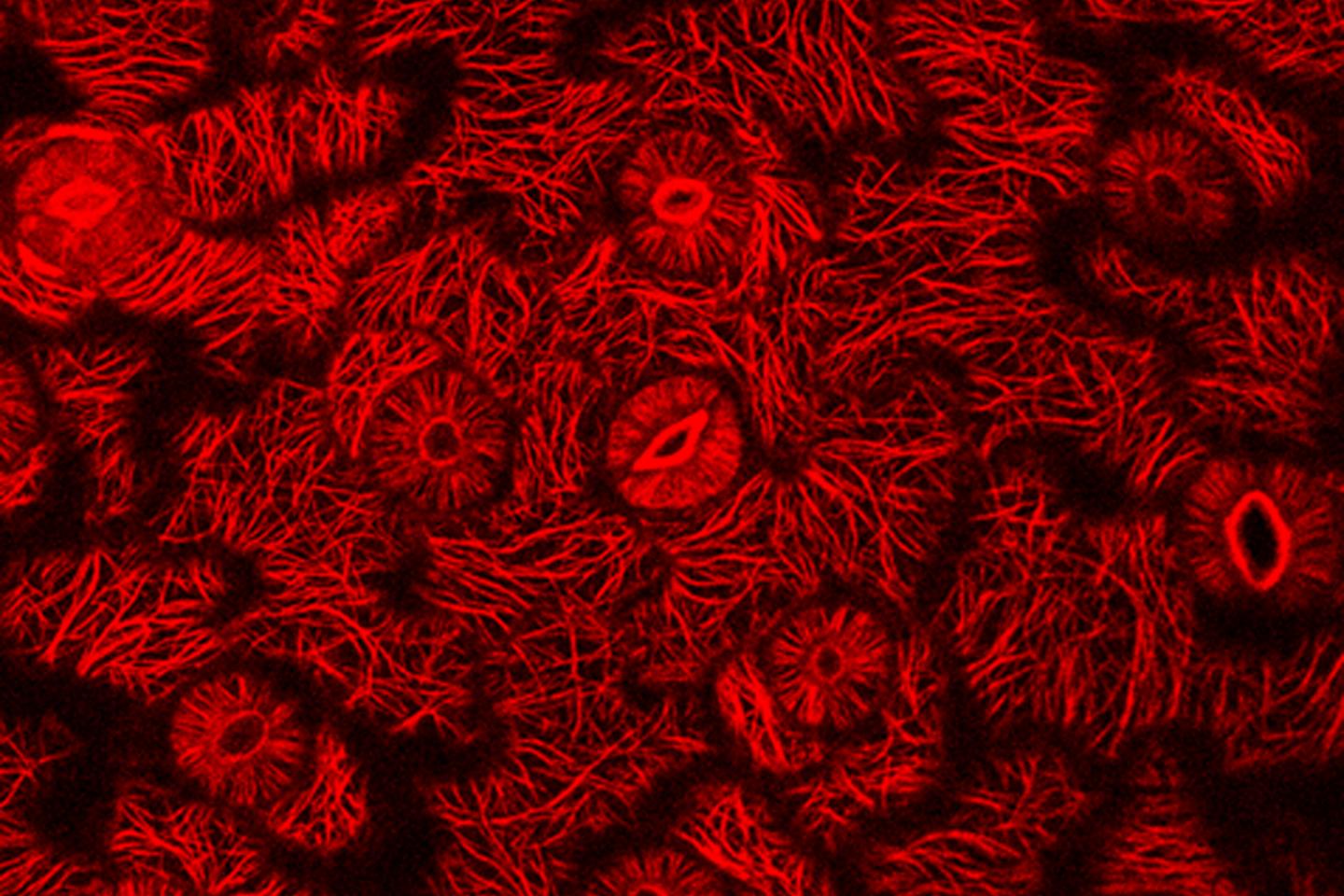
Organised cellulose fibres allow plants to grow, support themselves and store fixed carbon from the atmosphere. Wood and dietary fibre is largely made of cellulose, and coal is derived from cellulose synthesised millions of years ago.

Researchers have solved the long-standing mystery of how plants control the arrangement of their cellulose fibres.

Previous studies have shown that microtubules – hollow tubes with a diameter one thousandth of a human hair – play a key role in organising cellulose synthesis. They do this by guiding cellulose synthase complexes (CSCs) – nanomachines that spin cellulose fibres out while travelling along the cell membrane.

But when microtubules are removed by drugs, CSCs continue to journey in an organised way, suggesting another mechanism is at play.

In this study, which appears in the journal Current Biology, researchers at the John Innes Centre, discover this mechanism.

By slowing down microtubules inside growing leaves, spacing them apart and removing them altogether in some experiments, they reveal a system that can independently guide CSCs.

In this system CSCs interact with the cellulose trails left by other complexes, like ants following the chemical trails left by other ants.

Further investigation reveals this autonomous system can be overridden by microtubule guidance, allowing the ‘ant columns’ to be redirected in response to environmental and developmental cues.

Together the findings reveal that plants have a dual guidance system to organise their cellulose fibres.

The study concludes that having a dual guidance may provide a general mechanism to ensure both strong coherence and flexibility of response to environmental and developmental cues, allowing effective regulation of the growth and strength of cell walls.

“The mechanism we discovered was not predicted,” says lead author Dr Jordi Chan. “We hope our findings will help scientists interested in how plants build themselves and those interested in applying this knowledge for sustainable crop productivity and environmental protection.”

###

The study: Interactions between autonomous and microtubule guidance systems controls cellulose synthase trajectories, appears in Current Biology.

Media Contact
Adrian Galvin
[email protected]
01-603-450-238

Related Journal Article

http://dx.doi.org/10.1016/j.cub.2019.12.066

Tags: Agricultural Production/EconomicsBioinformaticsBiologyCell BiologyDevelopmental/Reproductive BiologyEvolutionGenesGeneticsMolecular Biology
Share12Tweet8Share2ShareShareShare2

Related Posts

Exploring Decision-Making in Dementia Caregivers’ Mobility

February 7, 2026

Succinate Receptor 1 Limits Blood Cell Formation, Leukemia

February 7, 2026

Palmitoylation of Tfr1 Drives Platelet Ferroptosis and Exacerbates Liver Damage in Heat Stroke

February 7, 2026

Oxygen-Enhanced Dual-Section Microneedle Patch Improves Drug Delivery and Boosts Photodynamic and Anti-Inflammatory Treatment for Psoriasis

February 7, 2026
Please login to join discussion

POPULAR NEWS

  • Robotic Ureteral Reconstruction: A Novel Approach

    Robotic Ureteral Reconstruction: A Novel Approach

    82 shares
    Share 33 Tweet 21
  • Digital Privacy: Health Data Control in Incarceration

    63 shares
    Share 25 Tweet 16
  • Study Reveals Lipid Accumulation in ME/CFS Cells

    57 shares
    Share 23 Tweet 14
  • Breakthrough in RNA Research Accelerates Medical Innovations Timeline

    53 shares
    Share 21 Tweet 13

About

We bring you the latest biotechnology news from best research centers and universities around the world. Check our website.

Follow us

Recent News

Florida Cane Toad: Complex Spread and Selective Evolution

Exploring Decision-Making in Dementia Caregivers’ Mobility

Succinate Receptor 1 Limits Blood Cell Formation, Leukemia

Subscribe to Blog via Email

Enter your email address to subscribe to this blog and receive notifications of new posts by email.

Join 73 other subscribers
  • Contact Us

Bioengineer.org © Copyright 2023 All Rights Reserved.

Welcome Back!

Login to your account below

Forgotten Password?

Retrieve your password

Please enter your username or email address to reset your password.

Log In
No Result
View All Result
  • Homepages
    • Home Page 1
    • Home Page 2
  • News
  • National
  • Business
  • Health
  • Lifestyle
  • Science

Bioengineer.org © Copyright 2023 All Rights Reserved.