


Medicine
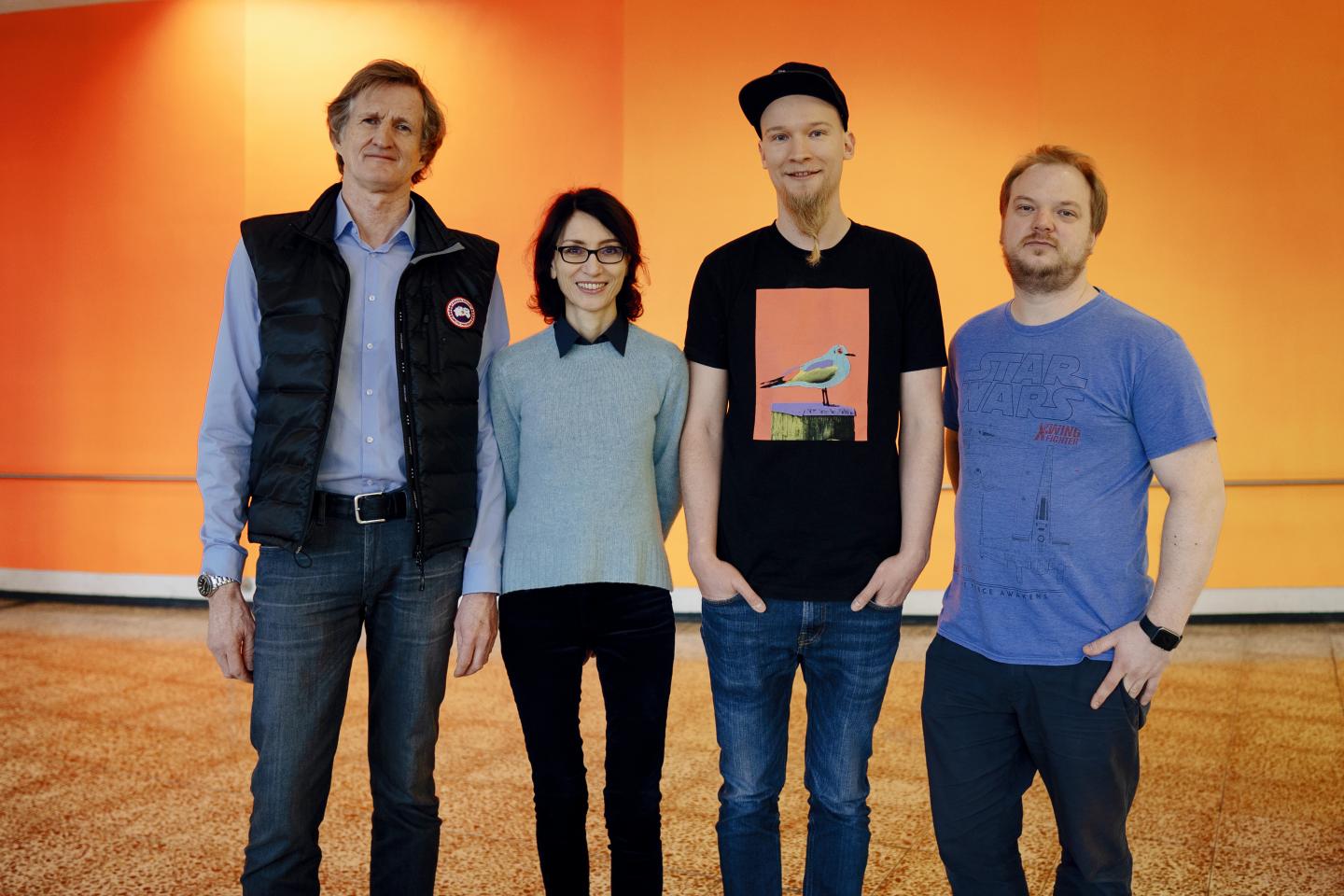
Credit: RUB, Kramer
The team was thus able to provide further evidence that there are interfaces between the nervous system and immune system. The researchers hope that the protagonists or antagonists of this signalling pathway may be suitable for therapeutic interventions. They report on this in the cover story in the journal Science Signaling on 4 February 2020.
Genes protect nerve cells against cell death
The Parkin gene protects nerve cells against functional impairment and cell death. It particularly ensures that mitochondria, cell organelles that are responsible for energy production, remain intact and that damaged mitochondria are removed. PACRG is located next to the Parkin gene in the genome. Both genes share what is called a promotor, which regulates the expression of the genes. Parkin and PACRG are thus expressed in a similar pattern.
“Little has been known about PACRG so far, so we investigated what functions this gene has,” says Konstanze Winklhofer. Her team found that, unlike Parkin, PACRG has no influence on the elimination of damaged mitochondria, but, like parkin, is able to protect nerve cells from cell death.
Parkin and PACRG regulate a signalling pathway of the innate immune system
Further investigations into the mechanism of action showed that PACRG regulates a signalling pathway that is stimulated by tumour necrosis factor (TNF). This results in the activation of the transcription factor NF-κB, which ensures the increased formation of pro-survival proteins. Both Parkin and PACRG have an effect on an essential protein complex of this signalling pathway, called Lubac (linear ubiquitin chain assembly complex). Lubac is required for efficient signal transduction by modifying components of the NF-κB signalling pathway with linear ubiquitin chains.
The TNF-NF-κB signalling pathway not only regulates cell death but also plays an important role in the innate immune system. It prevents the spreading of certain bacteria that invade host cells, such as salmonella, linked to foodborne infections, or mycobacteria, which cause tuberculosis or leprosy. “Interestingly, sequence variations in the Parkin and PACRG genes have been described that lead to an increased susceptibility to these bacterial infections and are associated with severe courses of salmonella or mycobacterial infections,” explains Konstanze Winklhofer. The current findings thus provide a plausible explanation for these observations and confirm that there are interfaces between the nervous system and immune system. Their protagonists or antagonists could be suitable targets for therapeutic interventions.
###
Funding
The work was funded by the German Research Foundation (WI-2111/4, WI-2111/6, MA-3257/5, TA-167/6, SFB 1177, project C2), the Michael J. Fox Foundation (Parkin Biology 2013 Grant and Grant ID 16293), the Munich Cluster for Systems Neurology, the Loewe programme Ub-Net, the North Rhine-Westphalia project Protein Unit for Research in Europe (Pure), and the German Research Foundation as part of the Excellence Strategy of the Federal and State Governments – EXC 2033 – project number 390677874 – Resolv.
Original publication
Jens Meschede et al.: The Parkin-coregulated gene PACRG promotes TNF signaling by stabilizing the linear ubiquitin chain assembly complex, in: Science Signaling, 2020, DOI: 10.1126/scisignal.aav1256
Press contact
Prof. Dr. Konstanze Winklhofer
Department of Molecular Cell Biology
Institute of Biochemistry and Pathobiochemistry
Faculty of Medicine
Ruhr-Universität Bochum
Germany
Phone: +49 234 32 28428
Email: [email protected]
Media Contact
Konstanze Winklhofer
[email protected]
49-234-322-8428
Original Source
https:/
Related Journal Article
http://dx.


