• HOME
  • NEWS
  • EXPLORE
    • CAREER
      • Companies
      • Jobs
    • EVENTS
    • iGEM
      • News
      • Team
    • PHOTOS
    • VIDEO
    • WIKI
  • BLOG
  • COMMUNITY
    • FACEBOOK
    • INSTAGRAM
    • TWITTER
Sunday, February 8, 2026
BIOENGINEER.ORG
No Result
View All Result
  • Login
  • HOME
  • NEWS
  • EXPLORE
    • CAREER
      • Companies
      • Jobs
        • Lecturer
        • PhD Studentship
        • Postdoc
        • Research Assistant
    • EVENTS
    • iGEM
      • News
      • Team
    • PHOTOS
    • VIDEO
    • WIKI
  • BLOG
  • COMMUNITY
    • FACEBOOK
    • INSTAGRAM
    • TWITTER
  • HOME
  • NEWS
  • EXPLORE
    • CAREER
      • Companies
      • Jobs
        • Lecturer
        • PhD Studentship
        • Postdoc
        • Research Assistant
    • EVENTS
    • iGEM
      • News
      • Team
    • PHOTOS
    • VIDEO
    • WIKI
  • BLOG
  • COMMUNITY
    • FACEBOOK
    • INSTAGRAM
    • TWITTER
No Result
View All Result
Bioengineer.org
No Result
View All Result
Home NEWS Science News Chemistry

CIGSe thin-film solar cells: EU Sharc25 project increases efficiency

Bioengineer by Bioengineer
February 5, 2020
in Chemistry
Reading Time: 2 mins read
0
IMAGE
Share on FacebookShare on TwitterShare on LinkedinShare on RedditShare on Telegram

IMAGE

Credit: HZB/Ingo Kniest


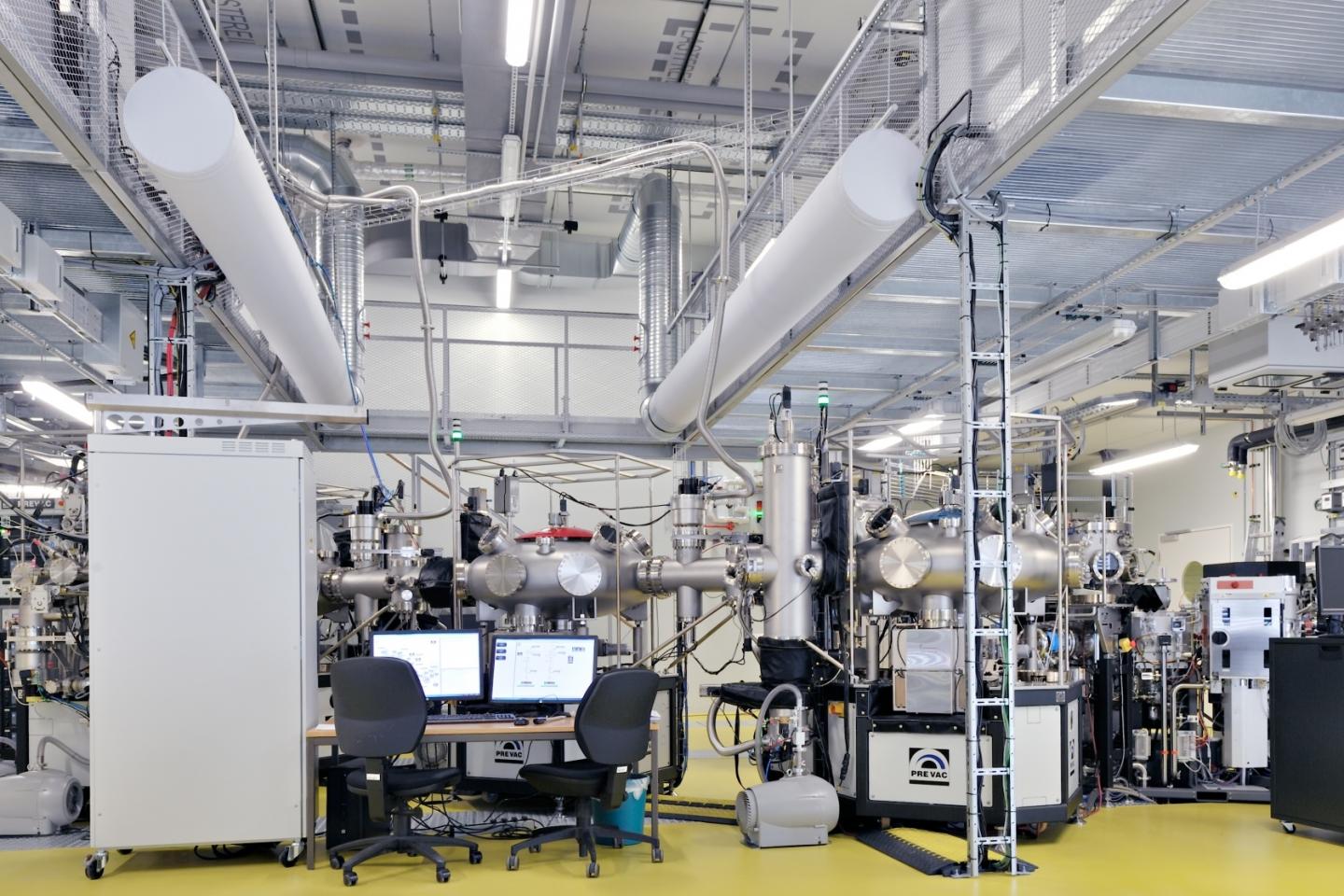
Producing thin-film solar modules requires much less energy than conventional wafer-based Si PV modules, and therefore their energy payback time is much shorter. Chalcopyrite-structured compounds of copper, indium, gallium, and selenium (CIGSe) are an important class of materials for thin-film PV, because CIGSe absorbs incident light much better than silicon, and so a very thin layer grown on a substrate via coevaporation suffices to convert light into electrical energy efficiently.

Efficiency up to 22,6 percent

The European Sharc25 research project approached the challenge of optimizing the conversion efficiency of CIGSe thin film technology from multiple angles, combining theoretical modelling, experimental characterization, and sharing of technological expertise between several leading research groups throughout Europe. During the project, the efficiency of CIGSe solar cells produced within the consortium rose from 21.7 to 22.6 percent.

One focus of the project was to understand the positive effects of post-processing with the alkali elements potassium, rubidium, and cesium. This post-processing changes the chemical and electronic surface properties of the CIGSe absorber. In addition, the alkali atoms migrate from the surface into the grain boundaries between the CIGSe grains, which improves the electronic properties of the thin film. The recombination of charge carriers in the bulk CIGSe is reduced, among other effects. This beneficial effect is observed for CIGSe layers prepared at various temperatures and on different substrates.

Know-how for European industries

Eleven research institutions from eight countries, including an HZB team headed by Prof. Marcus Bär, collaborated on the EU Sharc25 project. An important goal was to secure Europe’s pioneering role in the field of thin-film PV. “It is certainly a competitive advantage to be able to address questions related to applied materials research and to the development of industry-oriented devices using advanced research tools. To do so efficiently, we learn in such large EU projects. This represents a significant advantage and preserves the crucial edge in knowledge and know-how”, says Bär.

###

Partners: EMPA (CH), the Universities of Luxembourg (LU), Rouen (F), Parma (I), and Aalto (FIN), IMEC (B), HZB (D), INL (P), Flisom AG (CH), and Manz CIGS Technology GmbH (D). The Centre for Solar Energy and Hydrogen Research Baden-Württemberg (ZSW) coordinated the project.

The study has been published in Adv. Energy Materials (2020): Heavy alkali treatment of Cu(In,Ga)Se2 solar cells: Surface versus bulk effects

Media Contact
Dr. Marcus Bär
[email protected]
49-308-062-15641

Original Source

http://www.helmholtz-berlin.de/pubbin/news_seite?nid=21024;sprache=en;seitenid=1

Related Journal Article

http://dx.doi.org/10.1002/aenm.201903752

Tags: Chemistry/Physics/Materials Sciences
Share12Tweet8Share2ShareShareShare2

Related Posts

blank

Breakthrough in Environmental Cleanup: Scientists Develop Solar-Activated Biochar for Faster Remediation

February 7, 2026
blank

Cutting Costs: Making Hydrogen Fuel Cells More Affordable

February 6, 2026

Scientists Develop Hand-Held “Levitating” Time Crystals

February 6, 2026

Observing a Key Green-Energy Catalyst Dissolve Atom by Atom

February 6, 2026
Please login to join discussion

POPULAR NEWS

  • Robotic Ureteral Reconstruction: A Novel Approach

    Robotic Ureteral Reconstruction: A Novel Approach

    82 shares
    Share 33 Tweet 21
  • Digital Privacy: Health Data Control in Incarceration

    63 shares
    Share 25 Tweet 16
  • Breakthrough in RNA Research Accelerates Medical Innovations Timeline

    53 shares
    Share 21 Tweet 13
  • Mapping Tertiary Lymphoid Structures for Kidney Cancer Biomarkers

    50 shares
    Share 20 Tweet 13

About

We bring you the latest biotechnology news from best research centers and universities around the world. Check our website.

Follow us

Recent News

Group Therapy Boosts Recovery in Elderly Depression

Evaluating Biosimilar Trastuzumab for Breast Cancer in Thailand

Decoding Phantom Limb Movements via Intraneural Signals

Subscribe to Blog via Email

Success! An email was just sent to confirm your subscription. Please find the email now and click 'Confirm' to start subscribing.

Join 74 other subscribers
  • Contact Us

Bioengineer.org © Copyright 2023 All Rights Reserved.

Welcome Back!

Login to your account below

Forgotten Password?

Retrieve your password

Please enter your username or email address to reset your password.

Log In
No Result
View All Result
  • Homepages
    • Home Page 1
    • Home Page 2
  • News
  • National
  • Business
  • Health
  • Lifestyle
  • Science

Bioengineer.org © Copyright 2023 All Rights Reserved.