• HOME
  • NEWS
  • EXPLORE
    • CAREER
      • Companies
      • Jobs
    • EVENTS
    • iGEM
      • News
      • Team
    • PHOTOS
    • VIDEO
    • WIKI
  • BLOG
  • COMMUNITY
    • FACEBOOK
    • INSTAGRAM
    • TWITTER
Saturday, February 7, 2026
BIOENGINEER.ORG
No Result
View All Result
  • Login
  • HOME
  • NEWS
  • EXPLORE
    • CAREER
      • Companies
      • Jobs
        • Lecturer
        • PhD Studentship
        • Postdoc
        • Research Assistant
    • EVENTS
    • iGEM
      • News
      • Team
    • PHOTOS
    • VIDEO
    • WIKI
  • BLOG
  • COMMUNITY
    • FACEBOOK
    • INSTAGRAM
    • TWITTER
  • HOME
  • NEWS
  • EXPLORE
    • CAREER
      • Companies
      • Jobs
        • Lecturer
        • PhD Studentship
        • Postdoc
        • Research Assistant
    • EVENTS
    • iGEM
      • News
      • Team
    • PHOTOS
    • VIDEO
    • WIKI
  • BLOG
  • COMMUNITY
    • FACEBOOK
    • INSTAGRAM
    • TWITTER
No Result
View All Result
Bioengineer.org
No Result
View All Result
Home NEWS Science News Biology

Life in dead wood

Bioengineer by Bioengineer
February 3, 2020
in Biology
Reading Time: 3 mins read
0
IMAGE
Share on FacebookShare on TwitterShare on LinkedinShare on RedditShare on Telegram

IMAGE

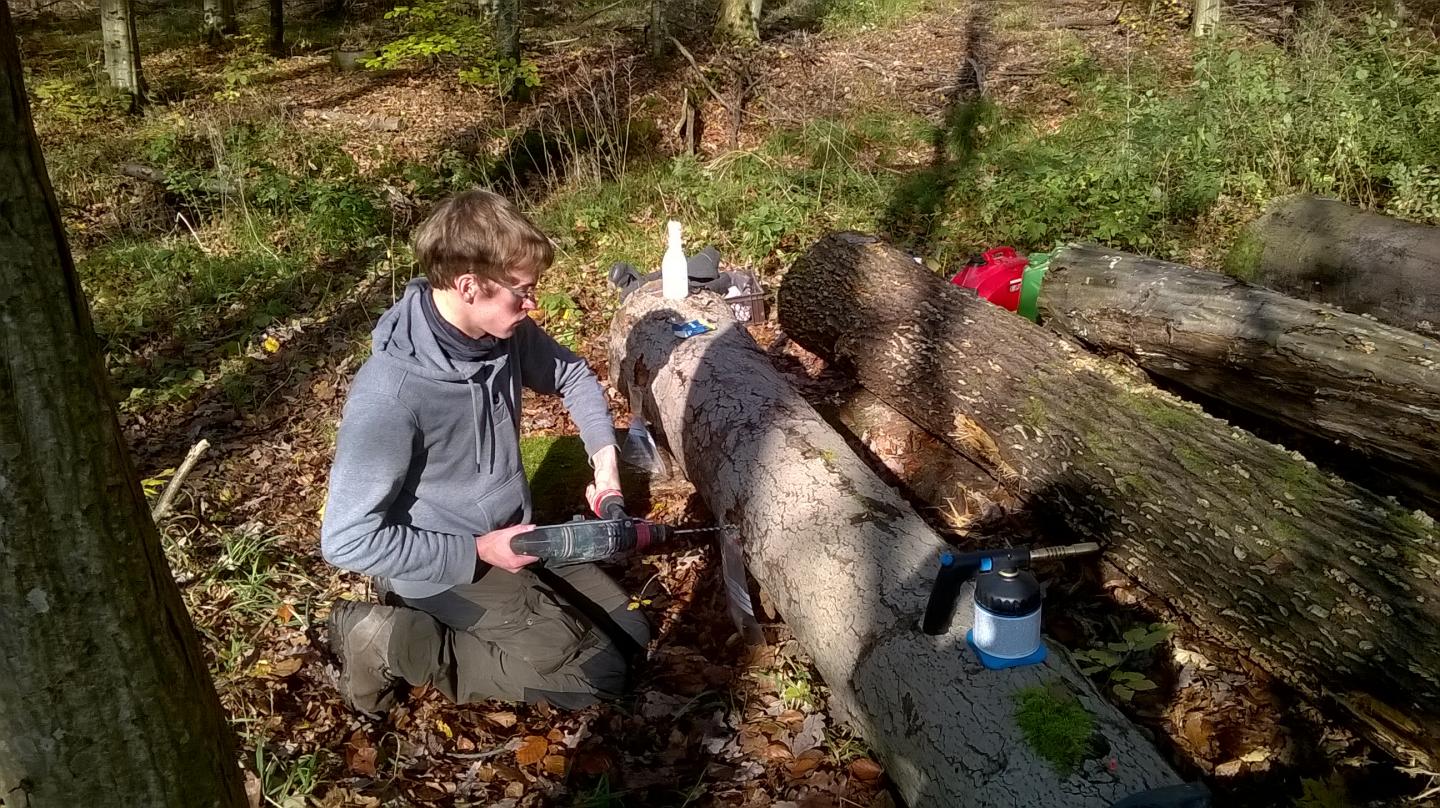
Credit: (Photo: Elisa Stengel)


Waldsterben 2.0 – this term has made the rounds in Germany. It refers to the death of various tree species as a result of the record summer of 2019 with heat, drought and bark beetle infestation.

“However, tree dieback is not only bad, since many insects and fungi in German forests depend on dead wood. Today, dead wood amounts in many places are still below the average of natural forests” says biologist Dr. Simon Thorn from Julius-Maximilians-Universität (JMU) Würzburg in Bavaria, Germany. Dead wood is very important for biodiversity in forests.

Combining nature conservation and profitability

From which tree species dead wood is needed and under which conditions should it be located in order to promote biodiversity in forests as much as possible? According to Dr. Thorn, very little is known about this question so far. To address this research gap, the Forest Enterprise Ebrach and the Ecological Station of JMU in the Steigerwald have initiated a research project in 2015.

The Forest Enterprise Ebrach attempts to enrich dead wood and thereby protect insects and fungi. However, these nature conservation measures are associated with significant losses of income associated to forestry products. “We would like to apply nature conservation in an efficient way, so that it can be conductedwith minimal economic effort,” says Ulrich Mergner, head of the forest enterprise.

Experiment in the Ebrach Forest

To achieve this goal, an experiment was started five years ago. The foresters laid out six trunks of six different tree species either in the sun, in the shade or under artificial shade. “This offered an uncomplicated and unique way to investigate an exciting scientific question,” says Thorn, who coordinates the scientific supervision of the experiment at the JMU’s Ecological Station.

During the first three years, it became apparent that many rare species appeared, especially in sun-exposed dead wood. However, there are also numerous species that prefer shaded trunks. PhD student Sebastian Vogel is currently summarising the results; his work is funded by the German Federal Environmental Foundation (DBU).

Half a million euros raised

“To develop the project and to understand the ecological mechanisms that cause the differences between light and shade, we need to go deeper into the details. To do this we need money,” says Simon Thorn. And he has now raised this money – around half a million euros – from the Bauer and the Stemmler Foundations and the German Research Foundation (DFG).

“Research funds are fiercely contested and are awarded especially when good preliminary work exists. We have only been able to do this because of the support of the Forest Enterprise Ebrach,” says the project manager. “Thanks to this funding, for the first time we can also study bacteria and fungi, which develop in dead wood. Many of these species are not visible to the eye, but play a crucial role in the decomposition of dead wood”.

The dead wood project in the Ebrach Forest will now be conducted until 2023. Forest manager Mergner is also pleased about this: “Nature and species protection is not a ‘one-hit wonder’ for us. Therefore, we are glad that we can expect long-term research results”.

###

Media Contact
Dr. Simon Thorn
[email protected]
49-931-318-3057

Original Source

https://www.uni-wuerzburg.de/en/news-and-events/news/detail/news/life-in-dead-wood/

Tags: BacteriologyBiodiversityBiologyEcology/EnvironmentEntomologyForestryMicrobiologyMycologyPlant Sciences
Share12Tweet8Share2ShareShareShare2

Related Posts

Florida Cane Toad: Complex Spread and Selective Evolution

Florida Cane Toad: Complex Spread and Selective Evolution

February 7, 2026
New Study Uncovers Mechanism Behind Burn Pit Particulate Matter–Induced Lung Inflammation

New Study Uncovers Mechanism Behind Burn Pit Particulate Matter–Induced Lung Inflammation

February 6, 2026

DeepBlastoid: Advancing Automated and Efficient Evaluation of Human Blastoids with Deep Learning

February 6, 2026

Navigating the Gut: The Role of Formic Acid in the Microbiome

February 6, 2026
Please login to join discussion

POPULAR NEWS

  • Robotic Ureteral Reconstruction: A Novel Approach

    Robotic Ureteral Reconstruction: A Novel Approach

    82 shares
    Share 33 Tweet 21
  • Digital Privacy: Health Data Control in Incarceration

    63 shares
    Share 25 Tweet 16
  • Study Reveals Lipid Accumulation in ME/CFS Cells

    57 shares
    Share 23 Tweet 14
  • Breakthrough in RNA Research Accelerates Medical Innovations Timeline

    53 shares
    Share 21 Tweet 13

About

We bring you the latest biotechnology news from best research centers and universities around the world. Check our website.

Follow us

Recent News

Phage-Antibiotic Combo Beats Resistant Peritoneal Infection

Boosting Remote Healthcare: Stepped-Wedge Trial Insights

Barriers and Boosters of Seniors’ Physical Activity in Karachi

Subscribe to Blog via Email

Enter your email address to subscribe to this blog and receive notifications of new posts by email.

Join 73 other subscribers
  • Contact Us

Bioengineer.org © Copyright 2023 All Rights Reserved.

Welcome Back!

Login to your account below

Forgotten Password?

Retrieve your password

Please enter your username or email address to reset your password.

Log In
No Result
View All Result
  • Homepages
    • Home Page 1
    • Home Page 2
  • News
  • National
  • Business
  • Health
  • Lifestyle
  • Science

Bioengineer.org © Copyright 2023 All Rights Reserved.