• HOME
  • NEWS
  • EXPLORE
    • CAREER
      • Companies
      • Jobs
    • EVENTS
    • iGEM
      • News
      • Team
    • PHOTOS
    • VIDEO
    • WIKI
  • BLOG
  • COMMUNITY
    • FACEBOOK
    • INSTAGRAM
    • TWITTER
Saturday, February 7, 2026
BIOENGINEER.ORG
No Result
View All Result
  • Login
  • HOME
  • NEWS
  • EXPLORE
    • CAREER
      • Companies
      • Jobs
        • Lecturer
        • PhD Studentship
        • Postdoc
        • Research Assistant
    • EVENTS
    • iGEM
      • News
      • Team
    • PHOTOS
    • VIDEO
    • WIKI
  • BLOG
  • COMMUNITY
    • FACEBOOK
    • INSTAGRAM
    • TWITTER
  • HOME
  • NEWS
  • EXPLORE
    • CAREER
      • Companies
      • Jobs
        • Lecturer
        • PhD Studentship
        • Postdoc
        • Research Assistant
    • EVENTS
    • iGEM
      • News
      • Team
    • PHOTOS
    • VIDEO
    • WIKI
  • BLOG
  • COMMUNITY
    • FACEBOOK
    • INSTAGRAM
    • TWITTER
No Result
View All Result
Bioengineer.org
No Result
View All Result
Home NEWS Science News Chemistry

Catalytic protocells get zingy

Bioengineer by Bioengineer
January 8, 2020
in Chemistry
Reading Time: 2 mins read
0
IMAGE
Share on FacebookShare on TwitterShare on LinkedinShare on RedditShare on Telegram

IMAGE

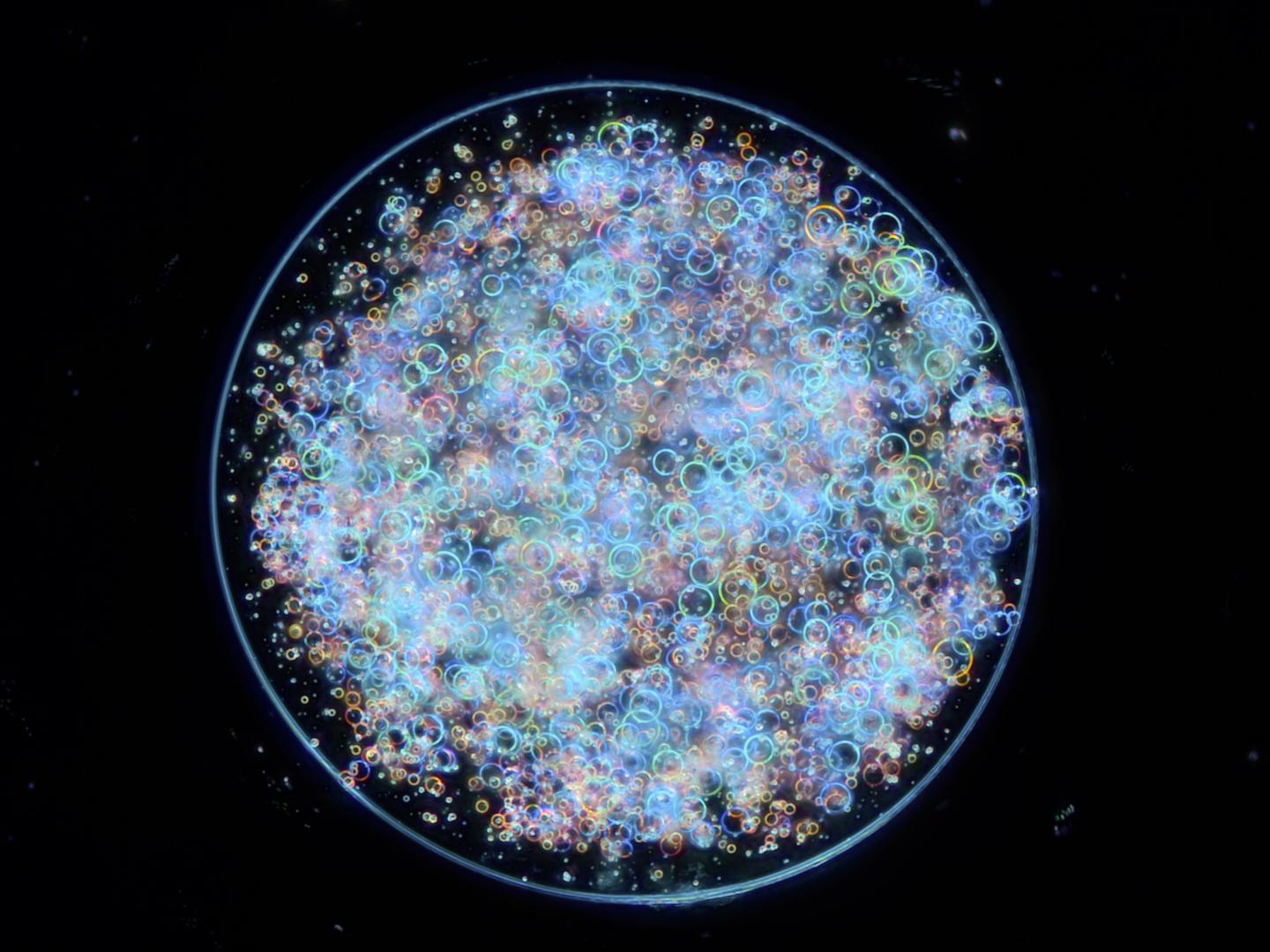
Credit: Dr. Pierangelo Gobbo and Dr. B. Pavan Kumar, University of Bristol

Artificial cells capable of oxygen gas production and chemical signalling have been prepared using a combination of synthetic and biological catalysts through an international collaboration between the University of Bristol and the University of Padua in Italy.

From the synthesis of drugs to the generation of plastics, catalysts – substances that speed up chemical reactions without being consumed – are the backbone of many industrial processes.

Catalysts come in many forms such as inorganic nanoparticles, organic liquids and aqueous enzymes, and can be linked to solid surfaces to increase their performance.

In a new study published in the journal Nature Communications, an international research team, led by University of Bristol chemists, used two different types of catalysts to develop a new type of artificial cell capable of decomposing hydrogen peroxide and generating oxygen.

The team used a ruthenium-based inorganic catalyst in the form of a synthetic enzyme (synzyme) as a membrane structuring agent to generate copious amounts of oxygen bubbles that they then exploited to construct synzyme-driven buoyant microcapsules.

In addition, the natural enzyme horseradish peroxidase was captured inside the protocells so that the synthetic and biological catalysts competed for hydrogen peroxide present in the solution.

The team used the antagonistic arrangement of the two catalysts to implement a rudimentary chemical signalling pathway between members of an artificial protocell community that were dispersed in solution or trapped within small droplets.

Professor Marcella Bonchio, from the University of Padua, said: “As the ruthenium-based catalyst has significant potential in bio-inspired catalysis, it seems feasible that communities of synzyme protocells could provide a step towards synthetic metabolic networks based on light-activated stimuli.”

Professor Stephen Mann from the University of Bristol’s School of Chemistry, added: “Our results highlight a new type of catalytic micro-compartment with multi-functional activity and provide a step towards the development of protocell reaction networks.”

###

Media Contact
Stephen Mann
[email protected]

Related Journal Article

http://dx.doi.org/10.1038/s41467-019-13759-1

Tags: Chemistry/Physics/Materials Sciences
Share12Tweet8Share2ShareShareShare2

Related Posts

blank

Breakthrough in Environmental Cleanup: Scientists Develop Solar-Activated Biochar for Faster Remediation

February 7, 2026
blank

Cutting Costs: Making Hydrogen Fuel Cells More Affordable

February 6, 2026

Scientists Develop Hand-Held “Levitating” Time Crystals

February 6, 2026

Observing a Key Green-Energy Catalyst Dissolve Atom by Atom

February 6, 2026
Please login to join discussion

POPULAR NEWS

  • Robotic Ureteral Reconstruction: A Novel Approach

    Robotic Ureteral Reconstruction: A Novel Approach

    82 shares
    Share 33 Tweet 21
  • Digital Privacy: Health Data Control in Incarceration

    63 shares
    Share 25 Tweet 16
  • Study Reveals Lipid Accumulation in ME/CFS Cells

    57 shares
    Share 23 Tweet 14
  • Breakthrough in RNA Research Accelerates Medical Innovations Timeline

    53 shares
    Share 21 Tweet 13

About

We bring you the latest biotechnology news from best research centers and universities around the world. Check our website.

Follow us

Recent News

Evaluating Pediatric Emergency Care Quality in Ethiopia

TPMT Expression Predictions Linked to Azathioprine Side Effects

Improving Dementia Care with Enhanced Activity Kits

Subscribe to Blog via Email

Success! An email was just sent to confirm your subscription. Please find the email now and click 'Confirm' to start subscribing.

Join 73 other subscribers
  • Contact Us

Bioengineer.org © Copyright 2023 All Rights Reserved.

Welcome Back!

Login to your account below

Forgotten Password?

Retrieve your password

Please enter your username or email address to reset your password.

Log In
No Result
View All Result
  • Homepages
    • Home Page 1
    • Home Page 2
  • News
  • National
  • Business
  • Health
  • Lifestyle
  • Science

Bioengineer.org © Copyright 2023 All Rights Reserved.