Credit: Ariel Friedenreich
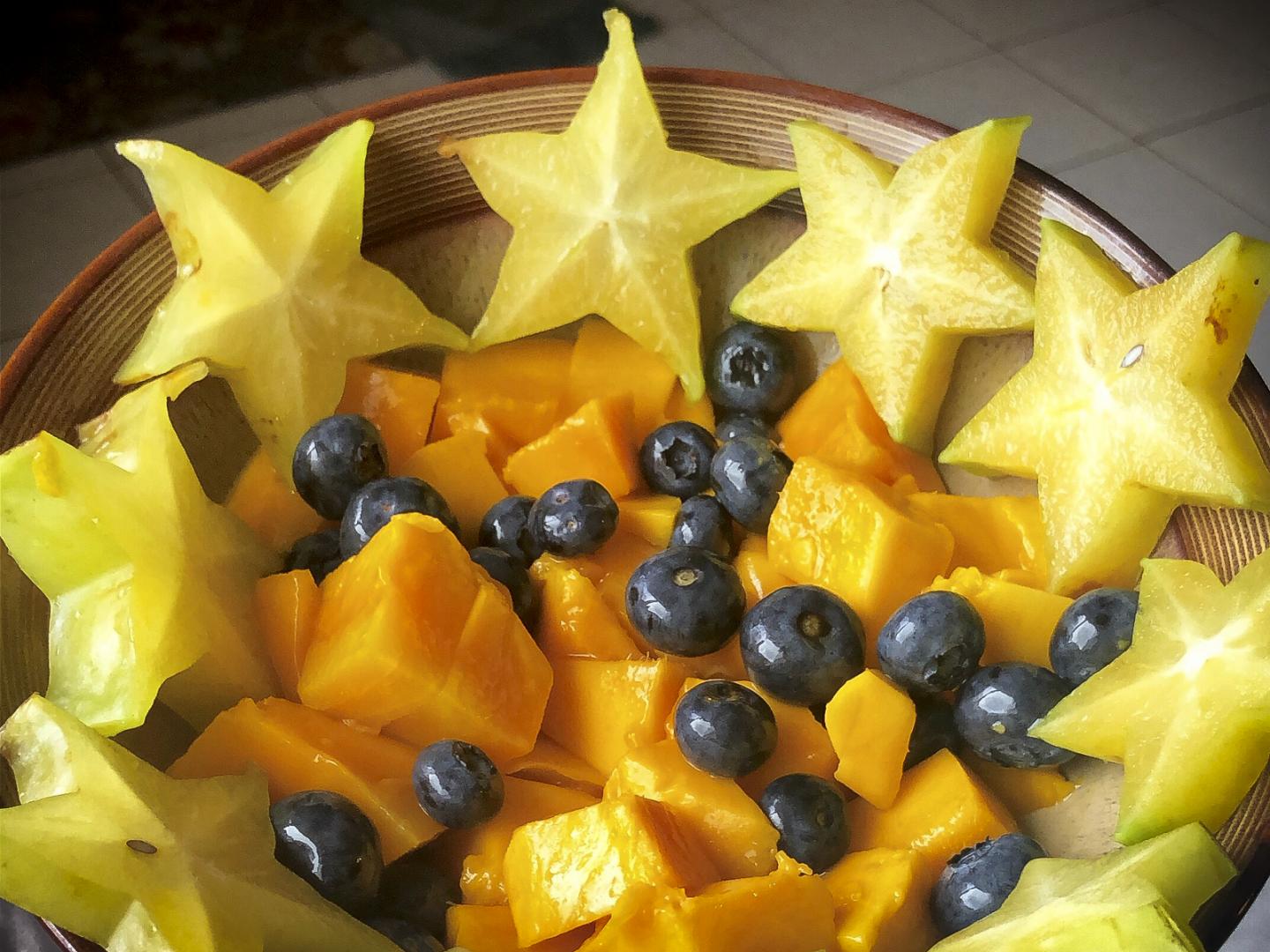
It’s not just oranges that grow in Florida. Carambola, or star fruit as most in the United States call it, is gaining popularity. One researcher from Florida International University is researching how cover crops can help the sustainability of star fruit farms.
“Tropical fruit production has become a prominent practice in Miami-Dade County,” says Ariel Freidenreich. “For this reason, it is vital that sustainable farming practices are applied to these systems to ensure healthy soils and economically viable fruit production.”
“Star fruit are a great snack while working in the sun because they are juicy and sweet,” says Freidenreich. “The Arkin variety is the most popular and widely planted in south Florida. Some growers are now expanding to sweeter and juicier varieties from Hawaii and other areas. They go great with salads and are used for juicing. There is even a winery that makes a delicious star fruit wine (tangy and not too sweet). While these fruits are not very popular in American culture, they are popular in Asian and Hispanic cultures, which are very prominent in south Florida.”
Besides being tasty, there’s another reason for finding a variety of crops that grow well in Florida.
“Increasing the diversity of crops that are grown in various areas is important for several reasons,” says Freidenreich. “First, crops like oranges are under pressure from a disease called citrus greening. It’s a blight disease that causes trees go into decline and die within three years. The disease destroys the production, appearance, and economic value of citrus trees and their fruit, and there is no cure. Similarly, laurel wilt has been greatly impacting the avocado industry in south Florida. Different crops are being planted to replace avocado groves.”
Establishing crops like star fruit will help diversify the biological system of a farm. It also diversifies the income stream for growers. Just like a well-balanced retirement portfolio, balancing the mix of crops on a farm can reduce overall risk. This is good for the environment and the sustainability of our food sources.
Freidenreich’s research with carambola includes cover crops. Cover crops are grown, not to be harvested, but to assist with soil health. Two cover crops the team studied are sunn hemp and velvet bean. Both are in the legume family and can take nitrogen from the air and metabolize it into a plant nutrient.
“We established cover crops within this young carambola stand to enhance overall soil quality,” says Freidenreich. “We grew sunn hemp and velvet bean between trees. We cut them and incorporated them into the soil as green manure for two summer growing seasons. This helps ensure healthy tree development without the addition of synthetic inputs.”
The research is taking place on a certified organic farm, and these practices are being developed to help farmers transitioning to organic production or those interested in sustainable practices.
Cover cropping should improve the soil organic matter. “The soil [at the research site] is rock-plowed limestone with little natural organic matter content,” says Freidenreich. “These soils have a basic pH, so improving organic matter content is necessary to help lower pH. This, in turn, should inspire healthy crop growth.”
Improving soil organic matter “should have positive effects on soil nutrient availability,” says Freidenreich. “It should also improve soil structure and microbial interaction. We expect fruit yield improvement over time. South Florida has a subtropical climate, so hot and humid weather inspires quick turn over for organic matter degradation. Continually adding these treatments should have positive benefits season to season. The cover crops can be great for weed suppression in the growing season and after termination.”
Future research means Freidenreich might get to snack on more star fruit while in the field. “Star fruit are very wind sensitive. They can defoliate with strong gusts. Sunn hemp has the potential to act as a windbreak for starfruit trees. Additionally, star fruit is truly tropical and can be sensitive to cool temperatures in the winter months in subtropical south Florida. Cover crop mulches might insulate the roots of carambola trees.”
###
Freidenreich recently presented her research at the 2019 International Annual Meeting of the American Society of Agronomy, Crop Science Society of America and Soil Science Society of America. This research was funded by USDA-NIFA-NNF (2015-38420-23702) and Florida International University Tropics Student Grant.
Media Contact
Rachel Leege
[email protected]
608-268-3976