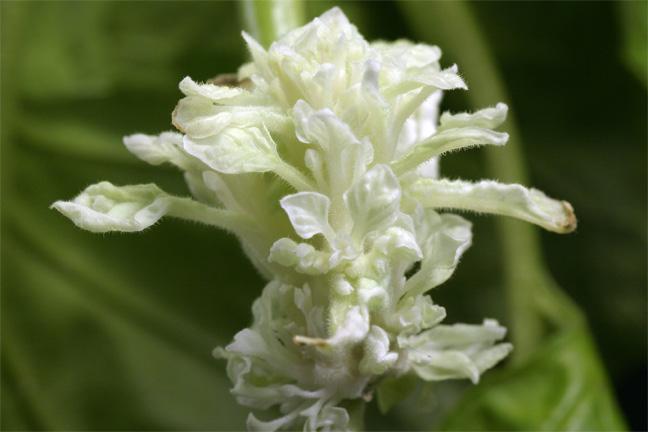
Credit: Michael Maher, University of Minnesota.
A University of Minnesota research team recently developed new methods that will make it significantly faster to produce gene-edited plants. They hope to alleviate a long-standing bottleneck in gene editing and, in the process, make it easier and faster to develop and test new crop varieties with two new approaches described in a paper recently published in Nature Biotechnology.
Despite dramatic advances in scientists’ ability to edit plant genomes using gene-editing tools such as CRISPR and TALENs, researchers were stuck using an antiquated approach — tissue culture. It has been in use for decades and is costly, labor intensive and requires precise work in a sterile environment. Researchers use tissue culture to deliver genes and gene editing reagents, or chemicals that drive the reaction, to plants.
“A handful of years ago the National Academy of Sciences convened a meeting of plant scientists, calling on the community to solve the tissue culture bottleneck and help realize the potential of gene editing in plants,” said Dan Voytas, professor in Genetics, Cell Biology and Development in the College of Biological Sciences and senior author on the paper. “We have advanced genome editing technology but we needed a novel way to efficiently deliver gene editing reagents to plants. The methods in this paper present a whole new way of doing business.”
The new methods will:
- drastically reduce the time needed to edit plant genes from as long as nine months to as short as a few weeks;
- work in more plant species than was possible using tissue culture, which is limited to specific species and varieties;
- allow researchers to produce genetically edited plants without the need of a sterile lab, making it a viable approach for small labs and companies to utilize.
To eliminate the arduous work that goes into gene-editing through tissue culture, co-first authors Ryan Nasti and Michael Maher developed new methods that leverage important plant growth regulators responsible for plant development.
Using growth regulators and gene editing reagents, researchers trigger seedlings to develop new shoots that contain edited genes. Researchers collect seeds from these gene-edited shoots and continue experiments. No cell cultures needed.
The approaches differ in how the growth regulators are applied and at what scale. The approach developed by Nasti allows small-scale rapid testing — with results in weeks instead of months or years — of different combinations of growth regulators. “This approach allows for rapid testing so that researchers can optimize combinations of growth regulators and increase their efficacy,” he said.
Maher used the same basic principles to make the process more accessible by eliminating the need for a sterile lab environment. “With this method, you don’t need sterile technique. You could do this in your garage,” he said. He added that this technique opens up the possibility that smaller research groups with less resources can gene edit plants and test how well they do.
“Nasti and Maher have democratized plant gene editing. It will no longer take months in a sterile lab with dozens of people in tissue culture hoods,” Voytas said.
The researchers used a tobacco species as their model, but have already demonstrated the method works in grape, tomato and potato plants. They believe the findings will likely transfer across many species. Plant geneticists and agricultural biotechnologists aim to ensure stable food sources for a growing global population in a warming climate, where pest outbreaks and extreme weather events are commonplace. These new methods will allow them to work more efficiently.
###
Co-authors include CBS undergraduate researcher Macy Vollbrecht; CBS Research Associate Colby Starker; and College of Food, Agricultural and Natural Resource Sciences Assistant Professor Matthew Clark. The research was funded by U of M’s Hackett Fund, TechAcell and a National Institutes of Health training grant.
About the College of Biological Sciences
The College of Biological Sciences at the University of Minnesota is one of two colleges in the United States dedicated to the biological sciences with undergraduate majors and graduate programs that cover the spectrum of life from molecules to ecosystems. Learn more at cbs.umn.edu.
Media Contact
Katrinna Dodge
[email protected]
612-624-4071
Original Source
https:/
Related Journal Article
http://dx.