• HOME
  • NEWS
  • EXPLORE
    • CAREER
      • Companies
      • Jobs
    • EVENTS
    • iGEM
      • News
      • Team
    • PHOTOS
    • VIDEO
    • WIKI
  • BLOG
  • COMMUNITY
    • FACEBOOK
    • INSTAGRAM
    • TWITTER
Saturday, February 7, 2026
BIOENGINEER.ORG
No Result
View All Result
  • Login
  • HOME
  • NEWS
  • EXPLORE
    • CAREER
      • Companies
      • Jobs
        • Lecturer
        • PhD Studentship
        • Postdoc
        • Research Assistant
    • EVENTS
    • iGEM
      • News
      • Team
    • PHOTOS
    • VIDEO
    • WIKI
  • BLOG
  • COMMUNITY
    • FACEBOOK
    • INSTAGRAM
    • TWITTER
  • HOME
  • NEWS
  • EXPLORE
    • CAREER
      • Companies
      • Jobs
        • Lecturer
        • PhD Studentship
        • Postdoc
        • Research Assistant
    • EVENTS
    • iGEM
      • News
      • Team
    • PHOTOS
    • VIDEO
    • WIKI
  • BLOG
  • COMMUNITY
    • FACEBOOK
    • INSTAGRAM
    • TWITTER
No Result
View All Result
Bioengineer.org
No Result
View All Result
Home NEWS Science News

Researchers capture first glimpse of important, abundant ocean microbe

Bioengineer by Bioengineer
November 22, 2016
in Science News
Reading Time: 2 mins read
0
Share on FacebookShare on TwitterShare on LinkedinShare on RedditShare on Telegram
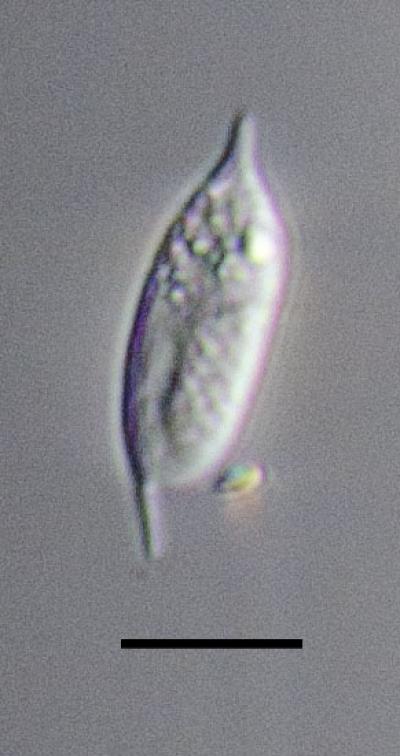
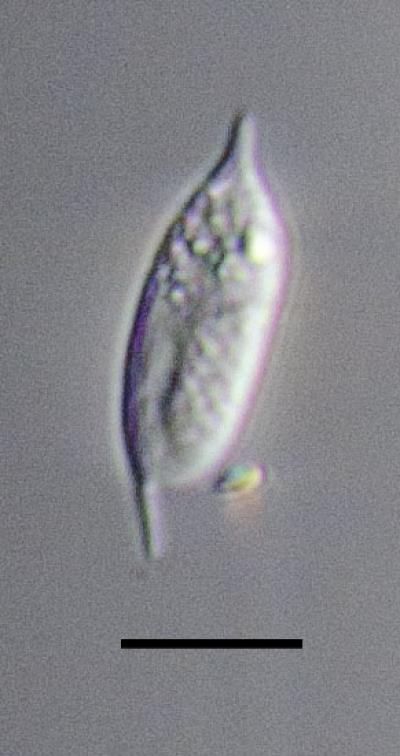
IMAGE

Credit: Patrick Keeling

A rare microbe that was once thought to be insignificant has turned out to be one of the most abundant single-celled hunters in the ocean, and a team of researchers led by UBC have captured the first glimpse of these elusive predators.

Diplonemids are tiny cells that have more or less been ignored by researchers until recently when surveys of marine diversity showed they are the most abundant protozoa, a diverse group of single-celled organisms that excludes bacteria and viruses, in the ocean. Despite their abundance, they had never been captured or observed directly in the ocean. Scientists from UBC and the Canadian Institute for Advanced Research (CIFAR) went to sea and managed to observe them for the first time.

"When a microbe is so abundant, it probably plays a very important role in the ecosystem," said Patrick Keeling, a professor of botany at UBC and director of the Integrated Microbial Biodiversity program at CIFAR. "The microbial world is one of the last frontiers of exploration on our planet, and we're using microscopes together with genomics to learn as much as possible about this invisible life."

The team sailed from the Monterey Bay Aquarium Research Institute in California to a well-studied part of the ocean known as Line 67, where the water is deep yet poor in nutrients. Here they photographed organisms from deep-water samples and used technology to sequence the genomes of these single-celled organisms.

The research showed that diplonemids are a diverse group of species of many different shapes and sizes, and that they hunt both bacteria and larger algae.

"It's like discovering lions after having only seen gazelles, antelopes and zebras for so many years," said Keeling.

Diplonemids also proved to have interesting genomes that are large and full of "junk" DNA called introns that interrupt genes. Introns are found in genes of all complex cells, but the diplonemid introns are unique and appear to spread similar to how a virus copies its genetic material into other cells when it attacks.

To learn more about the ecology of these organisms and the role they play in maintaining the marine ecosystmes, the next step will be to figure out how to keep diplonemids alive in the lab, "which will now be a lot easier since we know what they look like," said Keeling.

###

This research was funded by the Gordon and Betty Moore Foundation, CIFAR, and the Tula Foundation. It was published today in Current Biology: http://www.cell.com/current-biology/fulltext/S0960-9822(16)31062-4.

The paper was authored by Keeling along with UBC researchers Ryan Gawryluk, Javier del Campo, Noriko Okamoto, Jürgen Strassert and CIFAR researchers Julius Lukeš, Thomas Richards, Alexandra Worden and Alyson E. Santoro.

Media Contact

Heather Amos
[email protected]
604-822-3213
@UBCnews

http://www.ubc.ca

############

Story Source: Materials provided by Scienmag

Share12Tweet8Share2ShareShareShare2

Related Posts

Inflammasome Protein ASC Drives Pancreatic Cancer Metabolism

February 7, 2026

Phage-Antibiotic Combo Beats Resistant Peritoneal Infection

February 7, 2026

Boosting Remote Healthcare: Stepped-Wedge Trial Insights

February 7, 2026

Barriers and Boosters of Seniors’ Physical Activity in Karachi

February 7, 2026
Please login to join discussion

POPULAR NEWS

  • Robotic Ureteral Reconstruction: A Novel Approach

    Robotic Ureteral Reconstruction: A Novel Approach

    82 shares
    Share 33 Tweet 21
  • Digital Privacy: Health Data Control in Incarceration

    63 shares
    Share 25 Tweet 16
  • Study Reveals Lipid Accumulation in ME/CFS Cells

    57 shares
    Share 23 Tweet 14
  • Breakthrough in RNA Research Accelerates Medical Innovations Timeline

    53 shares
    Share 21 Tweet 13

About

We bring you the latest biotechnology news from best research centers and universities around the world. Check our website.

Follow us

Recent News

Inflammasome Protein ASC Drives Pancreatic Cancer Metabolism

Phage-Antibiotic Combo Beats Resistant Peritoneal Infection

Boosting Remote Healthcare: Stepped-Wedge Trial Insights

Subscribe to Blog via Email

Enter your email address to subscribe to this blog and receive notifications of new posts by email.

Join 73 other subscribers
  • Contact Us

Bioengineer.org © Copyright 2023 All Rights Reserved.

Welcome Back!

Login to your account below

Forgotten Password?

Retrieve your password

Please enter your username or email address to reset your password.

Log In
No Result
View All Result
  • Homepages
    • Home Page 1
    • Home Page 2
  • News
  • National
  • Business
  • Health
  • Lifestyle
  • Science

Bioengineer.org © Copyright 2023 All Rights Reserved.