• HOME
  • NEWS
  • EXPLORE
    • CAREER
      • Companies
      • Jobs
    • EVENTS
    • iGEM
      • News
      • Team
    • PHOTOS
    • VIDEO
    • WIKI
  • BLOG
  • COMMUNITY
    • FACEBOOK
    • INSTAGRAM
    • TWITTER
Saturday, February 7, 2026
BIOENGINEER.ORG
No Result
View All Result
  • Login
  • HOME
  • NEWS
  • EXPLORE
    • CAREER
      • Companies
      • Jobs
        • Lecturer
        • PhD Studentship
        • Postdoc
        • Research Assistant
    • EVENTS
    • iGEM
      • News
      • Team
    • PHOTOS
    • VIDEO
    • WIKI
  • BLOG
  • COMMUNITY
    • FACEBOOK
    • INSTAGRAM
    • TWITTER
  • HOME
  • NEWS
  • EXPLORE
    • CAREER
      • Companies
      • Jobs
        • Lecturer
        • PhD Studentship
        • Postdoc
        • Research Assistant
    • EVENTS
    • iGEM
      • News
      • Team
    • PHOTOS
    • VIDEO
    • WIKI
  • BLOG
  • COMMUNITY
    • FACEBOOK
    • INSTAGRAM
    • TWITTER
No Result
View All Result
Bioengineer.org
No Result
View All Result
Home NEWS Science News

Sustaining roads with grape and agricultural waste

Bioengineer by Bioengineer
December 2, 2019
in Science News
Reading Time: 2 mins read
0
IMAGE
Share on FacebookShare on TwitterShare on LinkedinShare on RedditShare on Telegram

IMAGE

Credit: WSU

The U.S. spends $5 billion a year to repair damages to road infrastructure from winter snow and ice control operations and the use of traditional deicers. A team of researchers at WSU is developing a more sustainable solution using grape skins and other agricultural waste.

The researchers, including graduate student Mehdi Honarvar Nazari and Xianming Shi, associate professor in Civil and Environmental Engineering, determined that their deicer containing grape extract outperformed commonly used deicers, including road salt and what is thought to be a more environmentally friendly blend of salt brine and beet juice. They published their results in the December issue of the Journal of Materials in Civil Engineering.

Every year, roughly 27 million tons of sodium chloride, commonly known as road salt, is used on U.S. roadways for winter maintenance. The chlorides do not degrade in the environment and may pose long term environmental risks. Commercial deicers typically contain chemicals that are corrosive toward metals, asphalt, concrete, and pose some risk to aquatic species.

Beet juice has become a common additive used by highway departments and cities to enhance the performance of deicers while reducing their corrosive impacts. However, when beet juice enters water bodies, it can deplete oxygen and endanger aquatic organisms.

Working to develop a greener additive, the WSU researchers derived chemicals from waste grape skins through chemical degradation and natural fermentation. Shi said their novel process to make the formula produces no waste of any kind.

The researchers found that their grape extract-based solution melts ice faster than other deicers and causes significantly less damage to concrete and asphalt, the two most ubiquitous materials used in bridges and roads. The solution also poses less risk to nearby water bodies.

“We delivered a more sustainable solution because we’re introducing less chlorides into the road operations and are achieving comparable or better performance,” Shi said. “It’s one step in the right direction.”

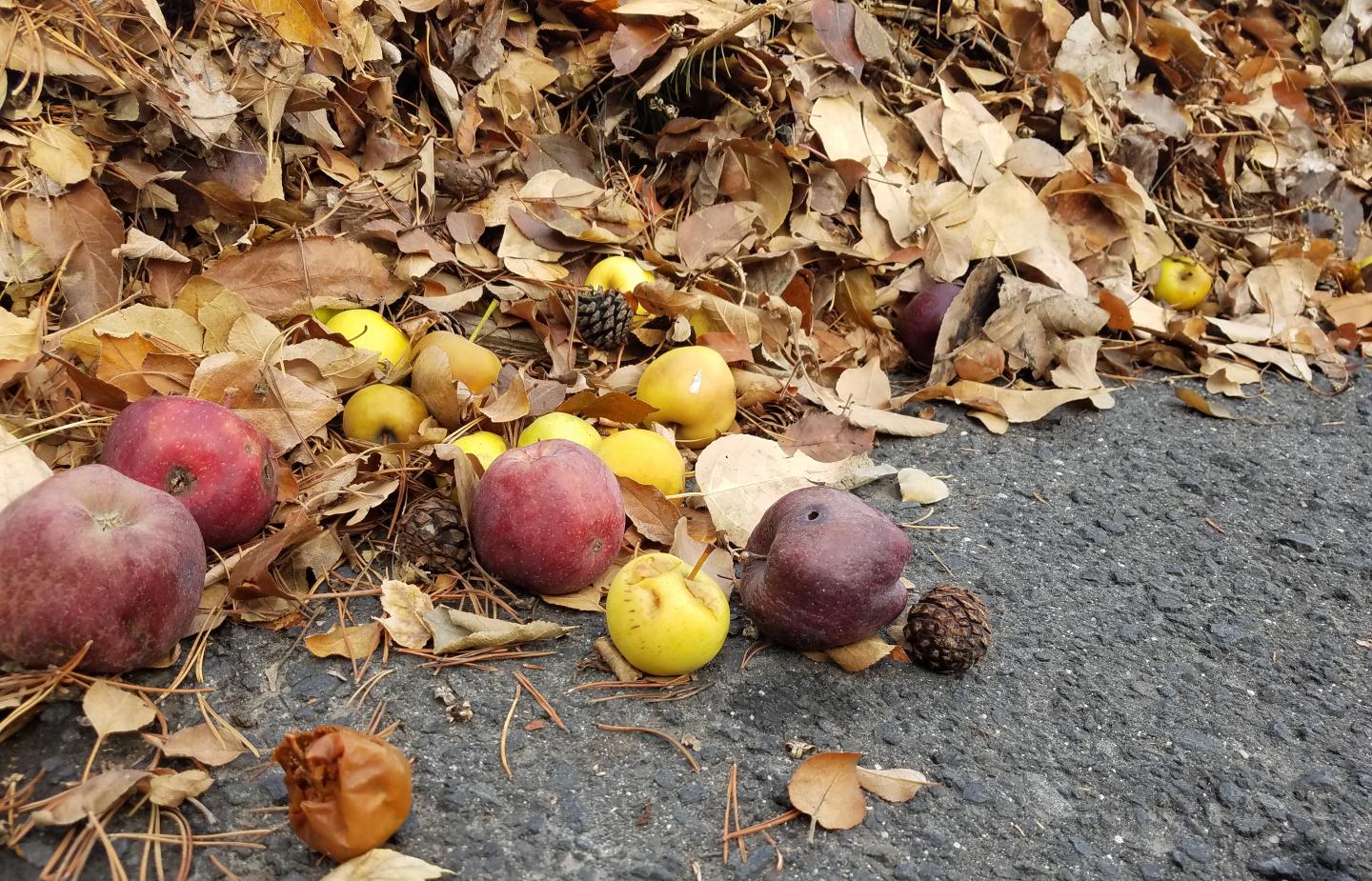
Shi first thought of using biotechnology to derive deicer additives out of agricultural waste materials several years ago when tasked by the Alaska Department of Transportation to develop locally sourced and performance-enhanced brine formulations for anti-icing. His group has also successfully applied this technology to waste peony leaves, sugar beet leaves, dandelion leaves, and waste from apples and grapes.

“The beauty of this approach is that it allows us to diversify,” he said. “We can use this same platform technology in different regions of the country but choose a different agricultural product, depending on what source of waste is available.”

###

The work was supported by the National Science Foundation, the Washington Department of Transportation, and the U.S. Department of Transportation.

Media Contact
Xianming Shi
[email protected]
509-335-7088

Original Source

https://news.wsu.edu/2019/12/02/sustaining-roads-grape-agricultural-waste/

Related Journal Article

http://dx.doi.org/10.1061/(ASCE)MT.1943-5533.0002963

Tags: AgricultureCivil EngineeringPlant SciencesTechnology/Engineering/Computer Science
Share12Tweet8Share2ShareShareShare2

Related Posts

Decoding Prostate Cancer Origins via snFLARE-seq, mxFRIZNGRND

February 7, 2026

Digital Health Perspectives from Baltic Sea Experts

February 7, 2026

Florida Cane Toad: Complex Spread and Selective Evolution

February 7, 2026

Exploring Decision-Making in Dementia Caregivers’ Mobility

February 7, 2026
Please login to join discussion

POPULAR NEWS

  • Robotic Ureteral Reconstruction: A Novel Approach

    Robotic Ureteral Reconstruction: A Novel Approach

    82 shares
    Share 33 Tweet 21
  • Digital Privacy: Health Data Control in Incarceration

    63 shares
    Share 25 Tweet 16
  • Study Reveals Lipid Accumulation in ME/CFS Cells

    57 shares
    Share 23 Tweet 14
  • Breakthrough in RNA Research Accelerates Medical Innovations Timeline

    53 shares
    Share 21 Tweet 13

About

We bring you the latest biotechnology news from best research centers and universities around the world. Check our website.

Follow us

Recent News

Decoding Prostate Cancer Origins via snFLARE-seq, mxFRIZNGRND

Digital Health Perspectives from Baltic Sea Experts

Florida Cane Toad: Complex Spread and Selective Evolution

Subscribe to Blog via Email

Enter your email address to subscribe to this blog and receive notifications of new posts by email.

Join 73 other subscribers
  • Contact Us

Bioengineer.org © Copyright 2023 All Rights Reserved.

Welcome Back!

Login to your account below

Forgotten Password?

Retrieve your password

Please enter your username or email address to reset your password.

Log In
No Result
View All Result
  • Homepages
    • Home Page 1
    • Home Page 2
  • News
  • National
  • Business
  • Health
  • Lifestyle
  • Science

Bioengineer.org © Copyright 2023 All Rights Reserved.