• HOME
  • NEWS
  • EXPLORE
    • CAREER
      • Companies
      • Jobs
    • EVENTS
    • iGEM
      • News
      • Team
    • PHOTOS
    • VIDEO
    • WIKI
  • BLOG
  • COMMUNITY
    • FACEBOOK
    • INSTAGRAM
    • TWITTER
Saturday, January 17, 2026
BIOENGINEER.ORG
No Result
View All Result
  • Login
  • HOME
  • NEWS
  • EXPLORE
    • CAREER
      • Companies
      • Jobs
        • Lecturer
        • PhD Studentship
        • Postdoc
        • Research Assistant
    • EVENTS
    • iGEM
      • News
      • Team
    • PHOTOS
    • VIDEO
    • WIKI
  • BLOG
  • COMMUNITY
    • FACEBOOK
    • INSTAGRAM
    • TWITTER
  • HOME
  • NEWS
  • EXPLORE
    • CAREER
      • Companies
      • Jobs
        • Lecturer
        • PhD Studentship
        • Postdoc
        • Research Assistant
    • EVENTS
    • iGEM
      • News
      • Team
    • PHOTOS
    • VIDEO
    • WIKI
  • BLOG
  • COMMUNITY
    • FACEBOOK
    • INSTAGRAM
    • TWITTER
No Result
View All Result
Bioengineer.org
No Result
View All Result
Home NEWS Science News Chemistry

Research shows old newspapers can be used to grow carbon nanotubes

Bioengineer by Bioengineer
November 22, 2019
in Chemistry
Reading Time: 2 mins read
0
IMAGE
Share on FacebookShare on TwitterShare on LinkedinShare on RedditShare on Telegram

Newspapers provide a green, economical way to produce carbon nanotubes
IMAGE

Credit: Rice University


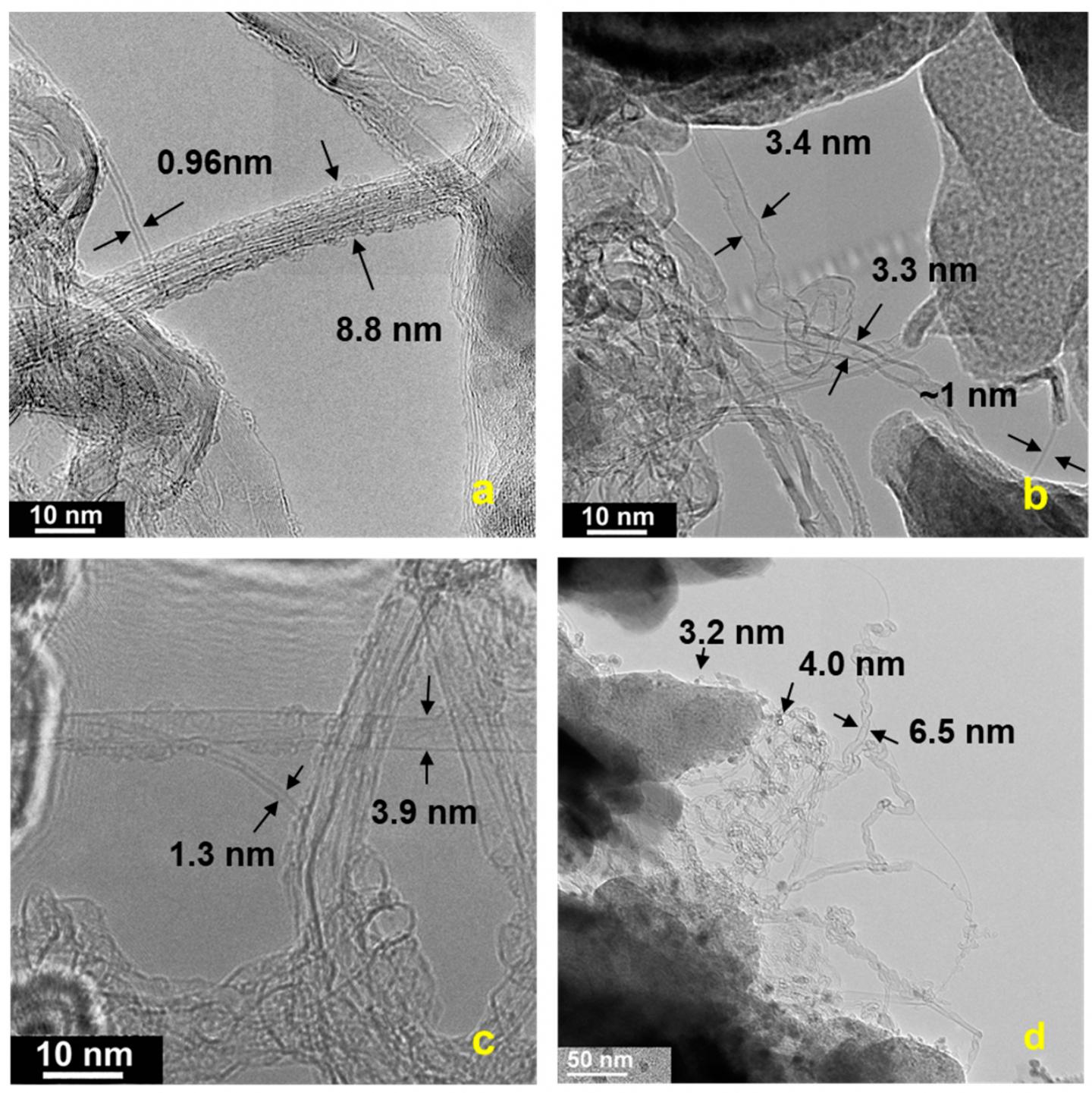
A research collaboration between Rice University and the Energy Safety Research Institute (ESRI) at Swansea University has found that old newspapers can be used as a low cost, eco-friendly material on which to grow single walled carbon nanotubes on a large scale.

Carbon nanotubes are tiny molecules with incredible physical properties that can be used in a huge range of things, such as conductive films for touchscreen displays, flexible electronics, fabrics that create energy and antennas for 5G networks.

The new study, published in the MDPI Journal C , details the research experiments carried out in producing carbon nanotubes which could have the potential to solve some of the problems associated with their large scale production such as:-

  • The high cost of preparing a suitable surface for chemical growth.
  • The difficulties in scaling up the process, as only single surface growth processes have been previously available.

The research team discovered that the large surface area of newspapers provided an unlikely but ideal way to chemically grow carbon nanotubes.

Lead researcher Bruce Brinson said: “Newspapers have the benefit of being used in a roll-to-roll process in a stacked form making it an ideal candidate as a low-cost stackable 2D surface to grow carbon nanotubes.”

However, not all newspaper is equally good – only newspaper produced with sizing made from kaolin, which is china clay, resulted in carbon nanotube growth.

Co-author Varun Shenoy Gangoli said: “Many substances including talc, calcium carbonate, and titanium dioxide can be used in sizing in papers which act as a filler to help with their levels of absorption and wear. However it was our observation that kaolin sizing, and not calcium carbonate sizing, showed us how the growth catalyst, which in our case was iron, is affected by the chemical nature of the substrate.”

ESRI Director Andrew Barron, also a professor at Rice University in the USA, said: “While there have been previous research that shows that graphene, carbon nanotubes and carbon dots can be been synthesised on a variety of materials, such as food waste, vegetation waste, animal, bird or insect waste and chemically grown on natural materials, to date, this research has been limited.

“With our new research, we have found a continuous flow system that dramatically reduces the cost of both substrate and post synthesis process which could impact on the future mass manufacture of single walled carbon nanotubes.”

###

Media Contact
Delyth Purchase
[email protected]

Original Source

https://www.swansea.ac.uk/press-office/news-events/news/2019/11/research-shows-old-newspapers-can-be-used-to-grow-carbon-nanotubes.php

Related Journal Article

http://dx.doi.org/10.3390/c5040066

Tags: Nanotechnology/MicromachinesTechnology/Engineering/Computer Science
Share12Tweet8Share2ShareShareShare2

Related Posts

Creating Synthetic Protein-Binding DNA Systems in Cells

January 17, 2026
blank

Chiral Catalysis Powers Rotary Molecular Motors

January 16, 2026

Selective GlcNAc to GalNAc Epimerization via Kinetic Control

January 15, 2026

Thermal [2+2] Cycloaddition Builds Gem-Difluoro Bicycloalkanes

January 13, 2026
Please login to join discussion

POPULAR NEWS

  • Enhancing Spiritual Care Education in Nursing Programs

    155 shares
    Share 62 Tweet 39
  • PTSD, Depression, Anxiety in Childhood Cancer Survivors, Parents

    147 shares
    Share 59 Tweet 37
  • Robotic Ureteral Reconstruction: A Novel Approach

    78 shares
    Share 31 Tweet 20
  • Study Reveals Lipid Accumulation in ME/CFS Cells

    54 shares
    Share 22 Tweet 14
>

About

We bring you the latest biotechnology news from best research centers and universities around the world. Check our website.

Follow us

Recent News

Hemodynamically Significant PDA Worsens Outcomes in BPD Infants

In-Person vs. Virtual: Facilitators’ Views on Driver Rehab

Empowering Physicians: Advocacy Skills in Academic Medicine

Subscribe to Blog via Email

Enter your email address to subscribe to this blog and receive notifications of new posts by email.

Join 71 other subscribers
  • Contact Us

Bioengineer.org © Copyright 2023 All Rights Reserved.

Welcome Back!

Login to your account below

Forgotten Password?

Retrieve your password

Please enter your username or email address to reset your password.

Log In
No Result
View All Result
  • Homepages
    • Home Page 1
    • Home Page 2
  • News
  • National
  • Business
  • Health
  • Lifestyle
  • Science

Bioengineer.org © Copyright 2023 All Rights Reserved.