• HOME
  • NEWS
  • EXPLORE
    • CAREER
      • Companies
      • Jobs
    • EVENTS
    • iGEM
      • News
      • Team
    • PHOTOS
    • VIDEO
    • WIKI
  • BLOG
  • COMMUNITY
    • FACEBOOK
    • INSTAGRAM
    • TWITTER
Tuesday, June 30, 2026
BIOENGINEER.ORG
No Result
View All Result
  • Login
  • HOME
  • NEWS
  • EXPLORE
    • CAREER
      • Companies
      • Jobs
        • Lecturer
        • PhD Studentship
        • Postdoc
        • Research Assistant
    • EVENTS
    • iGEM
      • News
      • Team
    • PHOTOS
    • VIDEO
    • WIKI
  • BLOG
  • COMMUNITY
    • FACEBOOK
    • INSTAGRAM
    • TWITTER
  • HOME
  • NEWS
  • EXPLORE
    • CAREER
      • Companies
      • Jobs
        • Lecturer
        • PhD Studentship
        • Postdoc
        • Research Assistant
    • EVENTS
    • iGEM
      • News
      • Team
    • PHOTOS
    • VIDEO
    • WIKI
  • BLOG
  • COMMUNITY
    • FACEBOOK
    • INSTAGRAM
    • TWITTER
No Result
View All Result
Bioengineer.org
No Result
View All Result
Home NEWS Science News Biology

Researchers find striking variation in mechanisms that drive sex selection in frogs

Bioengineer by Bioengineer
November 19, 2019
in Biology
Reading Time: 2 mins read
0
IMAGE
Share on FacebookShare on TwitterShare on LinkedinShare on RedditShare on Telegram

IMAGE

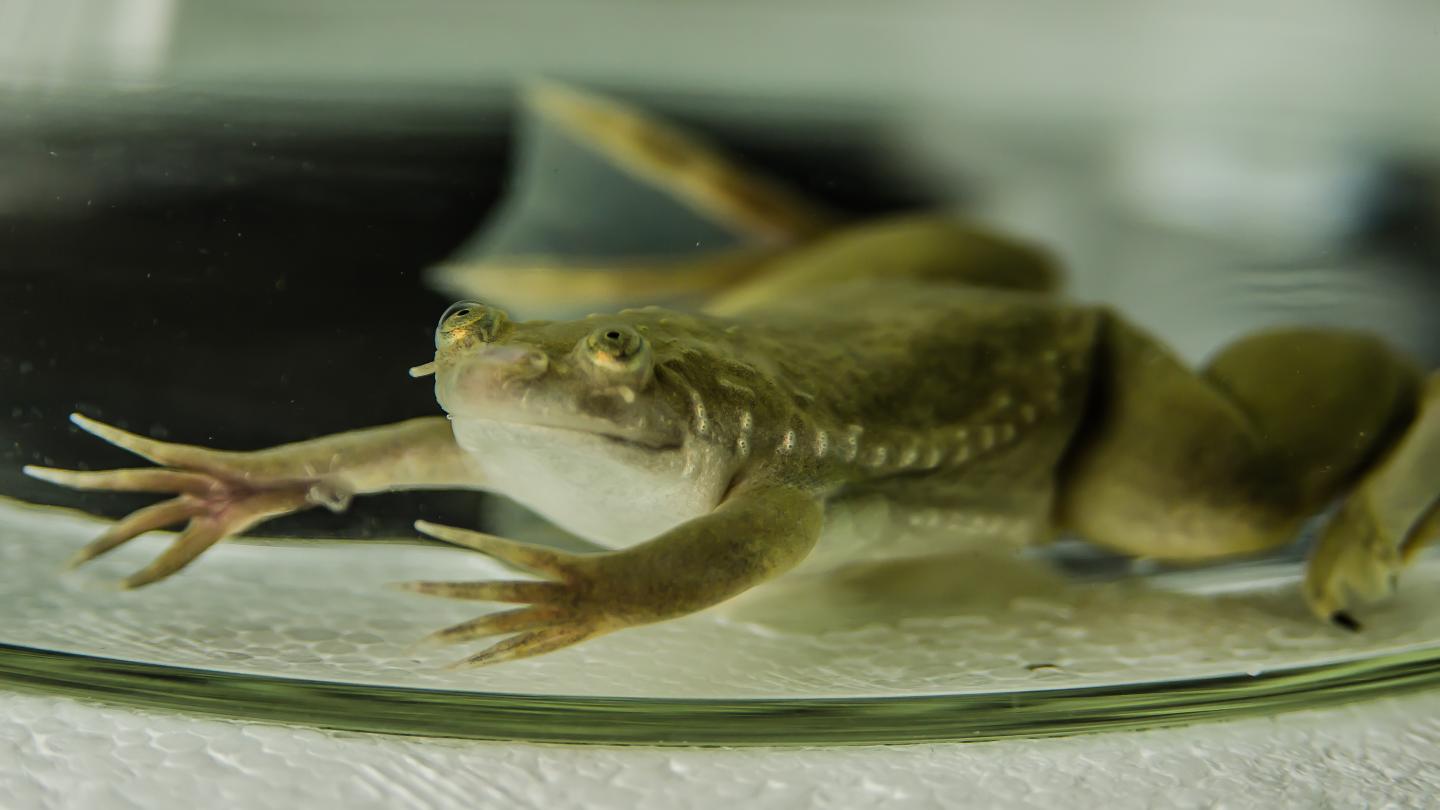
Credit: Adam Bewick

Researchers from McMaster University have discovered striking variation in the underlying genetic machinery that orchestrates sexual differentiation in frogs, demonstrating that evolution of this crucial biological system has moved at a dramatic pace.

A team of biologists examined more than two dozen species of Pipidae, a family of frog found in tropical South America and sub-Saharan Africa, which includes African clawed frogs, a smooth-skinned frog with webbed feet and claws on the hind legs.

They used modern techniques to study a gene known to trigger female development, dm-w, in over 20 species, each of which have both males and females, and requires sexual reproduction to breed.

Researchers discovered that the genes governing sexual selection differed radically across species.

“Sexual differentiation is fundamentally important in an evolutionary context,” says Ben Evans, lead author of the study and a professor of biology at McMaster University.

“Once you have a system that works so well, one might expect that natural selection would guard against changes to that system. This is why it’s so surprising that the genetic basis for sexual differentiation in fact evolved extremely rapidly in pipid frogs,” he says.

The team found at least seven different systems in place for regulating sex determination across closely related species. Evans explains that three underlying mechanisms within the developmental systems are at work.

In some species, female frogs lost dm-w and use another, unknown gene to determine sex, suggesting dm-w stopped functioning over time. In other frog families, scientists were surprised to find the gene was present in both sexes, suggesting the function of gene became sidelined. In yet other species, dm-w became empowered into a potent female-specific sex determining gene.

“The results of this study,” says Evans. “reminds us that evolution happens no matter how important a certain mechanism or trait might be.”

###

The study was published in the journal Molecular Biology and Evolution.

Media Contact
Michelle Donovan
[email protected]
905-525-9140

Related Journal Article

http://dx.doi.org/10.1093/molbev/msz268

Tags: BiologyEvolutionGenesGenetics
Share13Tweet8Share2ShareShareShare2

Related Posts

Scientists Unlock How Jellyfish Heal Wounds in Minutes — Biology

Scientists Unlock How Jellyfish Heal Wounds in Minutes

June 30, 2026

Natural Hallucinogens: Evolution’s Ecological Tools, Not Mere Chemical Byproducts

June 25, 2026

This Famous Butterfly Revealed: Three Distinct Species Hidden in One

June 25, 2026

Scientists Attack Soybean Cyst Nematode by Starving Its Food Source

June 25, 2026
Please login to join discussion

POPULAR NEWS

  • Saying Goodbye to PGY-6: Pediatric Fellowship Realities

    103 shares
    Share 41 Tweet 26
  • Detection of EDCs in Breast Milk and Infant Urine Up to Six Months Highlights Early Exposure Risks

    77 shares
    Share 31 Tweet 19
  • New Drug Candidate Developed at McMaster Shows Potential for Treating Brain Cancer

    58 shares
    Share 23 Tweet 15
  • KTU Researchers Explore Ultrasound’s Role in Enhancing Blood Flow Beyond Diagnostics

    53 shares
    Share 21 Tweet 13

About

We bring you the latest biotechnology news from best research centers and universities around the world. Check our website.

Follow us

Recent News

How a Common Probiotic Ingredient Transforms Immune Cells into Tumor-Fighting Warriors

Why the Same Alzheimer’s Blood Marker Might Indicate a More Serious Condition in Men: Examining the Evidence

From Cells to Boundaries: Unveiling the Origins of Biological Order

Subscribe to Blog via Email

Enter your email address to subscribe to this blog and receive notifications of new posts by email.

Join 82 other subscribers
  • Contact Us

Bioengineer.org © Copyright 2023 All Rights Reserved.

Welcome Back!

Login to your account below

Forgotten Password?

Retrieve your password

Please enter your username or email address to reset your password.

Log In
No Result
View All Result
  • Homepages
    • Home Page 1
    • Home Page 2
  • News
  • National
  • Business
  • Health
  • Lifestyle
  • Science

Bioengineer.org © Copyright 2023 All Rights Reserved.