• HOME
  • NEWS
  • EXPLORE
    • CAREER
      • Companies
      • Jobs
    • EVENTS
    • iGEM
      • News
      • Team
    • PHOTOS
    • VIDEO
    • WIKI
  • BLOG
  • COMMUNITY
    • FACEBOOK
    • INSTAGRAM
    • TWITTER
Monday, February 9, 2026
BIOENGINEER.ORG
No Result
View All Result
  • Login
  • HOME
  • NEWS
  • EXPLORE
    • CAREER
      • Companies
      • Jobs
        • Lecturer
        • PhD Studentship
        • Postdoc
        • Research Assistant
    • EVENTS
    • iGEM
      • News
      • Team
    • PHOTOS
    • VIDEO
    • WIKI
  • BLOG
  • COMMUNITY
    • FACEBOOK
    • INSTAGRAM
    • TWITTER
  • HOME
  • NEWS
  • EXPLORE
    • CAREER
      • Companies
      • Jobs
        • Lecturer
        • PhD Studentship
        • Postdoc
        • Research Assistant
    • EVENTS
    • iGEM
      • News
      • Team
    • PHOTOS
    • VIDEO
    • WIKI
  • BLOG
  • COMMUNITY
    • FACEBOOK
    • INSTAGRAM
    • TWITTER
No Result
View All Result
Bioengineer.org
No Result
View All Result
Home NEWS Science News Chemistry

Study reveals breach of ‘dancing’ barrier governs crystal growth

Bioengineer by Bioengineer
November 12, 2019
in Chemistry
Reading Time: 2 mins read
0
IMAGE
Share on FacebookShare on TwitterShare on LinkedinShare on RedditShare on Telegram

Controlling crystal growth for innovations in medicine, engineering
IMAGE

Credit: Meenesh Singh


While crystals have been studied for centuries and are ubiquitous in daily life — they are in our bones, the food we eat and the batteries we use — scientists still don’t fully understand how crystals grow or how to efficiently manufacture them. As a result, scientific efforts to improve a wide range of crystalline materials, from self-healing biomaterials to solar panels, have been limited.

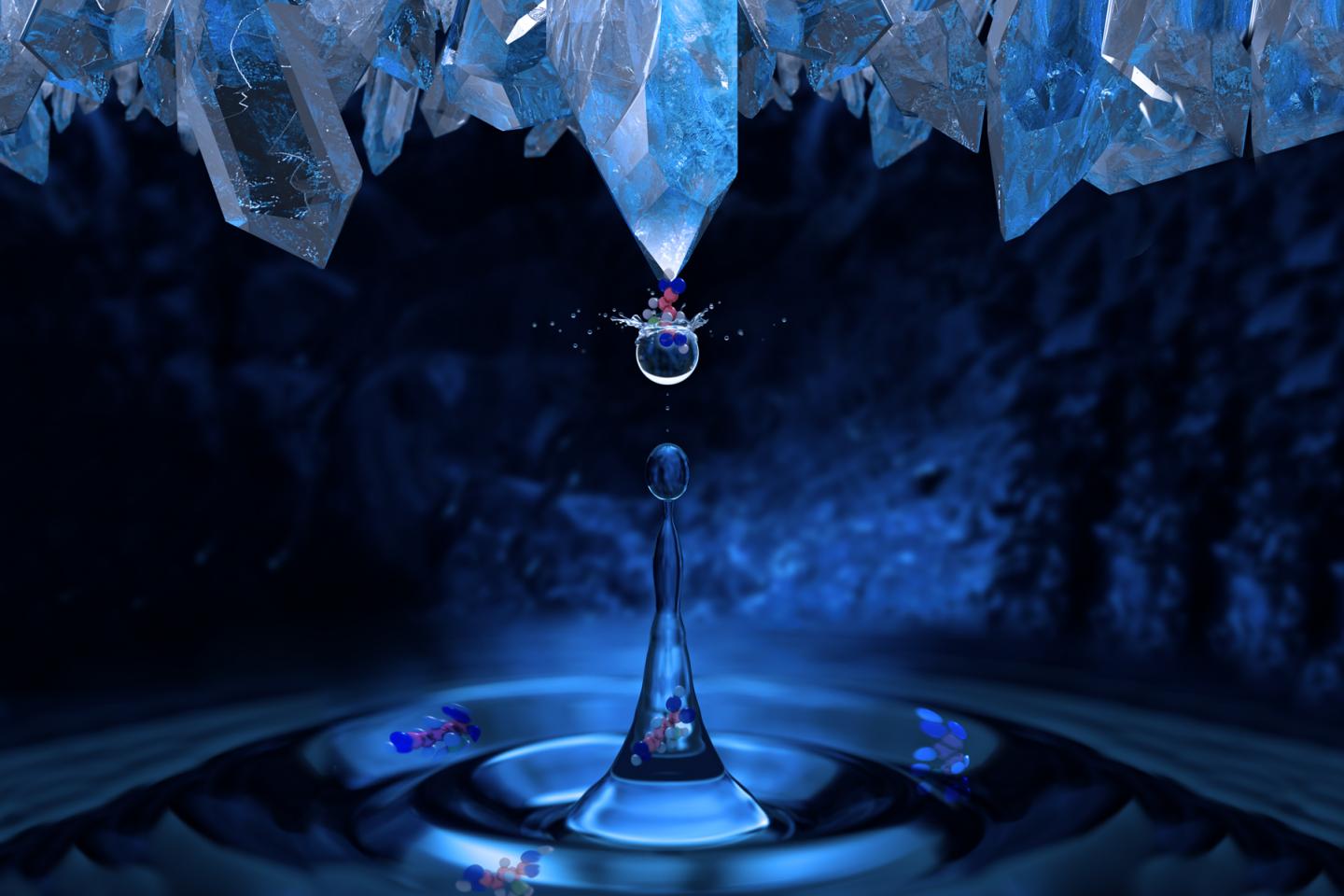
Researchers at the University of Illinois at Chicago have unlocked part of this mystery. By using computer-based simulations to analyze how atoms and molecules move in a solution, the UIC team has identified a general mechanism governing crystal growth that scientists can manipulate when developing new materials.

Specifically, they found that when crystal-forming molecules are surrounded by a solvent, like water, the solvent molecules form a shield that they call a solvation shell. When this shield fluctuates, molecules can break free to form crystals. They also showed that temperature, solvent type and the number of solvent molecules all affect the shell’s fluctuation.

Their findings are reported in the journal Proceedings of the National Academy of Sciences.

“For the first time, we have shown what happens when a molecule leaves a solvent to form a crystal,” said Meenesh Singh, senior author and assistant professor of chemical engineering at the UIC College of Engineering. “Under the right conditions, the shield ‘dances’ around and allows molecules to break free and integrate into the crystal surface. The fluctuations in the solvation shell are key molecular events that explain how crystals form — knowledge of this mechanism has been missing since the inception of crystallization research.”

Singh said understanding this mechanism will provide scientists with greater ability to direct molecules to form crystals for specific structure, shape and size. “This will allow us to make better materials for a wide class of products used in daily life,” he said.

Some examples, he said, are bone implants to promote biomineralization, better drug delivery systems, more stable lithium batteries, and improved semiconductors and agricultural chemicals.

“The molecular insight gained from this study will also help save money in various chemical industries by reducing the need for hit or miss techniques in thousands of trials,” said UIC graduate student Anish Dighe, co-author of the paper. “With the help of this study, we can now design systems that can crystallize the desired solute molecule without so many trials.”

###

This study is funded in part by the National Science Foundation (CBET-1706921).

Media Contact
Jackie Carey
[email protected]
312-996-8277

Original Source

https://today.uic.edu/study-reveals-breach-of-dancing-barrier-governs-crystal-growth

Related Journal Article

http://dx.doi.org/10.1073/pnas.1910691116

Tags: Chemistry/Physics/Materials Sciences
Share12Tweet8Share2ShareShareShare2

Related Posts

blank

Breakthrough in Environmental Cleanup: Scientists Develop Solar-Activated Biochar for Faster Remediation

February 7, 2026
blank

Cutting Costs: Making Hydrogen Fuel Cells More Affordable

February 6, 2026

Scientists Develop Hand-Held “Levitating” Time Crystals

February 6, 2026

Observing a Key Green-Energy Catalyst Dissolve Atom by Atom

February 6, 2026
Please login to join discussion

POPULAR NEWS

  • Robotic Ureteral Reconstruction: A Novel Approach

    Robotic Ureteral Reconstruction: A Novel Approach

    82 shares
    Share 33 Tweet 21
  • Digital Privacy: Health Data Control in Incarceration

    63 shares
    Share 25 Tweet 16
  • Mapping Tertiary Lymphoid Structures for Kidney Cancer Biomarkers

    50 shares
    Share 20 Tweet 13
  • Breakthrough in RNA Research Accelerates Medical Innovations Timeline

    53 shares
    Share 21 Tweet 13

About

We bring you the latest biotechnology news from best research centers and universities around the world. Check our website.

Follow us

Recent News

Private Sector Cuts Greenhouse Gases in Africa’s Livestock

Triple Targeting Enhances CXCL16–CXCR6 Antitumor Response

Intensive Short-Duration Exercise Outperforms Standard Care in Treating Panic Disorder

Subscribe to Blog via Email

Enter your email address to subscribe to this blog and receive notifications of new posts by email.

Join 74 other subscribers
  • Contact Us

Bioengineer.org © Copyright 2023 All Rights Reserved.

Welcome Back!

Login to your account below

Forgotten Password?

Retrieve your password

Please enter your username or email address to reset your password.

Log In
No Result
View All Result
  • Homepages
    • Home Page 1
    • Home Page 2
  • News
  • National
  • Business
  • Health
  • Lifestyle
  • Science

Bioengineer.org © Copyright 2023 All Rights Reserved.