Six scientists with UT involved in effort to assess 1 billion years of plant evolution
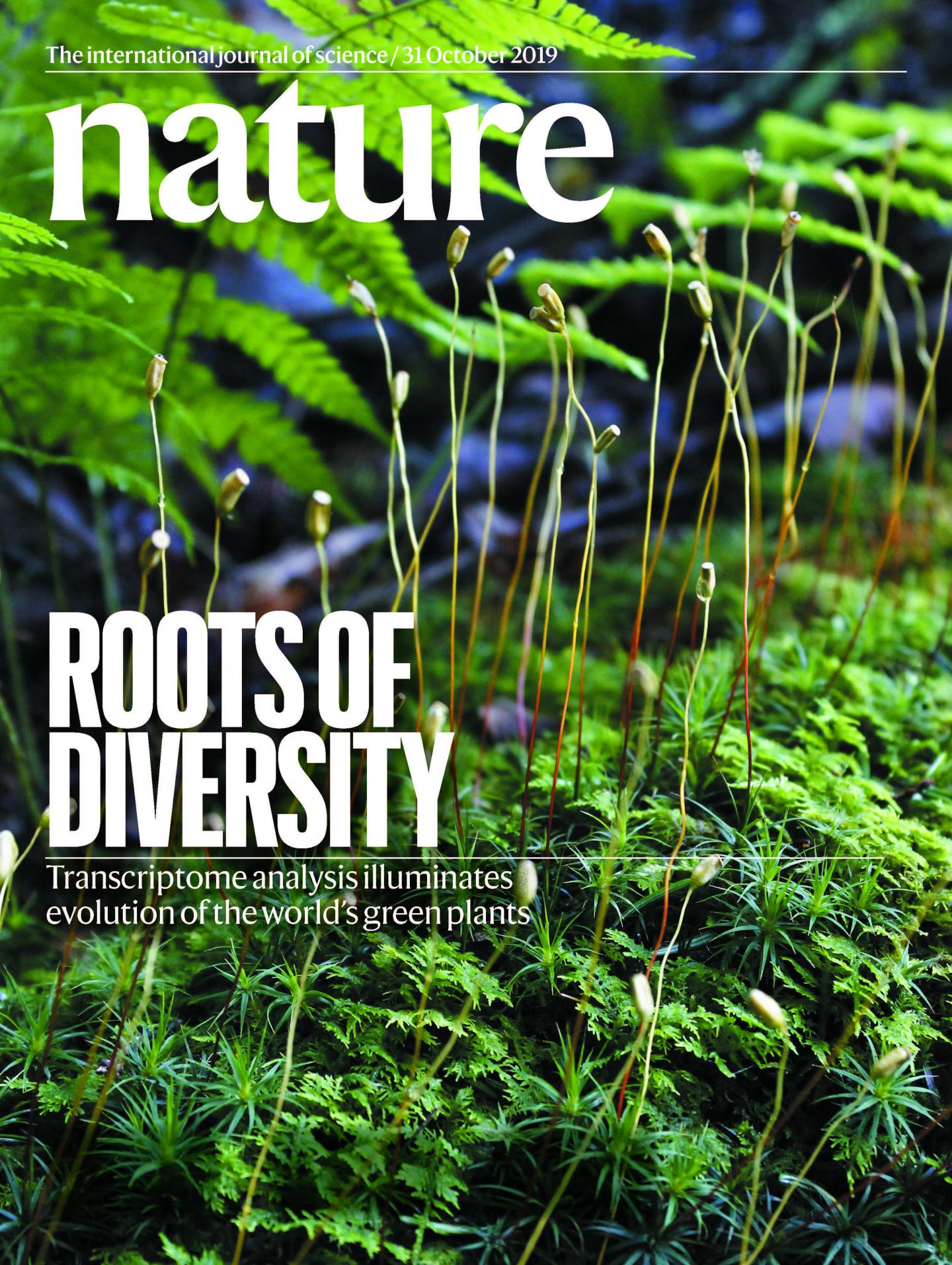
Credit: Photo by A. Petlewski, Cornell University, courtesy Nature magazine.
KNOXVILLE, Tenn. — A new study published in Nature traces the genetic histories of the last billion years of plant life on Earth. Yes, that’s billion with a “b.”
Nicknamed 1KP, the One Thousand Plant Transcriptomes Initiative involves a global collaboration of scientists who are examining the diversification of plant species, genes and genomes across the 1-billion-year history of green plants. Led by Gane Ka-Shu Wong, professor in the University of Alberta’s Department of Biological Sciences, and James Leebens-Mack, professor of plant biology in the University of Georgia Franklin College of Arts and Sciences, the 9-year effort has involved more than 200 researchers internationally. Two of them are established scientists from the University of Tennessee, and four more of the co-authors participated on the project while pursuing graduate degrees at UT. The faculty members are C. Neal Stewart, Jr., and Ed Schilling.
Stewart is a professor of plant sciences in the UT Herbert College of Agriculture. He also holds the endowed Racheff Chair of Excellence in Plant Molecular Genetics and is co-director of the UT Center for Agricultural Synthetic Biology within the UT Institute of Agriculture. Using his lab, Stewart and several graduate students and scientists with post-doctoral appointments helped identify plants to grow for the project from which RNA from expressed genes could be isolated for sequencing.
The group identified approximately 50 different species for the 1KP effort, then performed several studies that have already been published. “Essentially, all four people from my group who are authors in the Nature paper took responsibility for nominating, growing and performing research with their favorite ‘weird plants,'” said Stewart.
“We targeted flammable plants, plants that can move their leaves, plants that can accumulate heavy metals and plants with antimicrobial properties, to name a few categories,” Stewart explained.
The UTIA co-authors include Jason Burris, who was a Ph.D. student during the 1KP effort and who now holds a post-doctoral appointment in the UTIA Department of Food Science. Burris continues to work with Stewart on DARPA-funded projects. Additional co-authors from Stewart’s lab are former Ph.D. students Blake Joyce, who is now a scientist at the University of Arizona; Kellie Burris, who currently holds a post-doctoral appointment at North Carolina State University; and Yanhui Peng, who is now a staff scientist at the Centers for Disease Control and Prevention in Atlanta.
The second UT faculty co-author on the 1KP project, Ed Schilling, is a professor of plant systematics in the Department of Ecology and Evolutionary Biology. Schilling is involved in collaborative research with a group in Germany to study the evolution of wild lettuce, and information produced in the 1KP project is helping their ongoing efforts to understand the relationship between species in North America and Europe/Asia in this complex group of plants.
###
The paper, “One Thousand Plant Transcriptomes and the Phylogenomics of Green Plants,” was published online October 23 in Nature, and is featured on the cover of the October 31 issue. Sequences, sequence alignments and tree data are available through the CyVerse Data Commons.
Through its land-grant mission of research, teaching and extension, the University of Tennessee Institute of Agriculture touches lives and provides Real. Life. Solutions. ag.tennessee.edu.
Media Contact
Patricia McDaniels
[email protected]
615-835-4570
Original Source
https:/
Related Journal Article
http://dx.