

• HOME
  • NEWS
  • EXPLORE
    • CAREER
      • Companies
      • Jobs
    • EVENTS
    • iGEM
      • News
      • Team
    • PHOTOS
    • VIDEO
    • WIKI
  • BLOG
  • COMMUNITY
    • FACEBOOK
    • INSTAGRAM
    • TWITTER
Friday, January 2, 2026
BIOENGINEER.ORG
No Result
View All Result
  • Login
  • HOME
  • NEWS
  • EXPLORE
    • CAREER
      • Companies
      • Jobs
        • Lecturer
        • PhD Studentship
        • Postdoc
        • Research Assistant
    • EVENTS
    • iGEM
      • News
      • Team
    • PHOTOS
    • VIDEO
    • WIKI
  • BLOG
  • COMMUNITY
    • FACEBOOK
    • INSTAGRAM
    • TWITTER
  • HOME
  • NEWS
  • EXPLORE
    • CAREER
      • Companies
      • Jobs
        • Lecturer
        • PhD Studentship
        • Postdoc
        • Research Assistant
    • EVENTS
    • iGEM
      • News
      • Team
    • PHOTOS
    • VIDEO
    • WIKI
  • BLOG
  • COMMUNITY
    • FACEBOOK
    • INSTAGRAM
    • TWITTER
No Result
View All Result
Bioengineer.org
No Result
View All Result
Home NEWS Science News Science

UTMB researchers create powerful new tools to combat Zika

Bioengineer by Bioengineer
November 18, 2016
in Science
Reading Time: 2 mins read
0
Share on FacebookShare on TwitterShare on LinkedinShare on RedditShare on Telegram

New research from The University of Texas Medical Branch in Galveston, in collaboration with Southwest University in Chongqing, China and the University of Leuven in Belgium, have developed a way to replicate the basic structure of the Zika virus, stripping it of the genes that make the virus infectious. The replicon system research was spearheaded by Dr. Xuping Xie and recently published in EBioMedicine.

Replicons are segments of viral genome that can replicate on their own, independent of the cellular chromosome. The new Zika replicon system has deleted some of the genes that give the virus its structure. Because of this, the altered Zika virus is no longer infectious, lowering the safety risk involved in working with it.

"One of these replicons can be used to locate portions of the viral molecule that block or halt viral replication, making it a powerful tool for vaccine development," said senior author Pei-Yong Shi, a professor in the department of biochemistry and molecular biology.

The replicon system was engineered by attaching genes that allow researchers to tag certain parts of the virus that they are interested in. Luciferase, the chemical that gives fireflies their signature glow, was used to make targeted viral components light up – making processes like replication much easier to observe.

"The other newly-developed replicon was designed to study potential antiviral agents by differentiating between when the virus is making copies of itself and when it's altering its structure," Shi said. "Knowing when and how the virus is mutating is important, as evolution is what makes viruses more adept at invading hosts like humans or animals or become more damaging once inside the host."

The recent Zika virus outbreak has highlighted the urgent need to establish genetic tools for studying how the virus multiplies and causes disease within a newly infected person in order to develop countermeasures. This is especially important because the Zika virus is spreading rapidly and behaves differently than many other viruses – for instance, it can be transmitted sexually and is associated with microcephaly and Guillain-Barre syndrome.

###

Other authors include UTMB's Xuping Xie, Jing Zou, Shan Chao, Yujiao Yang and Dieudonné Buh Kum and Kai Dallmeier and Johan Neyts from the University of Leuven in Belguim. Yujiao Yang is also affiliated with Southwest University in China.

Media Contact

Donna Ramirez
[email protected]
409-772-8791
@utmb_news

http://www.utmb.edu

############

Story Source: Materials provided by Scienmag
Share12Tweet8Share2ShareShareShare2

Related Posts

Five or more hours of smartphone usage per day may increase obesity

July 25, 2019
IMAGE

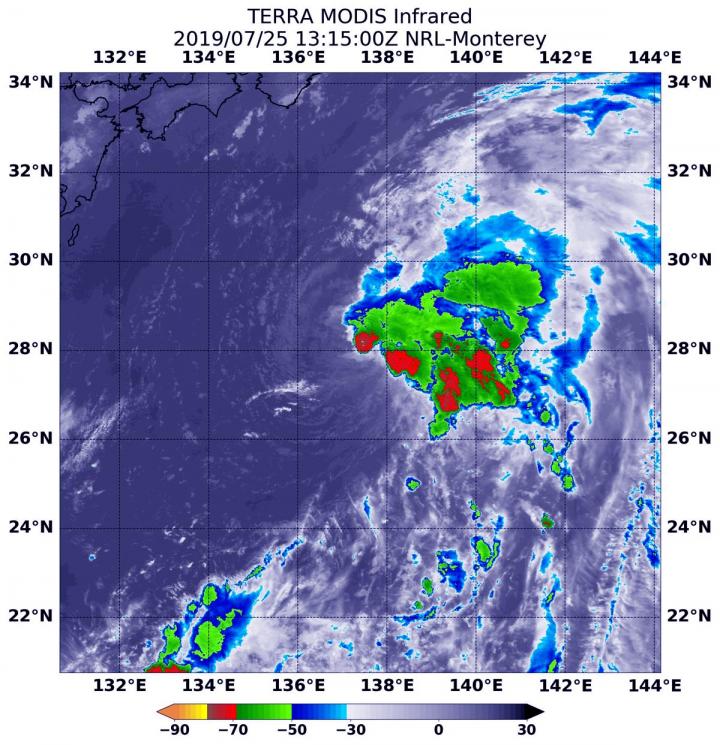
NASA’s terra satellite finds tropical storm 07W’s strength on the side

July 25, 2019

NASA finds one burst of energy in weakening Depression Dalila

July 25, 2019

Researcher’s innovative flood mapping helps water and emergency management officials

July 25, 2019
Please login to join discussion

POPULAR NEWS

  • blank

    PTSD, Depression, Anxiety in Childhood Cancer Survivors, Parents

    112 shares
    Share 45 Tweet 28
  • NSF funds machine-learning research at UNO and UNL to study energy requirements of walking in older adults

    71 shares
    Share 28 Tweet 18
  • Exploring Audiology Accessibility in Johannesburg, South Africa

    52 shares
    Share 21 Tweet 13
  • SARS-CoV-2 Subvariants Affect Outcomes in Elderly Hip Fractures

    44 shares
    Share 18 Tweet 11

About

We bring you the latest biotechnology news from best research centers and universities around the world. Check our website.

Follow us

Recent News

Topological Edge Cavities Boost Quality and Spectral Range

TECPR1 Tubulates Lysosomes to Repair Energy Crisis

Ultrawideband Polymer Transducers Boost Hemispherical Optoacoustic Imaging

Subscribe to Blog via Email

Enter your email address to subscribe to this blog and receive notifications of new posts by email.

Join 71 other subscribers
  • Contact Us

Bioengineer.org © Copyright 2023 All Rights Reserved.

Welcome Back!

Login to your account below

Forgotten Password?

Retrieve your password

Please enter your username or email address to reset your password.

Log In
No Result
View All Result
  • Homepages
    • Home Page 1
    • Home Page 2
  • News
  • National
  • Business
  • Health
  • Lifestyle
  • Science

Bioengineer.org © Copyright 2023 All Rights Reserved.
