Polar scientists to share how region is responding to rapid warming
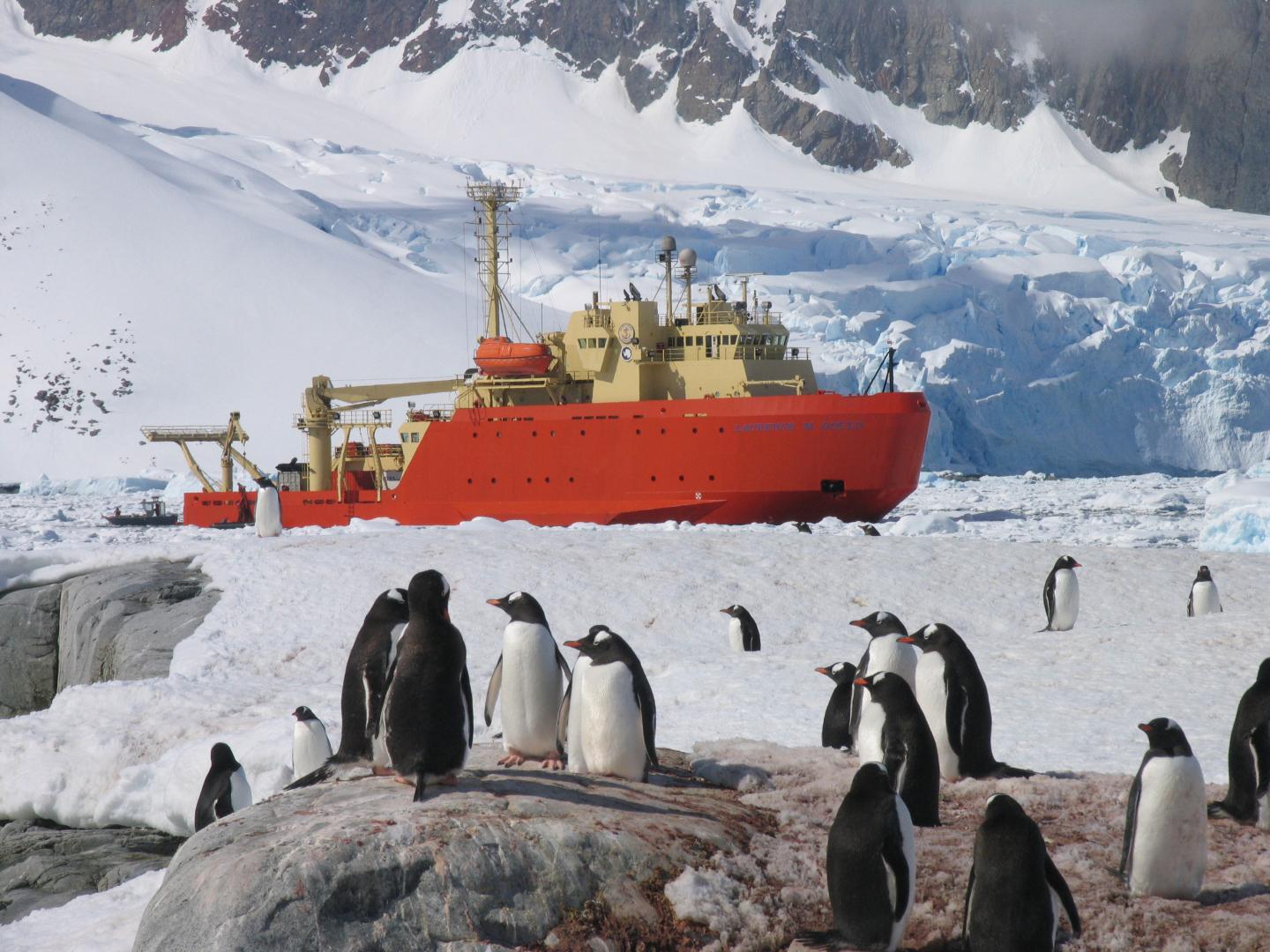
Credit: United States Antarctic Program
KINGSTON, R.I., – October 25, 2019 – Starting Monday, Oct. 28, the public and classrooms around the country are invited to interact in real time with polar scientists conducting critical research in the region of the Western Antarctic Peninsula, which has warmed four times more than anywhere else on Earth. The Inner Space Center at URI’s Graduate School of Oceanography will broadcast live “Polar Stories” to connect public and school audiences with polar scientists at sea on the R/V Lawrence M. Gould and in the U.S. Palmer Field Station, located on the peninsula.
The Antarctic Broadcasts: Broader Impacts Through Telepresence project is a National Science Foundation-funded pilot that will test ship-to-shore telepresence technology in a new and challenging region–extreme southern latitudes. The Inner Space Center team will broadcast from the Gould and from Palmer Station. Since the early 1990s, scientists have been studying how the peninsula’s polar environment is responding to rapid warming through research cruises and the Palmer Station Long Term Ecological Research project.
“Most U.S. citizens are unaware that the NSF operates the only three U.S. settlements in Antarctica: McMurdo Station, Palmer Station and Amundsen-Scott South Pole Station,” says Gail Scowcroft, associate director of the Inner Space Center and principal investigator of broadcast and telepresence project. “It is more important than ever for people to know what is happening in the polar regions. Our activities have led to unprecedented climatic warming, and the polar regions are most affected.”
The Gould will be transporting scientists, research gear, and other provisions for the spring and summer research season at Palmer Station in the Southern Hemisphere. Live interactions will take place from the ship during its round-trip transit between Punta Arenas, Chile and Antarctica, as well as while the Gould is stationed at Anvers Island, Antarctica.
“The Inner Space Center is excited to produce and support the first live interactive broadcasts in high definition from the R/V Laurence M. Gould,” says Dwight Coleman, director of the center and co-principal investigator on the project. “Using advanced satellite and video broadcasting technologies, the Inner Space Center will connect live audiences with research activities on the ship in one of the most remote regions on the planet.”
Each “Polar Stories” session will last approximately 25 minutes and will provide live feeds from the ship as Inner Space Center marine biologist and education specialist Holly Morin introduces viewers to the Gould’s onboard scientists. The scientists will share stories about their Antarctic research, including research on penguins and ocean technologies; and audience members will be able to ask questions of the scientists in real time.
“Science communication is important as it builds support for science, makes it more diverse and inclusive, and fosters collaboration and innovation,” says Morin. “This is even more critical for research conducted in remote environments or on oceanographic expeditions, where only a limited number of people can participate. Connecting audiences with scientists and other ship personnel or at a remote science station in real time broadens the impact of that research beyond the scientific community.”
The project has scheduled interactions with the Smithsonian National Museum of Natural History in Washington D.C., the Detroit Zoo, and several U.S. schools, but all are welcome to participate in a Facebook Live interaction on Monday, October 28. Any school may register for live interactions on Tuesday, October 29 and Thursday, October 31.
###
Schedule and Registration Information:
Facebook Live
Monday, Oct. 28, at 7 p.m. Eastern
Be sure to “like” the Inner Space Center’s Facebook page to follow this expedition and future programs (https:/
Polar Stories: Live from Antarctica! School Group Interactions:
Tuesday, Oct. 29, at 9 a.m. Eastern
Thursday, Oct. 31, at noon Eastern
Registration is required to take part in a live interaction. Use this link to register: http://ow.
Media Contact
Peter Hanlon
[email protected]
401-874-6397
Original Source
https:/