• HOME
  • NEWS
  • EXPLORE
    • CAREER
      • Companies
      • Jobs
    • EVENTS
    • iGEM
      • News
      • Team
    • PHOTOS
    • VIDEO
    • WIKI
  • BLOG
  • COMMUNITY
    • FACEBOOK
    • INSTAGRAM
    • TWITTER
Tuesday, July 7, 2026
BIOENGINEER.ORG
No Result
View All Result
  • Login
  • HOME
  • NEWS
  • EXPLORE
    • CAREER
      • Companies
      • Jobs
        • Lecturer
        • PhD Studentship
        • Postdoc
        • Research Assistant
    • EVENTS
    • iGEM
      • News
      • Team
    • PHOTOS
    • VIDEO
    • WIKI
  • BLOG
  • COMMUNITY
    • FACEBOOK
    • INSTAGRAM
    • TWITTER
  • HOME
  • NEWS
  • EXPLORE
    • CAREER
      • Companies
      • Jobs
        • Lecturer
        • PhD Studentship
        • Postdoc
        • Research Assistant
    • EVENTS
    • iGEM
      • News
      • Team
    • PHOTOS
    • VIDEO
    • WIKI
  • BLOG
  • COMMUNITY
    • FACEBOOK
    • INSTAGRAM
    • TWITTER
No Result
View All Result
Bioengineer.org
No Result
View All Result
Home NEWS Science News Biology

Survey completeness of a global citizen-science database of bird occurrence

Bioengineer by Bioengineer
October 22, 2019
in Biology
Reading Time: 2 mins read
0
IMAGE
Share on FacebookShare on TwitterShare on LinkedinShare on RedditShare on Telegram

IMAGE

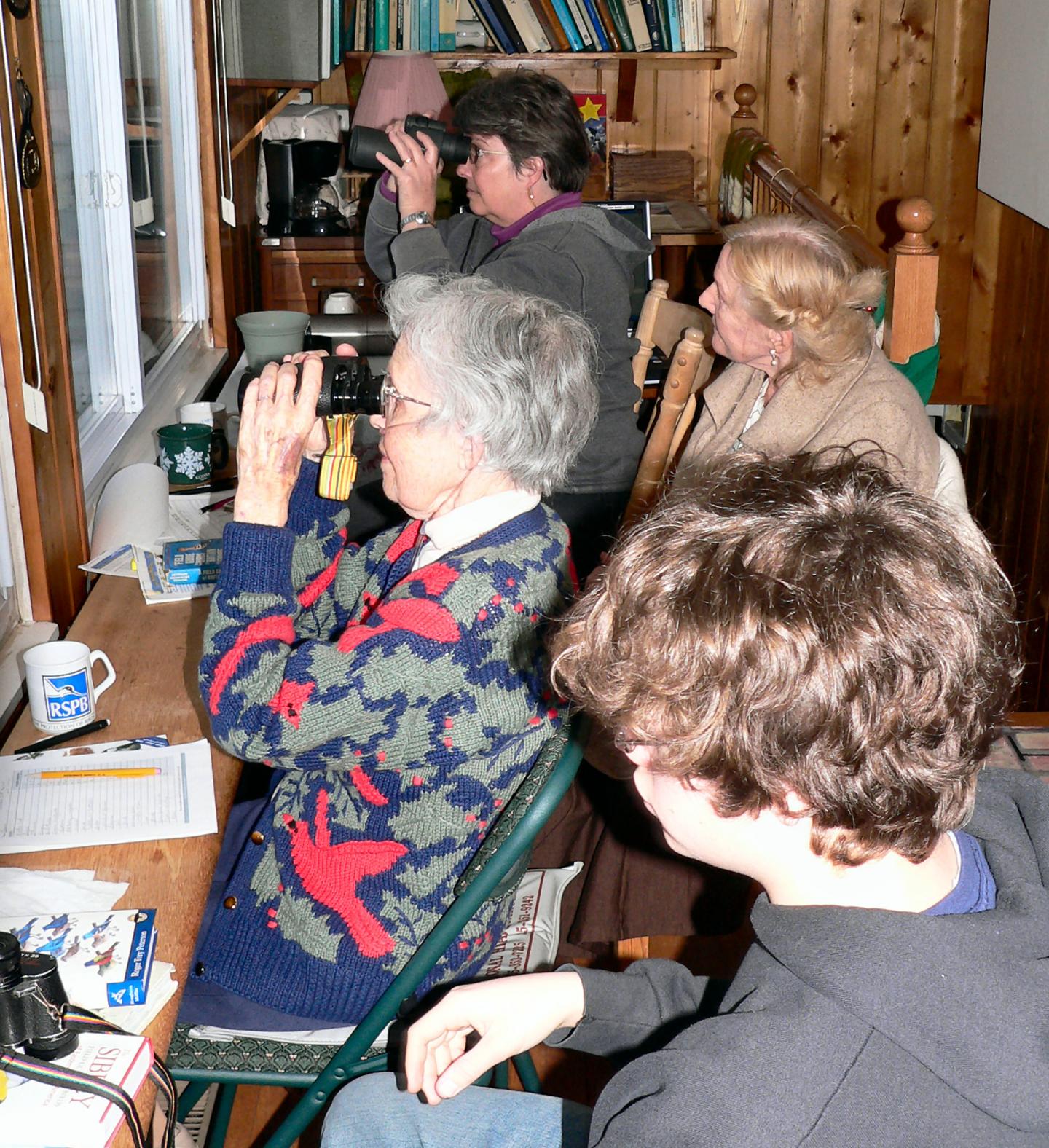
Credit: Blythe Mettitt, courtesy Cornell Lab of Ornithology


There are many shortfalls in knowledge of the world’s biodiversity, and one of the most basic is the lack of knowledge about where species occur geographically. This deficiency has broad ramifications for research and conservation. This study, published in Ecography, suggests the development of citizen science programs to collect data by volunteers has the potential to reduce this shortfall.

For this study, the researchers used bird observations entered in the eBird online program run by the Cornell Lab of Ornithology. The goal was to measure survey completeness of the world’s birds at three temporal resolutions and four spatial resolutions across the annual cycle during the period 2002 to 2018.

This global assessment of the completeness of eBird occurrence information identified the presence of strong geographic, seasonal and yearly patterns.

–As expected, occurrence information was concentrated in regions of North America and Europe with secondary concentrations in southern India, eastern Australia and New Zealand.

–The highest levels of survey completeness occurred in these same regions, with North America having the highest overall levels.

–As expected, survey completeness was higher during spring migration within temperate and boreal regions of North America and Europe when birdwatching activities tend to be more intensive.

–Large regions in South America, Africa, and northern Asia contained no occurrence information or low levels of survey completeness.

–Survey completeness increased from 2002 to 2018 in a consistent fashion across seasons, with the strongest gains occurring in India and tropical forests after 2012 and the weakest gains occurring in Africa and montane regions.

These and other findings from the study highlight the potential of citizen science initiatives to further knowledge of where species occur across space and time, information whose applications under global change will likely increase.

###

Media Contact
Pat Leonard
[email protected]
607-254-2137

Related Journal Article

http://dx.doi.org/10.1111/ecog.04632

Tags: BiologyEcology/Environment
Share12Tweet8Share2ShareShareShare2

Related Posts

Here are a few rewritten headlines for a science magazine post, each with a slightly different tone: Intriguing & poetic: How do organs sculpt themselves? Sea stars hold the secret Direct & research-focused: Sea stars reveal the hidden rules of organ formation Metaphorical & inviting: Tiny architects beneath the waves: What sea stars teach us about building organs Short & punchy: Star-shaped clues to how our organs take shape Question-led: Could a sea star show us how organs form? Elegant & feature-style: The body’s blueprint, glimpsed in a sea star’s arm

July 6, 2026
Bacteria evolve faster with unconventional gene copies — Biology

Bacteria evolve faster with unconventional gene copies

July 6, 2026

Neighbours rewire soil feedback via root microbiome shifts

July 6, 2026

Evolution-Inspired Biosensors Revolutionize Lipid Tracking in Real Time

July 2, 2026
Please login to join discussion

POPULAR NEWS

  • Detection of EDCs in Breast Milk and Infant Urine Up to Six Months Highlights Early Exposure Risks

    77 shares
    Share 31 Tweet 19
  • New Drug Candidate Developed at McMaster Shows Potential for Treating Brain Cancer

    58 shares
    Share 23 Tweet 15
  • Saying Goodbye to PGY-6: Pediatric Fellowship Realities

    103 shares
    Share 41 Tweet 26
  • KTU Researchers Explore Ultrasound’s Role in Enhancing Blood Flow Beyond Diagnostics

    53 shares
    Share 21 Tweet 13

About

We bring you the latest biotechnology news from best research centers and universities around the world. Check our website.

Follow us

Recent News

Flame retardant BDE-209 targets molecularly linked to ulcerative colitis

Ultra-high frequency particle impacts mimic rockbursts to shatter hard rock

Kidney transplant outcomes in older adults studied by German researchers

Subscribe to Blog via Email

Enter your email address to subscribe to this blog and receive notifications of new posts by email.

Join 83 other subscribers
  • Contact Us

Bioengineer.org © Copyright 2023 All Rights Reserved.

Welcome Back!

Login to your account below

Forgotten Password?

Retrieve your password

Please enter your username or email address to reset your password.

Log In
No Result
View All Result
  • Homepages
    • Home Page 1
    • Home Page 2
  • News
  • National
  • Business
  • Health
  • Lifestyle
  • Science

Bioengineer.org © Copyright 2023 All Rights Reserved.