• HOME
  • NEWS
  • EXPLORE
    • CAREER
      • Companies
      • Jobs
    • EVENTS
    • iGEM
      • News
      • Team
    • PHOTOS
    • VIDEO
    • WIKI
  • BLOG
  • COMMUNITY
    • FACEBOOK
    • INSTAGRAM
    • TWITTER
Saturday, February 7, 2026
BIOENGINEER.ORG
No Result
View All Result
  • Login
  • HOME
  • NEWS
  • EXPLORE
    • CAREER
      • Companies
      • Jobs
        • Lecturer
        • PhD Studentship
        • Postdoc
        • Research Assistant
    • EVENTS
    • iGEM
      • News
      • Team
    • PHOTOS
    • VIDEO
    • WIKI
  • BLOG
  • COMMUNITY
    • FACEBOOK
    • INSTAGRAM
    • TWITTER
  • HOME
  • NEWS
  • EXPLORE
    • CAREER
      • Companies
      • Jobs
        • Lecturer
        • PhD Studentship
        • Postdoc
        • Research Assistant
    • EVENTS
    • iGEM
      • News
      • Team
    • PHOTOS
    • VIDEO
    • WIKI
  • BLOG
  • COMMUNITY
    • FACEBOOK
    • INSTAGRAM
    • TWITTER
No Result
View All Result
Bioengineer.org
No Result
View All Result
Home NEWS Science News

Preclinical studies involving resistance to antiangiogenic therapies

Bioengineer by Bioengineer
November 18, 2016
in Science News
Reading Time: 2 mins read
0
Share on FacebookShare on TwitterShare on LinkedinShare on RedditShare on Telegram
IMAGE

Credit: Dr. Michalis Mastri et al, Bentham Science Publishers

New blood vessel growth, or angiogenesis, is critical for cancer to grow and spread throughout the body. Drugs that target vascular endothelial growth factor (VEGF) — a key driver of angiogenesis — are now approved for the treatment of several metastatic cancers. However, not all patients respond and many more eventually become resistant after initial treatment benefits.

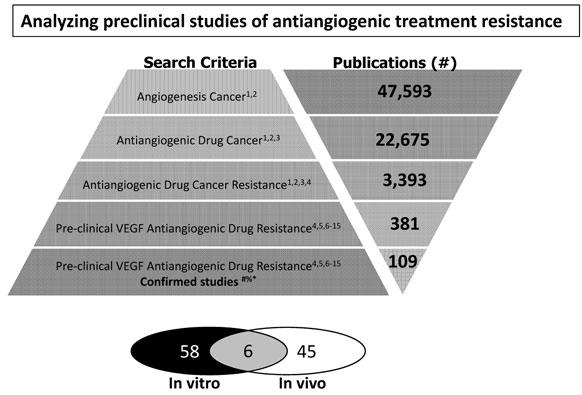
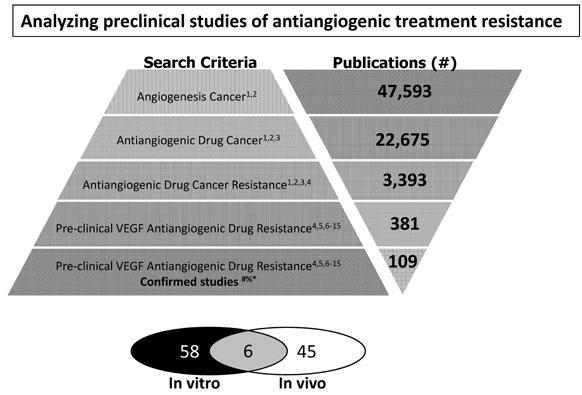
While researchers have sought to identify possible mechanisms to explain drug resistance the methods to study have proven complex. Preclinical studies seeking to identify reasons for antiangiogenic treatment failure have relied on animal models of cancer because the complex interaction between the tumor and the "normal" blood vessels that the treatment targets is difficult to reproduce in a petri dish. But the use of animal models can also increase the varience in results.

In a review published in the journal Current Drug Targets, researchers at Roswell Park Cancer Institute in Buffalo, New York, examined this variability and found that the many mechanisms of resistance identified in laboratory models are based on inconsistent definitions of treatment failure. "Most studies involve only a few drugs and animal models that do not fully recapitulate clinically relevant metastatic disease," said Dr. John Ebos, Assistant Professor at the Departments of Cancer Genetics and Medicine at Roswell Park. "Many excellent studies have been performed; however, it is difficult to determine which are most applicable to patients."

The literature considered in this new review highlights the challenges of studying resistance to inhibitors of tumor angiogenesis in preclinical models and the need to improve methodology to help qualify and quantify treatment failure to predict alternative strategies that will be of greatest benefit to patients.

###

For more information about the article, please visit http://benthamscience.com/journals/current-drug-targets/volume/17/issue/15/page/1747/

Reference: Mastri, M.; et al (2016). The Challenges of Modeling Drug Resistance to Antiangiogenic Therapy., DOI: 10.2174/1389450117666151209123544

Media Contact

Faizan ul Haq
[email protected]
@BenthamScienceP

http://benthamscience.com/

############

Story Source: Materials provided by Scienmag

Share12Tweet8Share2ShareShareShare2

Related Posts

Evaluating Pediatric Emergency Care Quality in Ethiopia

February 7, 2026

TPMT Expression Predictions Linked to Azathioprine Side Effects

February 7, 2026

Improving Dementia Care with Enhanced Activity Kits

February 7, 2026

Decoding Prostate Cancer Origins via snFLARE-seq, mxFRIZNGRND

February 7, 2026
Please login to join discussion

POPULAR NEWS

  • Robotic Ureteral Reconstruction: A Novel Approach

    Robotic Ureteral Reconstruction: A Novel Approach

    82 shares
    Share 33 Tweet 21
  • Digital Privacy: Health Data Control in Incarceration

    63 shares
    Share 25 Tweet 16
  • Study Reveals Lipid Accumulation in ME/CFS Cells

    57 shares
    Share 23 Tweet 14
  • Breakthrough in RNA Research Accelerates Medical Innovations Timeline

    53 shares
    Share 21 Tweet 13

About

We bring you the latest biotechnology news from best research centers and universities around the world. Check our website.

Follow us

Recent News

Evaluating Pediatric Emergency Care Quality in Ethiopia

TPMT Expression Predictions Linked to Azathioprine Side Effects

Improving Dementia Care with Enhanced Activity Kits

Subscribe to Blog via Email

Enter your email address to subscribe to this blog and receive notifications of new posts by email.

Join 73 other subscribers
  • Contact Us

Bioengineer.org © Copyright 2023 All Rights Reserved.

Welcome Back!

Login to your account below

Forgotten Password?

Retrieve your password

Please enter your username or email address to reset your password.

Log In
No Result
View All Result
  • Homepages
    • Home Page 1
    • Home Page 2
  • News
  • National
  • Business
  • Health
  • Lifestyle
  • Science

Bioengineer.org © Copyright 2023 All Rights Reserved.