• HOME
  • NEWS
  • EXPLORE
    • CAREER
      • Companies
      • Jobs
    • EVENTS
    • iGEM
      • News
      • Team
    • PHOTOS
    • VIDEO
    • WIKI
  • BLOG
  • COMMUNITY
    • FACEBOOK
    • INSTAGRAM
    • TWITTER
Saturday, February 7, 2026
BIOENGINEER.ORG
No Result
View All Result
  • Login
  • HOME
  • NEWS
  • EXPLORE
    • CAREER
      • Companies
      • Jobs
        • Lecturer
        • PhD Studentship
        • Postdoc
        • Research Assistant
    • EVENTS
    • iGEM
      • News
      • Team
    • PHOTOS
    • VIDEO
    • WIKI
  • BLOG
  • COMMUNITY
    • FACEBOOK
    • INSTAGRAM
    • TWITTER
  • HOME
  • NEWS
  • EXPLORE
    • CAREER
      • Companies
      • Jobs
        • Lecturer
        • PhD Studentship
        • Postdoc
        • Research Assistant
    • EVENTS
    • iGEM
      • News
      • Team
    • PHOTOS
    • VIDEO
    • WIKI
  • BLOG
  • COMMUNITY
    • FACEBOOK
    • INSTAGRAM
    • TWITTER
No Result
View All Result
Bioengineer.org
No Result
View All Result
Home NEWS Science News Biology

Ants fight plant diseases

Bioengineer by Bioengineer
October 17, 2019
in Biology
Reading Time: 2 mins read
0
IMAGE
Share on FacebookShare on TwitterShare on LinkedinShare on RedditShare on Telegram

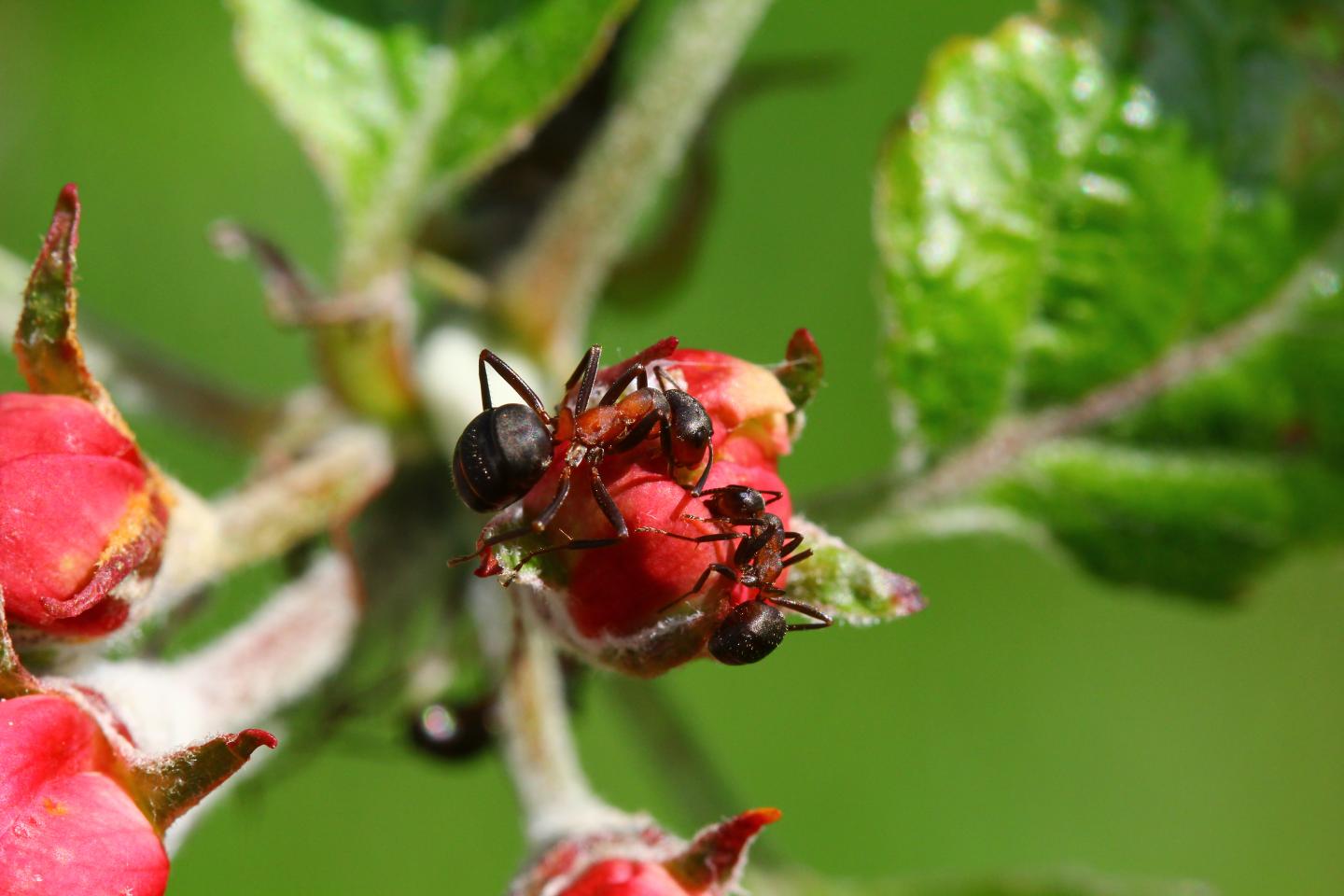
New research from Aarhus University shows that ants inhibit at least 14 different plant diseases.
IMAGE

Credit: Jens Henrik Petersen


New research from Aarhus University shows that ants inhibit at least 14 different plant diseases. The small insects secrete antibiotics from glands in the body. On their legs and body, they also host colonies of bacteria that secrete antibiotics. It is probably these substances that inhibit a number of different diseases and researchers now hope to find biological pesticides that may conquer resistant plant diseases.

Ants live closely together in their ant hills and are therefore highly exposed to spread of infections. But they have their own medication against diseases. On the one hand, they are very hygienic and, on the other hand, they can cure themselves and treat each other with antibiotics produced by themselves. Through body glands, the ants secrete antibiotics, and bacterial colonies, which the ants cultivate on their legs and body, may also secrete antibiotics.

Previous research has shown that wood ants moved to an apple plantation reduced the occurrence of two apple diseases (scab and apple rot) in the plantation. This prompted researchers to go through the existing literature where they have now found scientific evidence that ants can inhibit at least 14 different plant diseases.

“We don’t yet know how the ants cure the plants” says senior researcher Joachim Offenberg, Department of Bioscience, Aarhus University, who led the research.

“But we do know that the ants secrete pheromones on their trails on the plants to find their way. And we know that some of these have antibiotic properties. The curing effect on plant diseases could be due to these pheromones,” Joachim Offenberg explains.

The researchers believe that ants and their antibiotics can be put to use in agriculture in the future.

“We hope that more research in the field will reveal new types of biological control agents that can be used in the fight against resistant plant diseases in agriculture,” Joachim Offenberg says.

And the idea is not mere utopia: Other researchers have found antibiotics on African ants that are capable of killing MRSA and other multi-resistant bacteria.

###

The article: ‘Ants suppressing plant pathogens: a review’ is published in the acknowledged journal Oikos Friday October 11, 2019 (DOI: 10.1111/oik.06744)

Read paper here: http://onlinelibrary.wiley.com/doi/10.1111/oik.06744/abstract

Further information: Senior researcher Joachim Offenberg; Mail: [email protected]; Phone: +45 2558 0680.

Media Contact
Joachim Offenberg
[email protected]
0045-25-58-06-80

Tags: BiologyChemical/Biological WeaponsEntomologyPlant Sciences
Share13Tweet8Share2ShareShareShare2

Related Posts

Florida Cane Toad: Complex Spread and Selective Evolution

Florida Cane Toad: Complex Spread and Selective Evolution

February 7, 2026
New Study Uncovers Mechanism Behind Burn Pit Particulate Matter–Induced Lung Inflammation

New Study Uncovers Mechanism Behind Burn Pit Particulate Matter–Induced Lung Inflammation

February 6, 2026

DeepBlastoid: Advancing Automated and Efficient Evaluation of Human Blastoids with Deep Learning

February 6, 2026

Navigating the Gut: The Role of Formic Acid in the Microbiome

February 6, 2026
Please login to join discussion

POPULAR NEWS

  • Robotic Ureteral Reconstruction: A Novel Approach

    Robotic Ureteral Reconstruction: A Novel Approach

    82 shares
    Share 33 Tweet 21
  • Digital Privacy: Health Data Control in Incarceration

    63 shares
    Share 25 Tweet 16
  • Study Reveals Lipid Accumulation in ME/CFS Cells

    57 shares
    Share 23 Tweet 14
  • Breakthrough in RNA Research Accelerates Medical Innovations Timeline

    53 shares
    Share 21 Tweet 13

About

We bring you the latest biotechnology news from best research centers and universities around the world. Check our website.

Follow us

Recent News

Personalized Guide to Understanding and Reducing Chemicals

Inflammasome Protein ASC Drives Pancreatic Cancer Metabolism

Phage-Antibiotic Combo Beats Resistant Peritoneal Infection

Subscribe to Blog via Email

Enter your email address to subscribe to this blog and receive notifications of new posts by email.

Join 73 other subscribers
  • Contact Us

Bioengineer.org © Copyright 2023 All Rights Reserved.

Welcome Back!

Login to your account below

Forgotten Password?

Retrieve your password

Please enter your username or email address to reset your password.

Log In
No Result
View All Result
  • Homepages
    • Home Page 1
    • Home Page 2
  • News
  • National
  • Business
  • Health
  • Lifestyle
  • Science

Bioengineer.org © Copyright 2023 All Rights Reserved.