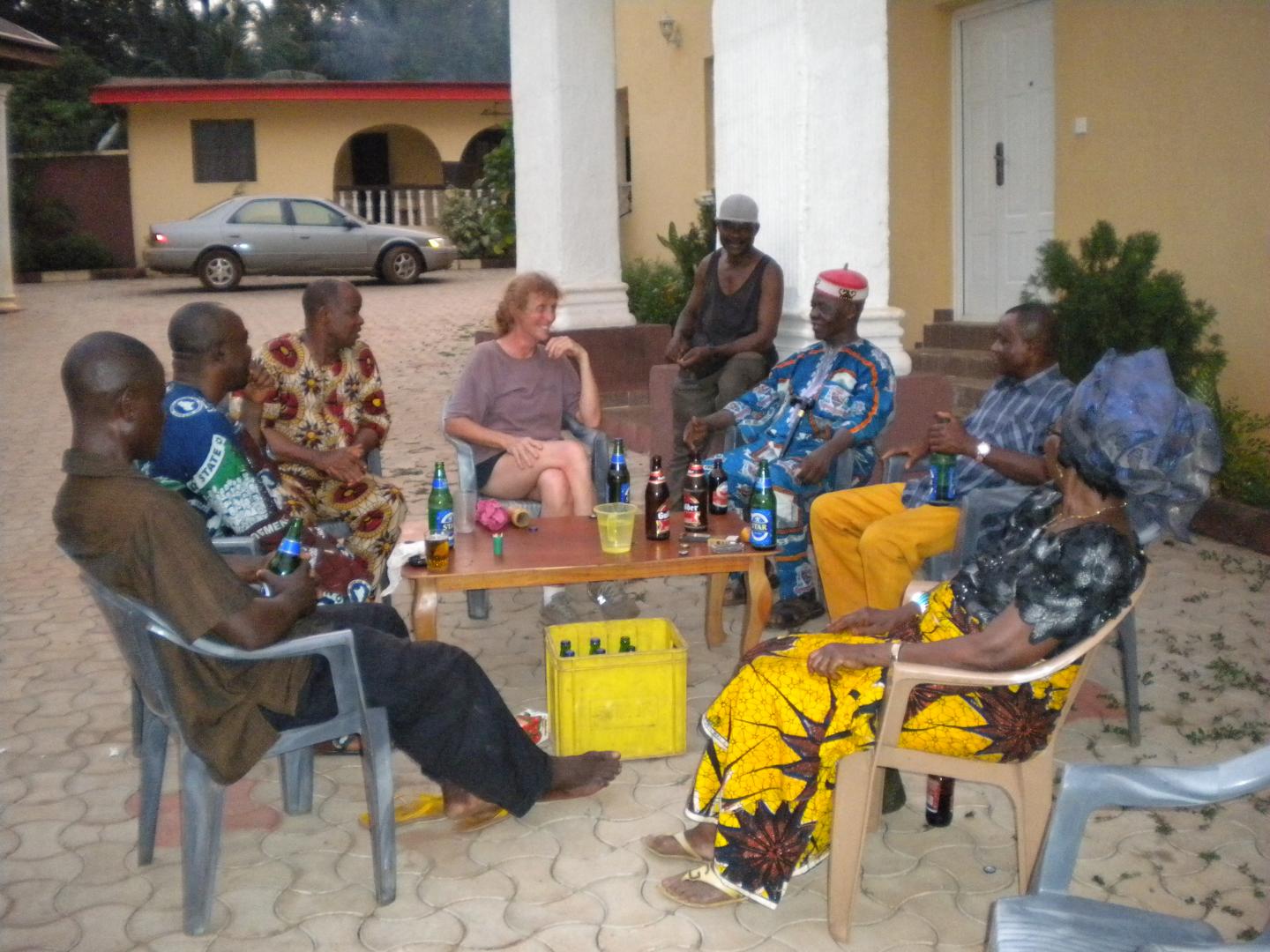
Credit: College of ACES, University of Illinois
URBANA, Ill. – Humanitarian engineering projects often focus on bringing western technologies to non-industrialized societies. But environmental and cultural factors in these locations may be very different from conditions in the West, and the projects may not meet client needs if engineers do not fully understand the context in which they are operating.
A new study from the University of Illinois, published in the Journal of Engineering, Design and Technology, takes a look at the biases that may influence the effectiveness of international engineering efforts implemented by development organizations such as Engineers Without Borders.
The study’s author Ann-Perry Witmer conducted an in-depth analysis of the motivations and beliefs of engineers working on international projects. She says her research is unique because it combines technology with anthropological insights.
“As engineers we think we’ve got all the technical solutions, but we tend to neglect where the project is being done, and the people we’re working with,” says Witmer, a lecturer in the Department of Agricultural and Biological Engineering in the College of Agricultural, Consumer and Environmental Sciences and The Grainger College of Engineering at U of I.
Contextual engineering is a new approach that can help overcome those hurdles, Witmer says, by merging technical knowledge with a place-based understanding of conditions that inform the process.
Witmer’s research grew out of her experiences as a practicing engineer, specializing in the design of water systems for communities. She has worked on numerous projects in Central America, South America, Asia and Africa, and she advised Engineers Without Borders at the U of I for the past five years.
“For this paper the core of the research comes from my decade of working on projects around the world,” she says. She kept detailed journals of each project, which formed the basis of a qualitative data analysis, using social science software that scans content for themes and patterns. She also developed a detailed questionnaire and conducted in-depth interviews with engineers, engineering students, and international project practitioners.
Witmer observed how projects were often derailed by limited understanding of local conditions. For example, she says, a water pump manufactured in the U.S. was transported to Guatemala for use in a community water system. However, seals in the pump housing frequently wore out and needed to be replaced. Getting replacement parts turned out to be difficult and time-consuming, leaving the community without a functioning water pump for much of the time.
Witmer’s research identified a number of dimensions that are important for the outcome of a project. These include:
- The engineers’ confidence in industrialized technology. Witmer says the experts often are so certain of the superiority of the technology they bring in that they overlook whether it’s appropriate for the local context.
- Uniqueness of the context. Engineers may be aware of obvious differences in climate and topography, but they may not consider social and cultural dimension that are unique to each location.
- Power dynamics. Each society will have its own structure of politics and power that can significantly influence the outcome of a project but that can be hard for an outsider to grasp.
- Innovative self-sufficiency. Local constituents may be able to craft solutions based on available materials and conditions, and engineers are not always willing to consider whether these solutions are appropriate for the project.
Witmer concludes that by ignoring the complexity of the context, there is a risk that international aid projects may not function as intended; the efforts and money will be wasted; and the local population will not be helped. Chances of project success are much greater if the factors listed above are considered.
“The ultimate conclusion of this paper and the work I’ve done is that every place is so different it doesn’t matter what kind of brilliant technology you come up with, there are places it’s not going to work. It’s not appropriate. So the idea of creating this silver bullet that’s going to solve the world’s problems, it simply doesn’t exist,” she says.
However, engineers working on international projects can take steps to ensure greater success. They can aim to develop a high degree of self-reflection and awareness of their own motivations and implicit biases; assimilate into the local culture and identify unique contextual influences; and employ rigorous design in close partnership with local people and conditions.
###
The article, “An Ethnographic Justification for Establishment of a Contextual Engineering Discipline,” is published in Journal of Engineering, Design and Technology.
Media Contact
Marianne Stein
[email protected]
217-244-2313
Related Journal Article
http://dx.