Credit: Kent State University
A new federal grant will help Kent State University expand an international relationship and provide invaluable opportunities for some graduate students.
The National Science Foundation (NSF) recently awarded Kent State a three-year, $298,000 International Research Experience for Students (IRES) grant that will allow graduate students to travel to Kyoto University in Japan to study primates and human evolution at the world-renowned Primate Research Institute.
The IRES grant is under the direction of Anthony Tosi, Ph.D., associate professor of anthropology in the College of Arts and Sciences, along with his colleagues in the Department of Anthropology, Richard Meindl, Ph.D., professor and graduate coordinator; Owen Lovejoy, Ph.D., Distinguished Professor of Human Evolutionary Studies; and Mary Ann Raghanti, Ph.D., professor and chair.
“The theme here is that we’re using non-human primates as models for human evolutionary history,” Tosi said. “Under this umbrella, we’ve allowed for several smaller projects, yet to be created, to be done by 18 graduate students – six students each summer for the next three years.”
Tosi said the students will come from anthropology and biological sciences, and they will conduct studies focused on morphology, genetics, neuroscience and primate behavior.
“Ideally, these might be master’s and doctoral students who would plug this in as a chapter in their final project as one component that will somehow dovetail with what they already do,” Raghanti said.
The team said Kyoto University gives students access to a broad array of opportunities.
“It’s not just the great faculty and the location, but the amount of resources they have for us fills a hole that we just can’t fill here,” Meindl said. “In addition to resources, they provide expertise that is first-rate. They are true scholars, international scholars at Kyoto.”
The Primate Research Institute is home to more than 40 faculty and welcomes students from all over the world. Tosi said the institute houses 12 different species of primates, more than 10,000 skeleton specimens of more than 100 different species and a biomaterials library with samples unavailable anywhere in the United States. The Primate Research Institute also boasts fossil sites and field stations in Africa, where students can observe chimpanzees, gorillas and other species in the wild.
Tosi said Kent State has already sent six students over the past five years, including two this year through fellowships from the Japanese Society for the Promotion of Science, the Japanese equivalent of the NSF.
He said the experience is invaluable for students who participate.
“They can build an international network of relationships with researchers very early in their careers,” he said. “They develop new scientific expertise while in Japan. They have access to all these resources. They gain a sense of how science is conducted in a foreign culture. And all that will open up more job opportunities.”
Tosi said the students come back with a new air of confidence and experience that makes Kent State’s labs better places for all to learn.
“They come back and they just have more presence in my lab meetings,” he said. “They’re not afraid to ask more questions or direct the discussion down different avenues, and they’re very helpful to their labmates.”
Tosi said the relationship with Kyoto University has been developing steadily, and he is hopeful that a two-way exchange program might be on the horizon.
###
For more information about Kent State’s Department of Anthropology, visit http://www.
For more information about research at Kent State, visit http://www.
Photo Caption:
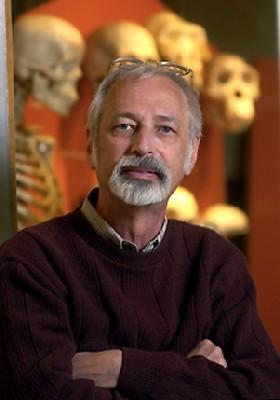
A new federal grant will help Kent State University expand an international relationship and provide invaluable opportunities for some graduate students. The new grant is under the direction of (from left to right) Anthony Tosi, Ph.D., associate professor of anthropology in the College of Arts and Sciences, along with his colleagues in the Department of Anthropology, Richard Meindl, Ph.D., professor and graduate coordinator; Owen Lovejoy, Ph.D., Distinguished Professor of Human Evolutionary Studies; and Mary Ann Raghanti, Ph.D., professor and chair.
Media Contacts:
Dan Pompili, [email protected], 330-672-0731
Emily Vincent, [email protected], 330-672-8595
Media Contact
Dan Pompili
[email protected]
330-672-0731
Original Source
https:/