Credit: CURSOR
In the wake of major disasters, where structures collapse or people get trapped in hazardous situations, the first 72 hours are critical. Urban search and rescue teams, as well as first responders such as police and medical units, race against the clock to locate survivors, often at their own risk.
To address that risk, Tohoku University’s Tough Cyberphysical AI Research Center (TCPAI) has joined forces with the German Federal Agency for Technical Relief (THW) and other EU partners, to develop faster and safer search and rescue technology. The three-year project – known as CURSOR – is funded by EU HORIZON 2020 and JST SI-CORP.
TCPAI, including researchers from Tohoku University led by Professor Satoshi Tadokoro, is working on miniaturised robots that will be part of the signature CURSOR Search and Rescue Kit.
The robots are equipped with cameras, thermographic capabilities, microphones, as well as chemical sensors that can detect a wide range of substances including human presence. When mobilised, the robots will be carried by a transport drone from the operations headquarters to the disaster site, where they will work independently, in clusters, searching for survivors.
Small and flexible, the robots are built to enter narrow spaces and move, drop, climb around debris. Data gathered by the robots will then be integrated into semantic information that can help guide first responders safely and more effectively.
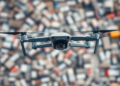
A Mothership UAV (Unmanned Aerial Vehicle) will provide additional support by producing high-definition aerial imaging of the disaster zone. This will allow for more accurate visualization and communication with the control centre.
The CURSOR initiative ultimately seeks to match the operational needs of search and rescue teams with current technological capabilities. It brings together 16 partners*, including first-response practitioners from four European countries; research organisations from Europe and Japan that will provide leading-edge technology; and small and medium companies that will develop key innovative components and commercialize the project results. Other relief practitioners will be involved as members of the project’s First Responder Board, responsible for technology validation and standardisation activities.
“First responders have practical experience on the field, and developers the technical know-how,” explains Klaus Dieter Büttgen, coordinator of the CURSOR project at THW. “Through this unique collaboration between technical partners, industry, academics and first responders, expertise will be transformed into a novel technology that contributes to locating buried victims more swiftly and with less risk for the people conducting the research operation.”
“Japan is a country that experiences frequent earthquakes, tsunamis and typhoons, so we are very aware of the importance of having fast, effective response capabilities,” says Tadokoro, who is also director of TCPAI. “Tohoku University was at the centre of the 2011 Great East Japan Earthquake. We know the devastation that natural disasters can cause, and we want to produce a solution that can help save more lives in the future.”
###
The project was officially launched in Bonn, Germany on September 1, 2019.
Media Contact
Satoshi Tadokoro
[email protected]
81-227-957-022
Original Source
https:/