• HOME
  • NEWS
  • EXPLORE
    • CAREER
      • Companies
      • Jobs
    • EVENTS
    • iGEM
      • News
      • Team
    • PHOTOS
    • VIDEO
    • WIKI
  • BLOG
  • COMMUNITY
    • FACEBOOK
    • INSTAGRAM
    • TWITTER
Thursday, January 29, 2026
BIOENGINEER.ORG
No Result
View All Result
  • Login
  • HOME
  • NEWS
  • EXPLORE
    • CAREER
      • Companies
      • Jobs
        • Lecturer
        • PhD Studentship
        • Postdoc
        • Research Assistant
    • EVENTS
    • iGEM
      • News
      • Team
    • PHOTOS
    • VIDEO
    • WIKI
  • BLOG
  • COMMUNITY
    • FACEBOOK
    • INSTAGRAM
    • TWITTER
  • HOME
  • NEWS
  • EXPLORE
    • CAREER
      • Companies
      • Jobs
        • Lecturer
        • PhD Studentship
        • Postdoc
        • Research Assistant
    • EVENTS
    • iGEM
      • News
      • Team
    • PHOTOS
    • VIDEO
    • WIKI
  • BLOG
  • COMMUNITY
    • FACEBOOK
    • INSTAGRAM
    • TWITTER
No Result
View All Result
Bioengineer.org
No Result
View All Result
Home NEWS Science News

Solving the riddle of putrid camel pee could aid millions affected by sleeping sickness

Bioengineer by Bioengineer
November 17, 2016
in Science News
Reading Time: 2 mins read
0
Share on FacebookShare on TwitterShare on LinkedinShare on RedditShare on Telegram
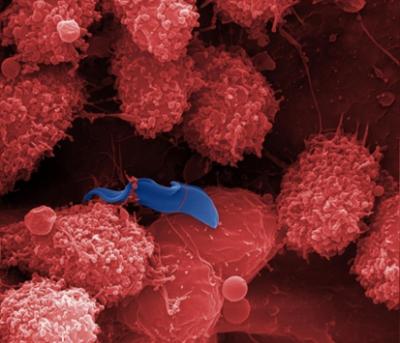
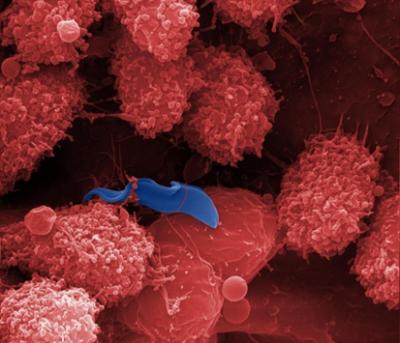
IMAGE

Credit: Professor Derek Nolan, Trinity College Dublin.

Biochemists from Trinity College Dublin have solved an old mystery as to the cause of especially smelly camel urine, with implications for the millions of people affected by African parasites called trypanosomes. These parasites frequently cause fatalities via sleeping sickness.

The biochemists have unearthed a metabolic by-product of trypanosome activity known as indolepyruvate, which may offer excellent possibilities for developing anti-trypanosome drugs and therapies because inhibiting its production may be key in fighting the parasite.

Additionally, because this by-product modifies the behaviour of important immune cells and prevents them from becoming fully active, it has potential as an inhibitor of common inflammatory diseases.

Professor in Biochemistry at Trinity, Derek Nolan, and his team collaborated with Professor of Biochemistry, Luke O'Neill, and his inflammation research group to make the discovery. Their findings have just been published in the journal PNAS. A copy of the article is available on request.

Trypanosomes are parasites of the mammalian bloodstream that rely on biting flies – like the tsetse fly — for transmission. They must constantly evade their hosts' immune defences through waves of infections, while simultaneously prolonging the survival of their hosts, so as to ensure life-cycle completion and future transmission via other biting flies.

Neither vaccination nor prophylactic intervention is possible, and all current treatments have associated limitations that restrict their application. Although cases of human infection have declined recently these parasites still represent a major societal burden across 36 sub-Saharan countries that are within range of the tsetse fly vector.

Professor Nolan said: "Camel herders have long known that the urine of camels infected with trypanosomes has a pungent odour, and is reddish brown in colour. We found that this is directly attributable to parasite breakdown of aromatic amino acids, such as tryptophan, in the host, and to the excretion of the novel by-products into the bloodstream."

"The advantage for the parasite of excreting indolepyruvate is that it modulates the inflammatory and immune responses of the host — especially at the peaks of infection. This prolongs host survival and thereby potentiates the transmission of the parasite to the tsetse fly, which ensures it can complete its life cycle."

"We are hopeful that by solving the riddle of the putrid camel pee, these new insights have unearthed a potential target for anti-trypanosome therapies, which are badly needed as sleeping sickness continues to claim a huge number of lives in sub-Saharan Africa."

###

Media Contact

Thomas Deane
[email protected]
353-189-64685
@tcddublin

http://www.tcd.ie/

############

Story Source: Materials provided by Scienmag

Share12Tweet8Share2ShareShareShare2

Related Posts

Mapping CD8+ T-Cell Exhaustion in Immunotherapy Resistance

January 29, 2026

Dietary Challenges and Supplements in Autistic Children

January 29, 2026

Retraction: Aegle Marmelos Compound’s Health Claims Questioned

January 29, 2026

Type 2 Diabetes and Liver Disease in Tanzania: Insights

January 29, 2026
Please login to join discussion

POPULAR NEWS

  • Enhancing Spiritual Care Education in Nursing Programs

    157 shares
    Share 63 Tweet 39
  • PTSD, Depression, Anxiety in Childhood Cancer Survivors, Parents

    149 shares
    Share 60 Tweet 37
  • Robotic Ureteral Reconstruction: A Novel Approach

    80 shares
    Share 32 Tweet 20
  • Digital Privacy: Health Data Control in Incarceration

    62 shares
    Share 25 Tweet 16

About

We bring you the latest biotechnology news from best research centers and universities around the world. Check our website.

Follow us

Recent News

Mapping CD8+ T-Cell Exhaustion in Immunotherapy Resistance

Dietary Challenges and Supplements in Autistic Children

Retraction: Aegle Marmelos Compound’s Health Claims Questioned

Subscribe to Blog via Email

Enter your email address to subscribe to this blog and receive notifications of new posts by email.

Join 72 other subscribers
  • Contact Us

Bioengineer.org © Copyright 2023 All Rights Reserved.

Welcome Back!

Login to your account below

Forgotten Password?

Retrieve your password

Please enter your username or email address to reset your password.

Log In
No Result
View All Result
  • Homepages
    • Home Page 1
    • Home Page 2
  • News
  • National
  • Business
  • Health
  • Lifestyle
  • Science

Bioengineer.org © Copyright 2023 All Rights Reserved.