Credit: Elle Starkman
Subatomic particles zip around ring-shaped fusion machines known as tokamaks and sometimes merge, releasing large amounts of energy. But these particles — a soup of charged electrons and atomic nuclei, or ions, collectively known as plasma — can sometimes leak out of the magnetic fields that confine them inside tokamaks. The leakage cools the plasma, reducing the efficiency of the fusion reactions and damaging the machine. Now, physicists have confirmed that an updated computer code could help to predict and ultimately prevent such leaks from happening.
The research team updated TRANSP, the plasma simulation code developed at the U.S. Department of Energy’s (DOE) Princeton Plasma Physics Laboratory (PPPL) and used in fusion research centers around the world, by installing a new bit of code known as a kick model into one of the TRANSP components. The kick model — so called because it simulates jolts of energy that kick the particles within the plasma — allows TRANSP to simulate particle behavior more accurately than before. Aided by subprograms known as NUBEAM and ORBIT that model plasma behavior by distilling information from raw data, this updated version of TRANSP could help physicists better understand and predict the leaks, as well as create engineering solutions to minimize them.
Fusion, the power that drives the sun and stars, is the fusing of light elements in the form of plasma — the hot, charged state of matter composed of free electrons and atomic nuclei — that generates massive amounts of energy. Scientists are seeking to replicate fusion on Earth for a virtually inexhaustible supply of power to generate electricity.
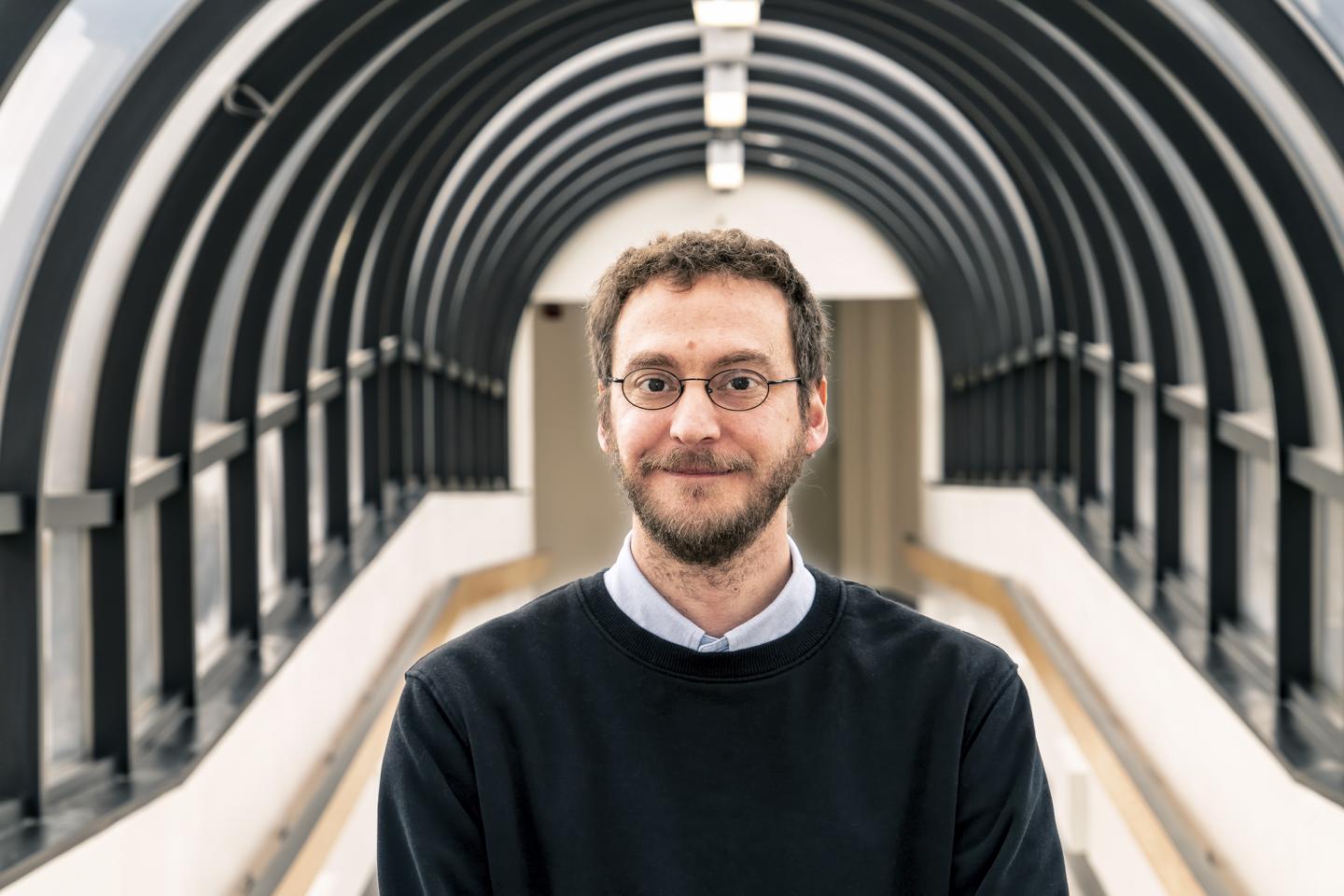
The team found that the updated version of TRANSP accurately modeled the effect of the sawtooth instability — a kind of disturbance affecting the fusion reactions — on the movement of highly energetic particles that help cause fusion reactions. “These results are important because they may allow physicists to use the same approach to deal with a broad spectrum of instabilities without switching from one model to another depending on the specific problem,” said PPPL physicist Mario Podestà, a coauthor of the paper that reported the findings in Nuclear Fusion. The results, based on sawtooth instabilities that occurred during operation of PPPL’s National Spherical Torus Experiment-Upgrade (NSTX-U) in 2016, extend previous PPPL research into putting kick models into TRANSP.
The updated version of TRANSP can simulate plasma behavior of experiments that have not been conducted yet, Podestà said. “Because we understand the physics built into the kick model, and because that model successfully simulated results from past experiments for which we have data, we have confidence that the kick model can accurately model future experiments,” he said.
In the future, the researchers want to determine what happens between instabilities to get a fuller sense of what’s occuring in the plasma. In the meantime, Podestà and the other scientists are encouraged by the current results. “We now see a path forward to improving the ways that we can simulate certain mechanisms that disturb plasma particles,” Podestà said. “This brings us closer to reliable and quantitative predictions for the performance of future fusion reactors.”
###
This research was supported by the DOE’s Office of Science (FES). The team included scientists from PPPL and the University of California, Irvine.
PPPL, on Princeton University’s Forrestal Campus in Plainsboro, N.J., is devoted to creating new knowledge about the physics of plasmas — ultra-hot, charged gases — and to developing practical solutions for the creation of fusion energy. The Laboratory is managed by the University for the U.S. Department of Energy’s Office of Science, which is the single largest supporter of basic research in the physical sciences in the United States and is working to address some of the most pressing challenges of our time. For more information, visit https:/
Media Contact
Raphael Rosen
[email protected]
Original Source
https:/
Related Journal Article
http://dx.