• HOME
  • NEWS
  • EXPLORE
    • CAREER
      • Companies
      • Jobs
    • EVENTS
    • iGEM
      • News
      • Team
    • PHOTOS
    • VIDEO
    • WIKI
  • BLOG
  • COMMUNITY
    • FACEBOOK
    • INSTAGRAM
    • TWITTER
Saturday, February 7, 2026
BIOENGINEER.ORG
No Result
View All Result
  • Login
  • HOME
  • NEWS
  • EXPLORE
    • CAREER
      • Companies
      • Jobs
        • Lecturer
        • PhD Studentship
        • Postdoc
        • Research Assistant
    • EVENTS
    • iGEM
      • News
      • Team
    • PHOTOS
    • VIDEO
    • WIKI
  • BLOG
  • COMMUNITY
    • FACEBOOK
    • INSTAGRAM
    • TWITTER
  • HOME
  • NEWS
  • EXPLORE
    • CAREER
      • Companies
      • Jobs
        • Lecturer
        • PhD Studentship
        • Postdoc
        • Research Assistant
    • EVENTS
    • iGEM
      • News
      • Team
    • PHOTOS
    • VIDEO
    • WIKI
  • BLOG
  • COMMUNITY
    • FACEBOOK
    • INSTAGRAM
    • TWITTER
No Result
View All Result
Bioengineer.org
No Result
View All Result
Home NEWS Science News Chemistry

Unconventional phenomena triggered by acoustic waves in 2D materials

Bioengineer by Bioengineer
July 23, 2019
in Chemistry
Reading Time: 2 mins read
0
IMAGE
Share on FacebookShare on TwitterShare on LinkedinShare on RedditShare on Telegram

Opening a new way to manipulate valley transport by acoustic methods
IMAGE

Credit: IBS

Researchers at the Center for Theoretical Physics of Complex Systems (PCS), within the Institute for Basic Science (IBS, South Korea), and colleagues have reported a novel phenomenon, called Valley Acoustoelectric Effect, which takes place in 2D materials, similar to graphene. This research is published in Physical Review Letters and brings new insights to the study of valleytronics.

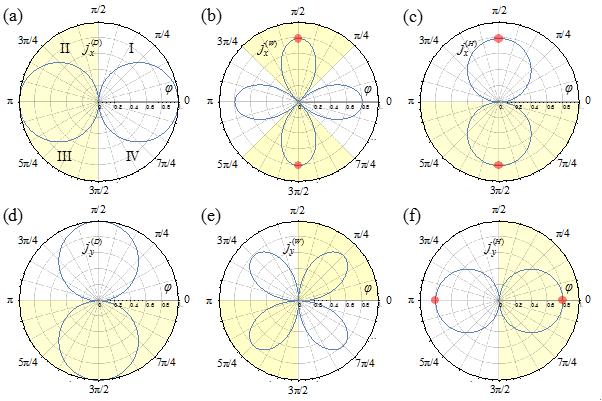
In acoustoelectronics, surface acoustic waves (SAWs) are employed to generate electric currents. In this study, the team of theoretical physicists modelled the propagation of SAWs in emerging 2D materials, such as single-layer molybdenum disulfide (MoS2). SAWs drag MoS2 electrons (and holes), creating an electric current with conventional and unconventional components. The latter consists of two contributions: a warping-based current and a Hall current. The first is direction-dependent, is related to the so-called valleys – electrons’ local energy minima – and resembles one of the mechanisms that explains photovoltaic effects of 2D materials exposed to light. The second is due to a specific effect (Berry phase) that affects the velocity of these electrons travelling as a group and resulting in intriguing phenomena, such as anomalous and quantum Hall effects.

The team analyzed the properties of the acoustoelectric current, suggesting a way to run and measure the conventional, warping, and Hall currents independently. This allows the simultaneous use of both optical and acoustic techniques to control the propagation of charge carriers in novel 2D materials, creating new logical devices.

The researchers are interested in controlling the physical properties of these ultra-thin systems, in particular those electrons that are free to move in two dimensions, but tightly confined in the third. By curbing the parameters of the electrons, in particular their momentum, spin, and valley, it will be possible to explore technologies beyond silicon electronics. For example, MoS2 has two district valleys, which could be potentially used in the future for bit storage and processing, making it an ideal material to delve into valleytronics.

“Our theory opens a way to manipulate valley transport by acoustic methods, expanding the applicability of valleytronic effects on acoustoelectronic devices,” explains Ivan Savenko, leader of the Light-Matter Interaction in Nanostructures Team at PCS.

###

Media Contact
Dahee Carol Kim
[email protected]

Related Journal Article

http://dx.doi.org/10.1103/PhysRevLett.122.256801

Tags: Chemistry/Physics/Materials Sciences
Share12Tweet8Share2ShareShareShare2

Related Posts

blank

Breakthrough in Environmental Cleanup: Scientists Develop Solar-Activated Biochar for Faster Remediation

February 7, 2026
blank

Cutting Costs: Making Hydrogen Fuel Cells More Affordable

February 6, 2026

Scientists Develop Hand-Held “Levitating” Time Crystals

February 6, 2026

Observing a Key Green-Energy Catalyst Dissolve Atom by Atom

February 6, 2026
Please login to join discussion

POPULAR NEWS

  • Robotic Ureteral Reconstruction: A Novel Approach

    Robotic Ureteral Reconstruction: A Novel Approach

    82 shares
    Share 33 Tweet 21
  • Digital Privacy: Health Data Control in Incarceration

    63 shares
    Share 25 Tweet 16
  • Study Reveals Lipid Accumulation in ME/CFS Cells

    57 shares
    Share 23 Tweet 14
  • Breakthrough in RNA Research Accelerates Medical Innovations Timeline

    53 shares
    Share 21 Tweet 13

About

We bring you the latest biotechnology news from best research centers and universities around the world. Check our website.

Follow us

Recent News

Decoding Prostate Cancer Origins via snFLARE-seq, mxFRIZNGRND

Digital Health Perspectives from Baltic Sea Experts

Florida Cane Toad: Complex Spread and Selective Evolution

Subscribe to Blog via Email

Enter your email address to subscribe to this blog and receive notifications of new posts by email.

Join 73 other subscribers
  • Contact Us

Bioengineer.org © Copyright 2023 All Rights Reserved.

Welcome Back!

Login to your account below

Forgotten Password?

Retrieve your password

Please enter your username or email address to reset your password.

Log In
No Result
View All Result
  • Homepages
    • Home Page 1
    • Home Page 2
  • News
  • National
  • Business
  • Health
  • Lifestyle
  • Science

Bioengineer.org © Copyright 2023 All Rights Reserved.