• HOME
  • NEWS
  • EXPLORE
    • CAREER
      • Companies
      • Jobs
    • EVENTS
    • iGEM
      • News
      • Team
    • PHOTOS
    • VIDEO
    • WIKI
  • BLOG
  • COMMUNITY
    • FACEBOOK
    • INSTAGRAM
    • TWITTER
Wednesday, July 8, 2026
BIOENGINEER.ORG
No Result
View All Result
  • Login
  • HOME
  • NEWS
  • EXPLORE
    • CAREER
      • Companies
      • Jobs
        • Lecturer
        • PhD Studentship
        • Postdoc
        • Research Assistant
    • EVENTS
    • iGEM
      • News
      • Team
    • PHOTOS
    • VIDEO
    • WIKI
  • BLOG
  • COMMUNITY
    • FACEBOOK
    • INSTAGRAM
    • TWITTER
  • HOME
  • NEWS
  • EXPLORE
    • CAREER
      • Companies
      • Jobs
        • Lecturer
        • PhD Studentship
        • Postdoc
        • Research Assistant
    • EVENTS
    • iGEM
      • News
      • Team
    • PHOTOS
    • VIDEO
    • WIKI
  • BLOG
  • COMMUNITY
    • FACEBOOK
    • INSTAGRAM
    • TWITTER
No Result
View All Result
Bioengineer.org
No Result
View All Result
Home NEWS Science News Biology

Tending the future of data analysis with MVApp

Bioengineer by Bioengineer
July 16, 2019
in Biology
Reading Time: 2 mins read
0
IMAGE
Share on FacebookShare on TwitterShare on LinkedinShare on RedditShare on Telegram

IMAGE

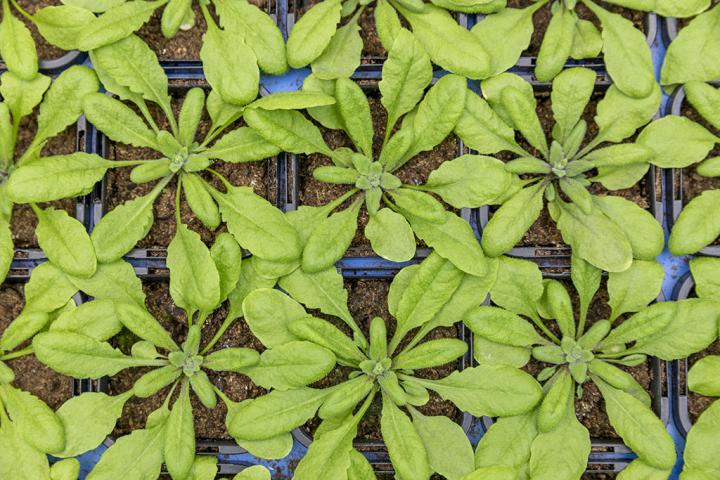
Credit: © 2019 KAUST

The vast datasets generated by modern plant-science technologies require clever data-mining methods to extract useful information. Now, KAUST researchers have developed MVApp–an open-source, online statistics platform for conducting multivariate analyses of these intricate data.

The recent development of high-throughput phenotyping techniques has rapidly produced huge datasets on the characteristics of plants. These multivariate data hold crucial details about plant physiology: how a plant responds to different environments and how a plant’s growth patterns and potential yields change–all of which are valuable in developing sustainable agriculture and ensuring food security.

“Our experiments typically include measurements of thousands of plants every day for multiple traits, from leaf size through to salt-stress tolerance or resistance to plant pathogens,” says Magdalena Julkowska, a research scientist working in Mark Tester’s lab at KAUST. “These data are extremely powerful, but overwhelming to sieve through, she adds, “As a team, we know the struggles that come with large data analyses, and we figured if we struggle, then others must too.”

The team built MVApp using R-language–a popular tool for statistical analyses–and incorporated the most pertinent R packages for analyzing phenotyping data. MVApp can be used with datasets of different sizes, from exploratory analyses of large-scale natural diversity to smaller-scale projects comparing mutant phenotypes to wild-type plants.

The team also incorporated a technique called quantile regression into MVApp–this specialist tool is used in other fields but has not yet reached its full potential in plant science.

“When we screen populations of hundreds of diverse plant accessions, originating from different parts of the globe, the plants that yield well might have different traits contributing to yield than the plants that produce low yields,” says Julkowska. “Let’s say you’d like to explain the yield of a specific plant type by its biomass and water use–quantile regression can help quantify how much each trait is contributing to your main trait of interest.”

MVApp produces comprehensive, easy-to-follow outputs, and generates attractive, publication-ready figures that have clear links back to the raw data used to create them. The MVApp team are passionate about improving data transparency and streamlining data curation, ensuring that every scientist can produce valuable, reproducible results.

“We hope that MVApp will help the entire scientific community–not just plant scientists–to become familiar with various statistical methods and to know how to implement them, particularly with big data,” says Julkowska. “We welcome feedback and hope users will help us improve MVApp.”

###

Media Contact
Carolyn Unck
[email protected]

Original Source

https://discovery.kaust.edu.sa/en/article/840/tending-the-future-of-data-analysis-with-mvapp

Related Journal Article

http://dx.doi.org/10.1104/pp.19.00235

Tags: Agricultural Production/EconomicsBiologyPlant Sciences
Share12Tweet8Share2ShareShareShare2

Related Posts

Here are a few rewritten headlines for a science magazine post, each with a slightly different tone: Intriguing & poetic: How do organs sculpt themselves? Sea stars hold the secret Direct & research-focused: Sea stars reveal the hidden rules of organ formation Metaphorical & inviting: Tiny architects beneath the waves: What sea stars teach us about building organs Short & punchy: Star-shaped clues to how our organs take shape Question-led: Could a sea star show us how organs form? Elegant & feature-style: The body’s blueprint, glimpsed in a sea star’s arm

July 6, 2026
Bacteria evolve faster with unconventional gene copies — Biology

Bacteria evolve faster with unconventional gene copies

July 6, 2026

Neighbours rewire soil feedback via root microbiome shifts

July 6, 2026

Evolution-Inspired Biosensors Revolutionize Lipid Tracking in Real Time

July 2, 2026
Please login to join discussion

POPULAR NEWS

  • Detection of EDCs in Breast Milk and Infant Urine Up to Six Months Highlights Early Exposure Risks

    77 shares
    Share 31 Tweet 19
  • New Drug Candidate Developed at McMaster Shows Potential for Treating Brain Cancer

    58 shares
    Share 23 Tweet 15
  • Saying Goodbye to PGY-6: Pediatric Fellowship Realities

    103 shares
    Share 41 Tweet 26
  • KTU Researchers Explore Ultrasound’s Role in Enhancing Blood Flow Beyond Diagnostics

    53 shares
    Share 21 Tweet 13

About

We bring you the latest biotechnology news from best research centers and universities around the world. Check our website.

Follow us

Recent News

Flame retardant BDE-209 targets molecularly linked to ulcerative colitis

Ultra-high frequency particle impacts mimic rockbursts to shatter hard rock

Kidney transplant outcomes in older adults studied by German researchers

Subscribe to Blog via Email

Success! An email was just sent to confirm your subscription. Please find the email now and click 'Confirm' to start subscribing.

Join 83 other subscribers
  • Contact Us

Bioengineer.org © Copyright 2023 All Rights Reserved.

Welcome Back!

Login to your account below

Forgotten Password?

Retrieve your password

Please enter your username or email address to reset your password.

Log In
No Result
View All Result
  • Homepages
    • Home Page 1
    • Home Page 2
  • News
  • National
  • Business
  • Health
  • Lifestyle
  • Science

Bioengineer.org © Copyright 2023 All Rights Reserved.