• HOME
  • NEWS
  • EXPLORE
    • CAREER
      • Companies
      • Jobs
    • EVENTS
    • iGEM
      • News
      • Team
    • PHOTOS
    • VIDEO
    • WIKI
  • BLOG
  • COMMUNITY
    • FACEBOOK
    • INSTAGRAM
    • TWITTER
Saturday, February 7, 2026
BIOENGINEER.ORG
No Result
View All Result
  • Login
  • HOME
  • NEWS
  • EXPLORE
    • CAREER
      • Companies
      • Jobs
        • Lecturer
        • PhD Studentship
        • Postdoc
        • Research Assistant
    • EVENTS
    • iGEM
      • News
      • Team
    • PHOTOS
    • VIDEO
    • WIKI
  • BLOG
  • COMMUNITY
    • FACEBOOK
    • INSTAGRAM
    • TWITTER
  • HOME
  • NEWS
  • EXPLORE
    • CAREER
      • Companies
      • Jobs
        • Lecturer
        • PhD Studentship
        • Postdoc
        • Research Assistant
    • EVENTS
    • iGEM
      • News
      • Team
    • PHOTOS
    • VIDEO
    • WIKI
  • BLOG
  • COMMUNITY
    • FACEBOOK
    • INSTAGRAM
    • TWITTER
No Result
View All Result
Bioengineer.org
No Result
View All Result
Home NEWS Science News Health

Using an embryonic pause to save the date

Bioengineer by Bioengineer
July 8, 2019
in Health
Reading Time: 2 mins read
0
IMAGE
Share on FacebookShare on TwitterShare on LinkedinShare on RedditShare on Telegram

IMAGE

Credit: 2019 KAUST Vinicius Lube

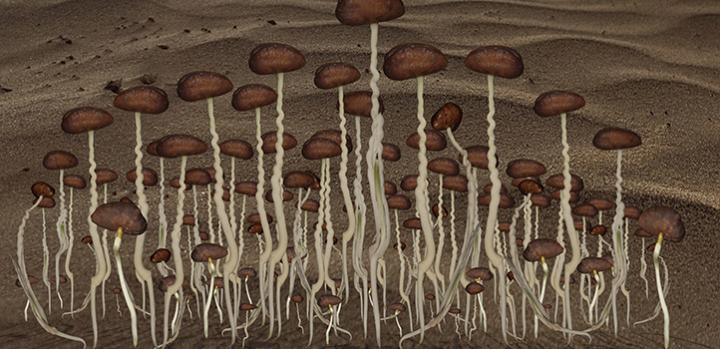
Dates are one of the most significant fruit crops grown in the Middle East; however, little is known about how these resilient palm trees flourish in the high temperatures of desert habitats. Now, KAUST researchers have shown that date palms, after germination, can pause their early development within womb-like root structures in the soil, ready to grow when the environmental conditions are just right.

“Date palms are of huge importance to desert agriculture, especially in The Kingdom of Saudi Arabia, where they are considered as a symbol of vitality and prosperity,” says Ting Ting Xiao, who worked on the study with an international project team, under the supervision of KAUST’s Ikram Blilou. “Dates are known for their medicinal and nutritional values. In Europe, they are considered a delicacy, while in the desert they are a promising sustainable food source.”

“Our research was driven by curiosity. While there have been genomic and tissue-culture studies of date palms, there is little literature on the plant’s embryo development and organ formation,” Blilou explains.

Date palms employ a method of remote germination: rather than growing the first shoot and root right next to the seed and close to the surface of the soil, the whole seedling (root and shoot) remains within a multilayered root-like structure that buries deep into the soil to protect the young plant.

“It is what happens during remote germination that really surprised and delighted us,” says Xiao. “Using a combination of state-of-the-art high-resolution imaging and molecular tools, we found that date palms can pause their development–rather like some animals whose pregnancy lies dormant until conditions are favorable.”

When the time is right, such as when soil temperature increases, the plant emerges with a fully developed leaf and delicate root system, thereby maximizing its nutrients and water uptake in harsh surroundings.

“This is a real breakthrough in understanding plant adaptations to hostile desert environments,” says Blilou. “Our insights could have an immediate use for growers, who can focus on the root system to screen for new cultivars. Ultimately, this knowledge could help us in the fight against desertification.”

In a combined effort, KAUST plant science groups also plan to assess the genetic diversity of date palms in the Kingdom using genome resequencing as well as establishing breeding strategies for date palm. This work will contribute to improving date palm fruit production and quality for this important crop.

###

Media Contact
Carolyn Unck
[email protected]

Original Source

https://discovery.kaust.edu.sa/en/article/851/using-an-embryonic-pause-to-save-the-date

Related Journal Article

http://dx.doi.org/10.1105/tpc.19.00008

Tags: BiologyDevelopmental/Reproductive BiologyPlant SciencesTemperature-Dependent Phenomena
Share12Tweet8Share2ShareShareShare2

Related Posts

Phage-Antibiotic Combo Beats Resistant Peritoneal Infection

February 7, 2026

Boosting Remote Healthcare: Stepped-Wedge Trial Insights

February 7, 2026

Barriers and Boosters of Seniors’ Physical Activity in Karachi

February 7, 2026

Evaluating Pediatric Emergency Care Quality in Ethiopia

February 7, 2026
Please login to join discussion

POPULAR NEWS

  • Robotic Ureteral Reconstruction: A Novel Approach

    Robotic Ureteral Reconstruction: A Novel Approach

    82 shares
    Share 33 Tweet 21
  • Digital Privacy: Health Data Control in Incarceration

    63 shares
    Share 25 Tweet 16
  • Study Reveals Lipid Accumulation in ME/CFS Cells

    57 shares
    Share 23 Tweet 14
  • Breakthrough in RNA Research Accelerates Medical Innovations Timeline

    53 shares
    Share 21 Tweet 13

About

We bring you the latest biotechnology news from best research centers and universities around the world. Check our website.

Follow us

Recent News

Phage-Antibiotic Combo Beats Resistant Peritoneal Infection

Boosting Remote Healthcare: Stepped-Wedge Trial Insights

Barriers and Boosters of Seniors’ Physical Activity in Karachi

Subscribe to Blog via Email

Enter your email address to subscribe to this blog and receive notifications of new posts by email.

Join 73 other subscribers
  • Contact Us

Bioengineer.org © Copyright 2023 All Rights Reserved.

Welcome Back!

Login to your account below

Forgotten Password?

Retrieve your password

Please enter your username or email address to reset your password.

Log In
No Result
View All Result
  • Homepages
    • Home Page 1
    • Home Page 2
  • News
  • National
  • Business
  • Health
  • Lifestyle
  • Science

Bioengineer.org © Copyright 2023 All Rights Reserved.