• HOME
  • NEWS
  • EXPLORE
    • CAREER
      • Companies
      • Jobs
    • EVENTS
    • iGEM
      • News
      • Team
    • PHOTOS
    • VIDEO
    • WIKI
  • BLOG
  • COMMUNITY
    • FACEBOOK
    • INSTAGRAM
    • TWITTER
Monday, November 16, 2026
BIOENGINEER.ORG
No Result
View All Result
  • Login
  • HOME
  • NEWS
  • EXPLORE
    • CAREER
      • Companies
      • Jobs
        • Lecturer
        • PhD Studentship
        • Postdoc
        • Research Assistant
    • EVENTS
    • iGEM
      • News
      • Team
    • PHOTOS
    • VIDEO
    • WIKI
  • BLOG
  • COMMUNITY
    • FACEBOOK
    • INSTAGRAM
    • TWITTER
No Result
View All Result
Bioengineer.org
No Result
View All Result
Home NEWS Science News Biology

Holy crocodiles

Bioengineer by Bioengineer
July 2, 2019
in Biology
Reading Time: 2 mins read
0
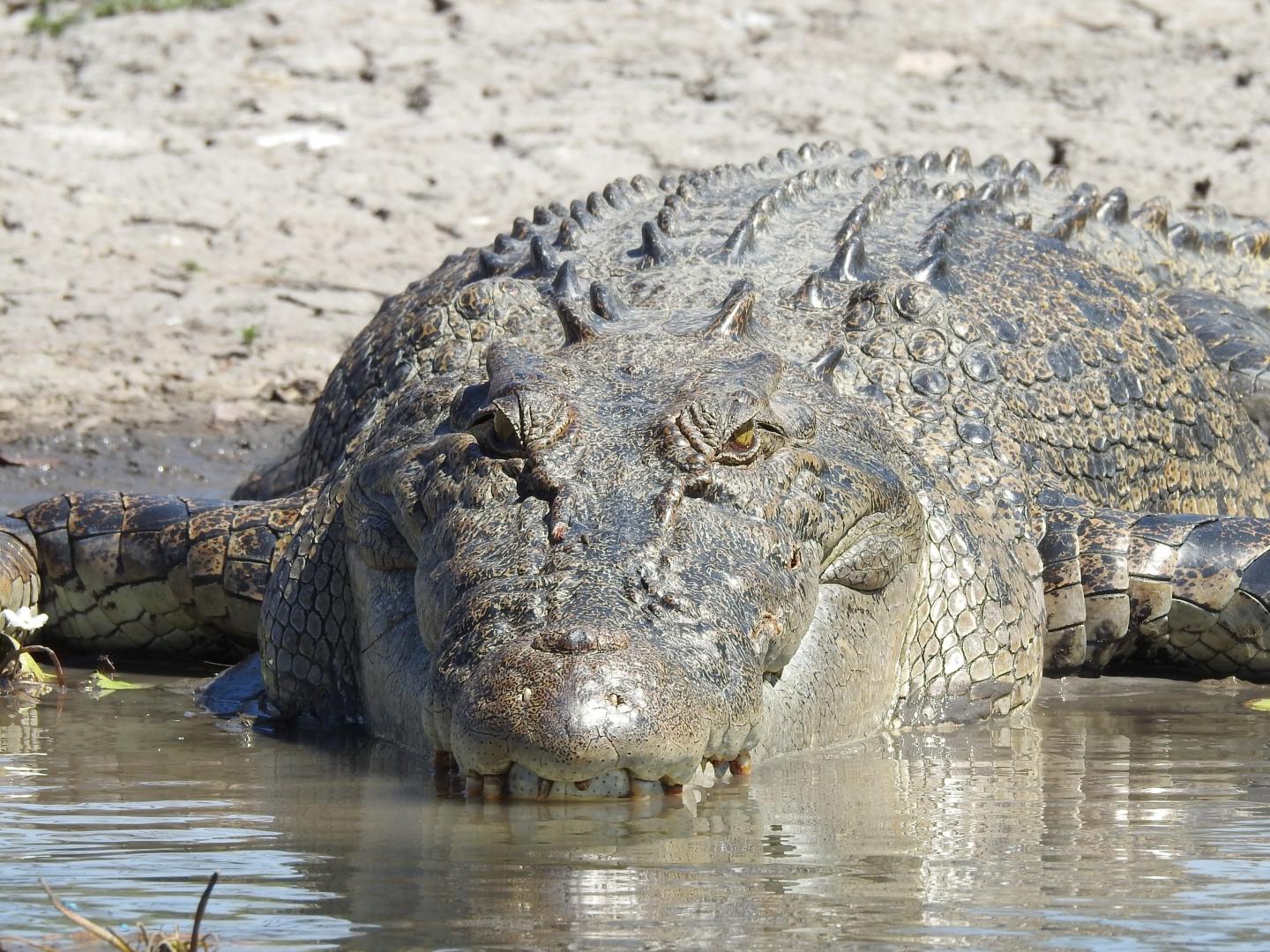
IMAGE
Share on FacebookShare on TwitterShare on LinkedinShare on RedditShare on Telegram

IMAGE

Credit: Yusuke Fukuda

East Timor’s origin is shrouded in myth. The Southeast Asian island is said to have formed from “Grandfather Crocodile.” That is why many who live on East Timor revere the animal who they believe established the island. A doctoral candidate of the Faculty of Environment and Natural Resources at the University of Freiburg, Sebastian Brackhane, investigated the challenges the belief poses for wildlife management. He has published an article about the cultural status of saltwater crocodiles in East Timor in the journal “Human Dimensions of Wildlife.”

“The cultural status of crocodiles can be traced back to the creation myth of East Timor. Once, a little boy rescued a crocodile. He and the crocodile became friends and they travelled the sea together. After the crocodile died, the island of East Timor formed from his body,” explains Brackhane. In many East Timorese communities, this belief continues to coexist alongside Catholicism. The special relationship between humans and animals is demonstrated in various ways. “There are rituals for saltwater crocodiles that involve the sacrification of other animals such as pigs. At the national level, a soccer team and East Timor’s biggest telecommunication company use crocodiles as logos.” And the reptiles are not just worshipped, since 2000, they have also been protected by law.

The study used stakeholder interviews to gain a better understanding of the cultural belief around crocodiles in East Timor. The information is crucial to develop options for wildlife management, because East Timor is subject to severe human-crocodile conflict, which Brackhane revealed in an earlier study from 2018. The number of saltwater crocodile attacks on people has increased in recent years. Successful crocodile management must integrate the local stakeholder´s beliefs based around the special cultural status of crocodiles. Raising public awareness may help on the short term: The local crocodile task force has put up warning signs around crocodile habitat and provides workshops for local fishermen. On the long term, Brackhane describes two potential measures to solve the problem: “Crocodiles could be captured in areas where human and crocodile activities often overlap and then be removed to enclosures. Important crocodile habitat for nesting could become protected areas with limited access for humans. However, all activities in the water, especially traditional fishing, will continue to pose a risk in the future.”

###

Original publication:

Sebastian Brackhane, Grahame Webb, Flaminio M. E. Xavier, Josh Trindade, Marcal Gusmao & Peter Pechacek (2019): Crocodile management in Timor-Leste: Drawing upon traditional ecological knowledge and cultural beliefs. In: Human Dimensions of Wildlife.

doi: 10.1080/10871209.2019.1614240

Press release about the study of crocodile attacks in Southeast Asia:
http://www.pr.uni-freiburg.de/pm-en/press-releases-2018/dangerous-reptiles

Contact:

Faculty of Environment and Natural Resources

University of Freiburg

Media Contact
Sebastian Brackhane
sebastian.brackhane@felis.uni-freiburg.de

Related Journal Article

http://dx.doi.org/10.1080/10871209.2019.1614240

Tags: AgricultureAnimal Research/RightsForestryPlant Sciences
Share12Tweet8Share2ShareShareShare2

Related Posts

Computational Study Identifies Potential Neuroprotective Mechanism of Bromelain-Digested Casein Peptides

Computational Study Identifies Potential Neuroprotective Mechanism of Bromelain-Digested Casein Peptides

November 16, 2026
Multiscale GPCR Structural Insights Reveal Signalling Mechanisms for Safer Medicine Design

Multiscale GPCR Structural Insights Reveal Signalling Mechanisms for Safer Medicine Design

November 16, 2026

Hepatic Usp2 Promotes Lipid Accumulation Through G3bp2 Protein Stabilization

November 16, 2026

Thymol and Carvacrol Reduce Diarrhea in Goat Kids by Supporting Gut Barriers

November 16, 2026
Please login to join discussion

POPULAR NEWS

  • Urban Expansion Across Sub-Saharan Africa Fuels Complex Malaria Transmission Risks

    Urban Expansion Across Sub-Saharan Africa Fuels Complex Malaria Transmission Risks

    29 shares
    Share 12 Tweet 7
  • Distinct Nesprin Isoforms Govern Nuclear Positioning and Mechanics in Striated Muscle

    29 shares
    Share 12 Tweet 7
  • Language Model Simulation Links Control Prompts to Synthetic Quiet Quitting Risk

    29 shares
    Share 12 Tweet 7
  • Standardized Metrics Needed to Prioritize Own Mother’s Milk in Neonatal Units

    29 shares
    Share 12 Tweet 7

About

We bring you the latest biotechnology news from best research centers and universities around the world. Check our website.

Follow us

Recent News

Computational Study Identifies Potential Neuroprotective Mechanism of Bromelain-Digested Casein Peptides

Health Perception and Consumption Willingness Differ Across Potato Products in Virtual Evaluation

Task Force Issues Guidance on Animal Models for CNS Neuroimmunology Research

Subscribe to Blog via Email

Enter your email address to subscribe to this blog and receive notifications of new posts by email.

Join 88 other subscribers
  • Contact Us

Bioengineer.org © Copyright 2023 All Rights Reserved.

Welcome Back!

Login to your account below

Forgotten Password?

Retrieve your password

Please enter your username or email address to reset your password.

Log In
No Result
View All Result
  • Homepages
    • Home Page 1
    • Home Page 2
  • News
  • National
  • Business
  • Health
  • Lifestyle
  • Science

Bioengineer.org © Copyright 2023 All Rights Reserved.