• HOME
  • NEWS
  • EXPLORE
    • CAREER
      • Companies
      • Jobs
    • EVENTS
    • iGEM
      • News
      • Team
    • PHOTOS
    • VIDEO
    • WIKI
  • BLOG
  • COMMUNITY
    • FACEBOOK
    • INSTAGRAM
    • TWITTER
Thursday, March 26, 2026
BIOENGINEER.ORG
No Result
View All Result
  • Login
  • HOME
  • NEWS
  • EXPLORE
    • CAREER
      • Companies
      • Jobs
        • Lecturer
        • PhD Studentship
        • Postdoc
        • Research Assistant
    • EVENTS
    • iGEM
      • News
      • Team
    • PHOTOS
    • VIDEO
    • WIKI
  • BLOG
  • COMMUNITY
    • FACEBOOK
    • INSTAGRAM
    • TWITTER
  • HOME
  • NEWS
  • EXPLORE
    • CAREER
      • Companies
      • Jobs
        • Lecturer
        • PhD Studentship
        • Postdoc
        • Research Assistant
    • EVENTS
    • iGEM
      • News
      • Team
    • PHOTOS
    • VIDEO
    • WIKI
  • BLOG
  • COMMUNITY
    • FACEBOOK
    • INSTAGRAM
    • TWITTER
No Result
View All Result
Bioengineer.org
No Result
View All Result
Home NEWS Science News Biology

Honeybee mite raises bumblebee virus risk

Bioengineer by Bioengineer
June 13, 2019
in Biology
Reading Time: 2 mins read
0
IMAGE
Share on FacebookShare on TwitterShare on LinkedinShare on RedditShare on Telegram

IMAGE

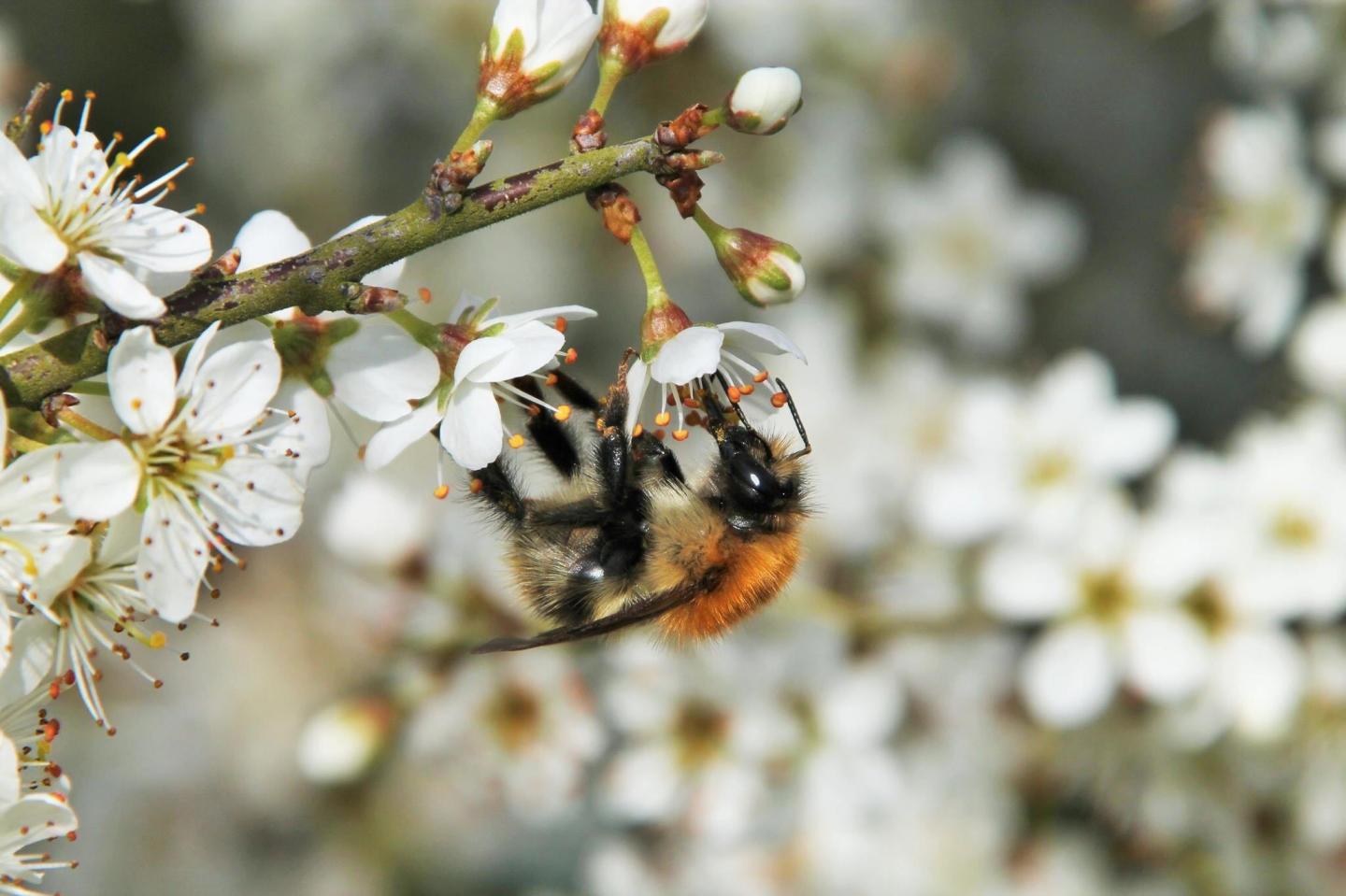
Credit: Sophie Hedges

A mite that spreads a dangerous virus among honeybees also plays an indirect role in infecting wild bumblebees, new research shows.

The Varroa destructor mite lives on honeybees and can spread deformed wing virus (DWV) throughout the hive.

The mite has emerged as a parasite of Western honeybees, after switching from its original host, the Asian honeybee at the beginning of the last century. It has since spread globally through the man-made movement of infested honeybee hives and has turned into a viral vector.

The invasive mite does not live on bumblebees, but University of Exeter scientists have discovered it indirectly affects them by raising infection rates among honeybees, which then spread DWV to nearby bumblebees.

The researchers say their findings highlight the need for beekeepers to treat honeybee colonies affected by mites in order to protect wild bees.

“We compared areas where honeybees had Varroa destructor mites with mite-free areas,” said Dr Robyn Manley, of the Centre for Ecology and Conservation on the University of Exeter’s Penryn Campus in Cornwall.

“In areas where mites were present – and therefore spreading DWV among honeybees – we found higher rates of the virus among wild bumblebees. Infected honeybees share their environment with bumblebees, feeding on the same flowers and passing on the virus. In effect, the mites turn honeybees into ‘super spreaders’ of DWV.”

A large proportion of honeybees in Britain and many other countries live in hives kept by beekeepers, and Dr Manley said the study raised an important point for them. “Some beekeepers prefer not to intervene if mites appear in their colonies, but this could be endangering wild bees,” she said.

As parasites on honeybee pupae and adults, Varroa destructor mites spread DWV – which is associated with dramatic colony losses due to increased over-winter mortality.

“There is a global epidemic of DWV, partly driven by the spread of the Varroa destructor mite,” said Professor Wilfert, of the University of Ulm, Germany.

“We know the virus severely affects honeybee colonies. There has been less research into the impact on wild bumblebees, but studies so far suggest it can reduce their lifespan. These results emphasise the important role of beekeepers, regulators and landscape managers in maintaining the health of both managed honeybees and wild bee populations.”

There are various strains of DWV, and the Exeter study supports the view that DWV-B is taking over from DWV-A as the most prevalent strain. DWV-B is known to be more harmful to honeybees, but it is not yet clear if and how the strains affect wild bumblebees differently.

###

The research was funded by the Royal Society, the CB Dennis Trust, NERC and the Genetics Society, and supported by the Exeter Sequencing Service.

The paper, published in the journal Ecology Letters, is entitled: “Knock-on community impacts of a novel vector: Spillover of emerging DWV-B from Varroa-infested honeybees to wild bumblebees.”

Media Contact
Duncan Sandes
[email protected]

Tags: BiodiversityBiologyEcology/EnvironmentEntomologyVirologyZoology/Veterinary Science
Share13Tweet8Share2ShareShareShare2

Related Posts

How to sway group opinions: Encourage opponents to stay undecided

How to sway group opinions: Encourage opponents to stay undecided

March 23, 2026
Deep Learning Model Maps How Individual Cells Shape Disease Outcomes

Deep Learning Model Maps How Individual Cells Shape Disease Outcomes

March 20, 2026

Removing only 15 female sharks annually could endanger the entire population, scientists warn

March 20, 2026

Scientists Urge Fragrance Industry to Transition from Sustainability Talk to Active Funding of Plant Conservation

March 20, 2026
Please login to join discussion

POPULAR NEWS

  • blank

    Revolutionary AI Model Enhances Precision in Detecting Food Contamination

    96 shares
    Share 38 Tweet 24
  • Imagine a Social Media Feed That Challenges Your Views Instead of Reinforcing Them

    1003 shares
    Share 397 Tweet 248
  • Uncovering Functions of Cavernous Malformation Proteins in Organoids

    54 shares
    Share 22 Tweet 14
  • Promising Outcomes from First Clinical Trials of Gene Regulation in Epilepsy

    51 shares
    Share 20 Tweet 13

About

We bring you the latest biotechnology news from best research centers and universities around the world. Check our website.

Follow us

Recent News

In-Sensor Cryptography Links Physical Process to Digital Identity

Can Psychosocial Factors Influence Cancer Risk?

Depression Factors in Elderly: Pre vs. Post-COVID Analysis

Subscribe to Blog via Email

Success! An email was just sent to confirm your subscription. Please find the email now and click 'Confirm' to start subscribing.

Join 78 other subscribers
  • Contact Us

Bioengineer.org © Copyright 2023 All Rights Reserved.

Welcome Back!

Login to your account below

Forgotten Password?

Retrieve your password

Please enter your username or email address to reset your password.

Log In
No Result
View All Result
  • Homepages
    • Home Page 1
    • Home Page 2
  • News
  • National
  • Business
  • Health
  • Lifestyle
  • Science

Bioengineer.org © Copyright 2023 All Rights Reserved.