Credit: University of Illinois
URBANA, Ill. – If the Mississippi River continues to go unchecked, the farmland on Dogtooth Bend peninsula may be only accessible by boat. According to a University of Illinois study, each successive flood carves a deeper channel across the narrow neck of the peninsula. This floodwater shortcut threatens to permanently reroute the Mississippi River, leaving Dogtooth Bend an island rather than a peninsula.
U of I researcher Ken Olson and his colleague from Iowa State University, Lois Wright Morton, have studied the seasonal Mississippi River flooding for over a decade. They've paid particularly close attention to the damages caused by major flooding events in 1993, 2011, and most recently in January 2016.
"Approximately 15,000 acres of farmland in the Dogtooth Bend area would no longer be accessible by road if the Mississippi River is allowed to realign naturally. In some cases the land use would likely shift from agriculture to other uses," Olson explains.
Olson says climate scientists predict a continued pattern of extreme rainfall events in the upper Mississippi River region. This suggests that unexpected above-average rainfall events in the Ohio and Mississippi River basins will continue to increase the frequency of extreme flooding events.
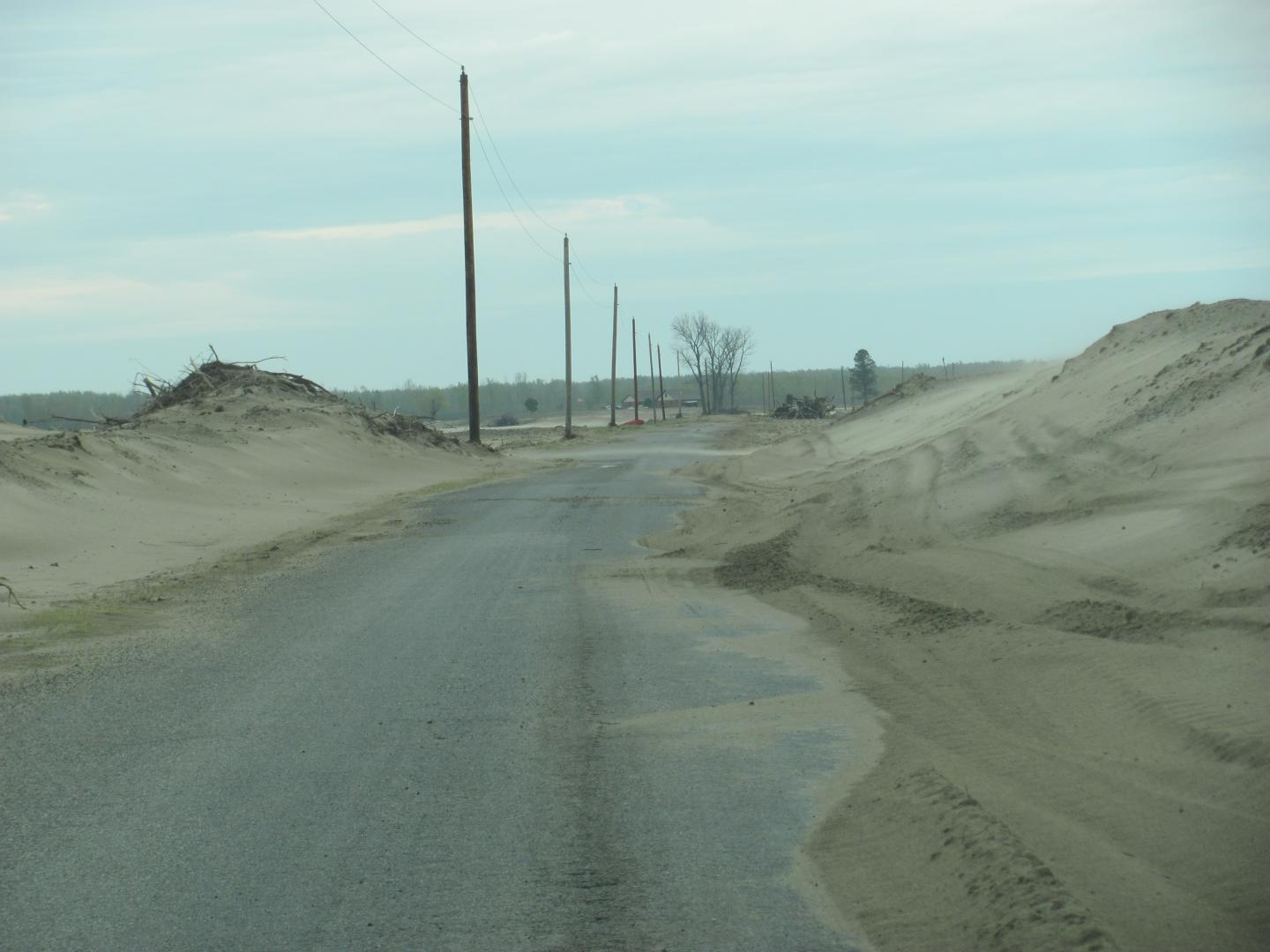
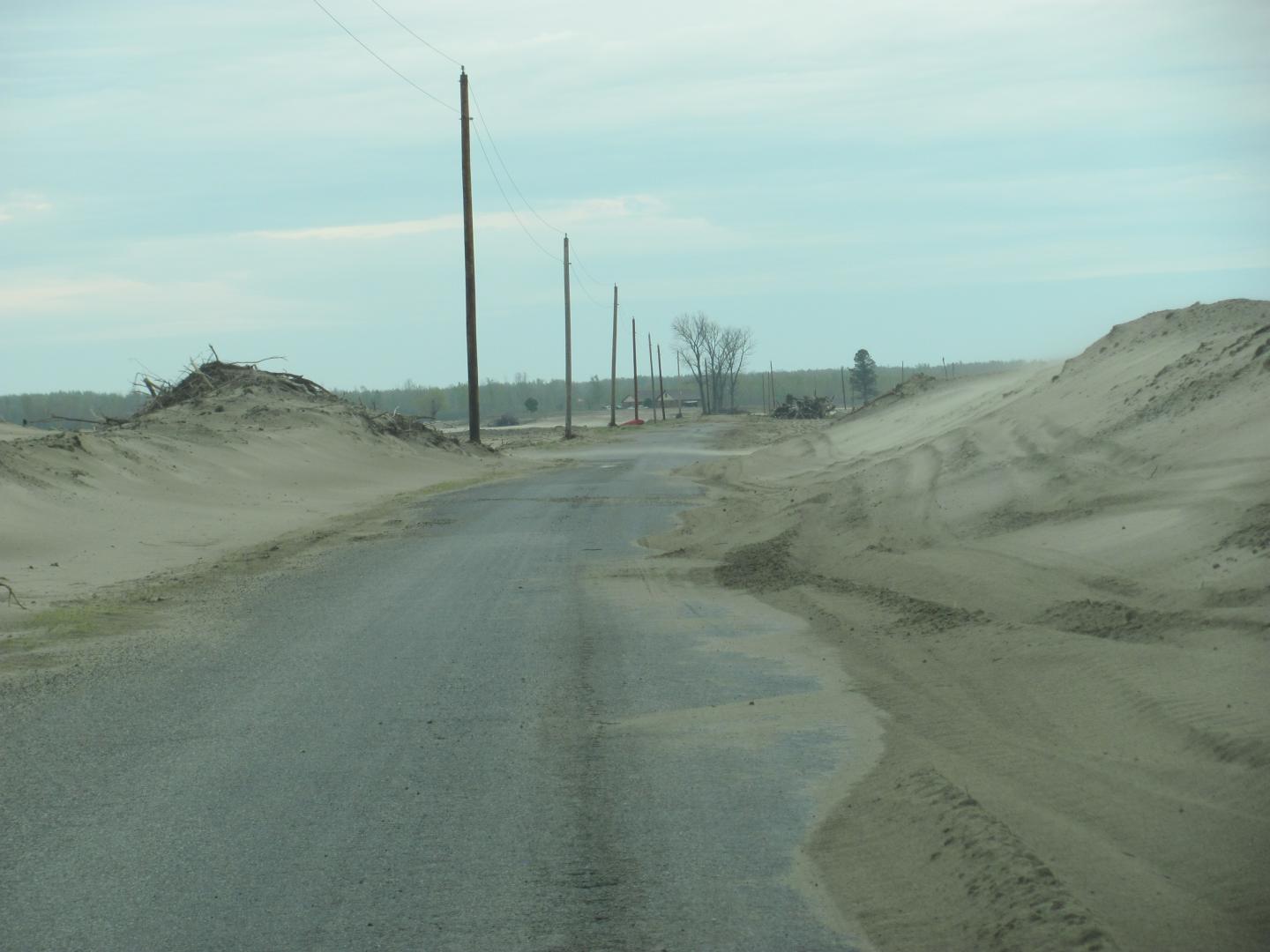
"The 2016 Len Small levee breach was much more severe than 2011 because of its location," says Olson. "The fast-moving river cut a 1-mile long breach in late December through early January, scouring out a crater lake and deep gullies info adjacent farmland. The southeast flow of the Mississippi River created a new channel connecting the old channel with the main stem of the river."
Olson says Dogtooth Bend farmers and landowners, members and staff of the Len Small Levee and Drainage District, community and state-level leaders, and the U.S. Army Corps of Engineers have some difficult decisions ahead in repairing the current landscape and preparing for future flood events–decisions that affect future land uses, resource allocations, and the livelihoods of the people of southern Illinois.
The study suggests three remedies for the situation. One is to continue to repair the Len small levee when needed. Olson says this is only a short-term fix.
A second idea is to proactively construct a diversion channel with embankments on both sides where the old meander channel is currently located. "During high water periods, the channel would temporarily redirect excess Mississippi River floodwaters and allow the water to exit back into the river at mile marker 15," Olson says. This would also require one or more bridges be built over the diversion channel to allow access to farmland, homes, and recreational hunting areas.
"A third alternative is to assist the Mississippi River realignment tendency and construct a sixth-tenths of a mile wide new river channel through the 3.5 miles shortcut between mile marker 34 and 15 where the Mississippi River is already cutting with each major flooding event," Olson says. "The USACE could accelerate this process even more by making this channel between mile markers 34 and 15 the main stem river navigation channel."
This last alternative fix would require thorough hydrologic, environmental, social, and economic assessments. And, as Olson reminds, "over time, the mighty Mississippi River will eventually win, as it always has in the past."
###
The study, "Mississippi River threatens to make Dogtooth Bend peninsula in Illinois an island," is written by Kenneth R. Olson and Lois Wright Morton. It appears in the Journal of Soil and Water Conservation. Olson is a researcher in the Department of Natural Resources and Environmental Sciences in the College of Agricultural, Consumer and Environmental Sciences at the University of Illinois.
A pdf of the full paper is available online.
Funding was provided by the North-Central Regional Project No. NCERA-3 Soil Survey, the University of Illinois College of Agricultural, Consumer, and Environmental Sciences, Iowa State University, and the National Great River Research and Education Center.
Media Contact
Debra Levey Larson
[email protected]
217-244-2880
@uignome
http://aces.illinois.edu/
############
Story Source: Materials provided by Scienmag