Credit: Joel Boerckel
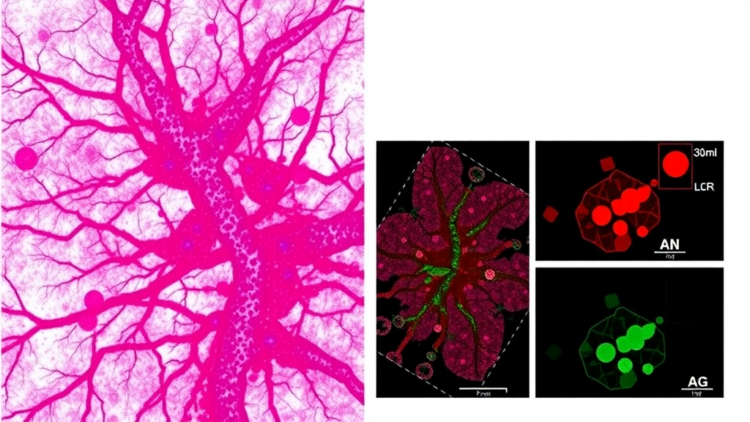
To treat large gaps in long bones, like the femur, which result from bone tumor removal or a shattering trauma, researchers at Penn Medicine and the University of Illinois at Chicago developed a process that partially recreates the bone growth process that occurs before birth. A bone defect of more than two centimeters is considered substantial, and current successful healing rates stand at 50 percent or less, with failure often resulting in amputation. The team hopes that their method, which they’ve developed in rodent models to mimic the process of rapid fetal bone growth, can substantially improve success rates. Their findings are published in Science Translational Medicine.
“When bones are originally formed in the embryo, they’re first generated from cartilage, like a template,” said senior author Joel Boerckel, PhD, an assistant professor of Orthopaedic Surgery and Bioengineering at the University of Pennsylvania. “In order to regenerate bone within defects that otherwise won’t heal in grown people, we are seeking to recreate the embryonic bone development process.”
To do that, the researchers’ process begins with the delivery of specially engineered stem cells (called a condensation of mesenchymal cells) to the rodents’ bone defect, which sparks endochondral ossification, the specific term for embryonic bone development.
But, the researchers note that a baby’s movement in the womb is also an important factor in the process to develop new bone quickly. Therefore, the second step taken by the team to mimic bone development involved special orthopaedic plates that can be adjusted to vary the mechanical forces placed on the regenerating limbs. This allowed for some movement in the defect area that contributed to cartilage formation and blood vessel growth, key steps of endochondral ossification. Through this combination of development-like stem cell delivery and mechanical forces, bone regeneration was on par with current methods for healing defects, such as high doses of the growth factor, BMP-2, a potent protein that stimulates bone formation. However, this experimental process did not generate any of the typical adverse side effects, such as abnormal bone growth, that can result from using BMP-2.
While plates are currently used to fix serious defects, they keep the joints completely stiff and don’t allow for mechanical loading. In this study, the researchers compared stiff plates to those that were “unlocked” to allow limited movement. While bone volume increased in bones that were always kept in the stiff plates, the plates that were unlocked generated far more bone growth as time went on.
“Very little has been known about how the mechanical environment in bone defects affects the capacity of transplanted cells to contribute to the regeneration of the defects,” said senior author Eben Alsberg, PhD, the Richard and Loan Hill Professor of Bioengineering and Orthopaedics at the University of Illinois at Chicago. “In this work, we’ve shown how critically important mechanical forces are in this process when implanting stem cell condensation constructs.”
Not only did the researchers look at plates that were unlocked, they also studied the differences that occurred when plates were unlocked. One set was unlocked about four weeks after they were put in place, while the others were unlocked immediately. At 12 weeks after the plates were put in place, the bone growth for plates unlocked a month in was triple that of the plates that remained stiff the entire time. For plates unlocked immediately, the bone growth was doubled what resulted from using stiff plates.
“While this work is in its early stages, it is possible that these finding could influence how non-healing bone defects are treated with respect to both fixation and other transplanted therapeutic strategies,” said Alsberg.
Moving forward, the researchers feel that further preclinical studies will be required to determine how these this process and the findings therein can be used in clinic. Additionally, the long-term goal is to not only map development and regeneration processes for bones themselves, but other tissues where the potential for regeneration is limited, such as in cartilage for patients with osteoarthritis.
“Devices and techniques we develop out of this research could also influence the way we implement physical therapy after injury,” Boerckel explained. “Our findings support the emerging paradigm of ‘regenerative rehabilitation,’ a concept that marries principles from physical therapy and regenerative medicine. Our goals are to understand how mechanical stimuli influence cell behavior to better impact patient outcomes without additional drugs or devices.”
###
Funding for this study included support from the Naughton Foundation, the Indiana Clinical Translational Sciences Institute, the National Institutes of Health (grant no. UL1TR001108), the American Heart Association (16SDG31230034), the National Science Foundation (1435467), the NIH’s National Institute of Arthritis and Musculoskeletal and Skin Diseases awards (R01AR066193, R01AR063194, R01AR069564), the NIH’s Biomedical Imaging & Bioengineering award (R01EB023907), the NIH’s National Institute of Dental and Craniofacial Research award (5F32DE024712), and the Ohio Biomedical Research Commercialization Program award (TECG20150782).
Other authors include lead authors Anna M. McDermott, of Penn, and Samuel Herberg, of SUNY Upstate Medical University; as well as Devon E. Mason and Joseph M. Collins, of Penn; Hope B. Pearson and James H. Dawahare, of the University of Notre Dame; Rui Tang, of Case Western Reserve University; Amit N. Patwa and Mark W. Grinstaff, of Boston University; and Daniel J. Kelly, of Trinity College, Dublin.
Media Contact
Frank Otto
[email protected]
Related Journal Article
http://dx.