• HOME
  • NEWS
  • EXPLORE
    • CAREER
      • Companies
      • Jobs
    • EVENTS
    • iGEM
      • News
      • Team
    • PHOTOS
    • VIDEO
    • WIKI
  • BLOG
  • COMMUNITY
    • FACEBOOK
    • INSTAGRAM
    • TWITTER
Thursday, March 26, 2026
BIOENGINEER.ORG
No Result
View All Result
  • Login
  • HOME
  • NEWS
  • EXPLORE
    • CAREER
      • Companies
      • Jobs
        • Lecturer
        • PhD Studentship
        • Postdoc
        • Research Assistant
    • EVENTS
    • iGEM
      • News
      • Team
    • PHOTOS
    • VIDEO
    • WIKI
  • BLOG
  • COMMUNITY
    • FACEBOOK
    • INSTAGRAM
    • TWITTER
  • HOME
  • NEWS
  • EXPLORE
    • CAREER
      • Companies
      • Jobs
        • Lecturer
        • PhD Studentship
        • Postdoc
        • Research Assistant
    • EVENTS
    • iGEM
      • News
      • Team
    • PHOTOS
    • VIDEO
    • WIKI
  • BLOG
  • COMMUNITY
    • FACEBOOK
    • INSTAGRAM
    • TWITTER
No Result
View All Result
Bioengineer.org
No Result
View All Result
Home NEWS Science News Biology

Threatened beetles benefit from forest thinning

Bioengineer by Bioengineer
May 28, 2019
in Biology
Reading Time: 3 mins read
0
IMAGE
Share on FacebookShare on TwitterShare on LinkedinShare on RedditShare on Telegram

IMAGE

Credit: Photo: Oskar Gran

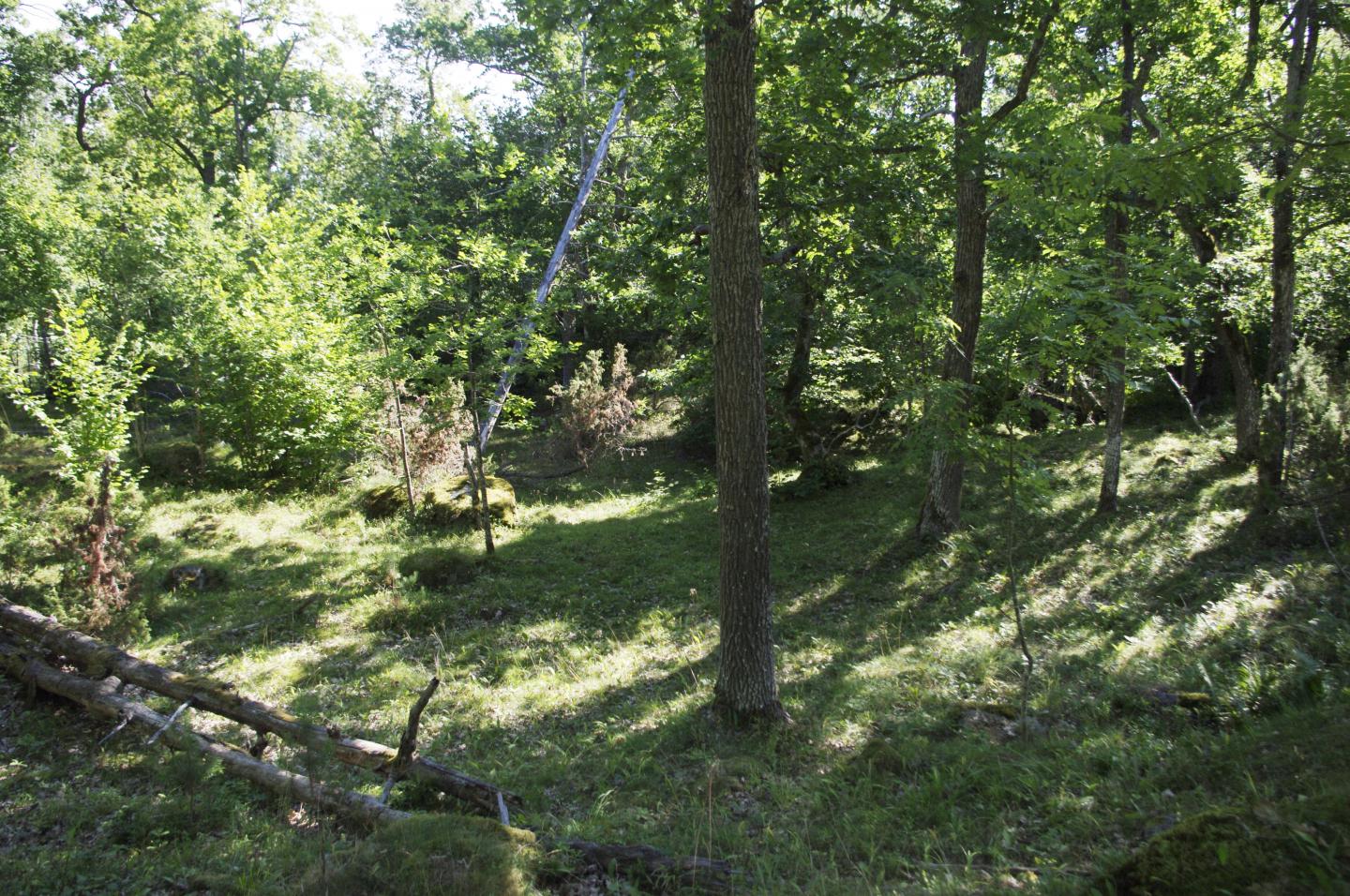
Wood-living beetles that use oak trees are a species-rich and threatened animal group in modern forestry and agriculture in southern Sweden. New research from the University of Gothenburg shows that management with conservation thinning can be an effective way to promote these beetles in the long term.

When traditional forestry modernised in the 20th century, many of the forests in the southern and middle parts of Sweden became denser and darker than they had been before. For many species in sunlit and open forests with oak trees as their habitat, this has meant an increased risk of extinction.

“These insects represent a large part of the biodiversity that we have committed ourselves to preserving by law and through international agreements. In addition to being beautiful and fascinating, they also play an important role in stabilizing forest ecosystems,” says Oskar Gran, at the Department of Biological and Environmental Sciences.

Gran conducts research in the Swedish Oak Project at the University of Gothenburg, a long-term research project evaluating management alternatives for overgrown oak forests in southern Sweden.

Compared different forest sites

The Oak Project is studying 25 pairs of forest sites. In each pair one site is allowed to develop freely, and one is actively managed through conservation thinning. In the thinned area, about a quarter of the tree biomass is harvested for the benefit of oak trees and certain groups of organisms. Results of the two management alternatives are then followed up.

“Nature conservation lacks long-term, experimental evaluations of different management alternatives. That makes studies such as those within the Oak Project very important as a way of finding out if our conservation measures are correct.”

Number of species increased by one third

Wood-inhabiting beetles are a species-rich animal group with about 400 types on the Swedish Red List of threatened and near threatened species. In the new study, Oskar Gran and his research colleagues investigated how management has impacted wood-inhabiting beetles connected with oak trees.

“We previously knew that they responded positively to the thinning immediately after the management intervention. But the new study showed that the effect has continued and even been strengthened after 10 years,” says Gran.

The number of wood-inhabiting beetle species connected with oaks had even increased by one third compared with the forest areas that have remained untouched.

“This result surprised us. We expected that regrowth after thinning would have been detrimental to the animal group. In addition, we encountered a number of species that were only in the conservation-thinned areas and not in the untouched ones,” says Gran.

###

Name of the article: Long-term experimental management in Swedish mixed oak-rich forests has a positive effect on saproxylic beetles after 10 years

Link to article: https://doi.org/10.1007/s10531-019-01736-5

Link to the Oak Project’s website: https://bioenv.gu.se/forskning/huvudforskningsomraden/ekologi-naturvardsbiologi/ekprojektet

Media Contact
Oskar Gran
[email protected]

Original Source

https://science.gu.se/english/News/News_detail//threatened-beetles-benefit-from-forest-thinning.cid1627807

Related Journal Article

http://dx.doi.org/10.1007/s10531-019-01736-5

Tags: BiodiversityBiologyDevelopmental/Reproductive BiologyEntomologyForestryPlant Sciences
Share12Tweet8Share2ShareShareShare2

Related Posts

How to sway group opinions: Encourage opponents to stay undecided

How to sway group opinions: Encourage opponents to stay undecided

March 23, 2026
Deep Learning Model Maps How Individual Cells Shape Disease Outcomes

Deep Learning Model Maps How Individual Cells Shape Disease Outcomes

March 20, 2026

Removing only 15 female sharks annually could endanger the entire population, scientists warn

March 20, 2026

Scientists Urge Fragrance Industry to Transition from Sustainability Talk to Active Funding of Plant Conservation

March 20, 2026
Please login to join discussion

POPULAR NEWS

  • blank

    Revolutionary AI Model Enhances Precision in Detecting Food Contamination

    96 shares
    Share 38 Tweet 24
  • Imagine a Social Media Feed That Challenges Your Views Instead of Reinforcing Them

    1003 shares
    Share 397 Tweet 248
  • Uncovering Functions of Cavernous Malformation Proteins in Organoids

    54 shares
    Share 22 Tweet 14
  • Promising Outcomes from First Clinical Trials of Gene Regulation in Epilepsy

    51 shares
    Share 20 Tweet 13

About

We bring you the latest biotechnology news from best research centers and universities around the world. Check our website.

Follow us

Recent News

In-Sensor Cryptography Links Physical Process to Digital Identity

Can Psychosocial Factors Influence Cancer Risk?

Depression Factors in Elderly: Pre vs. Post-COVID Analysis

Subscribe to Blog via Email

Success! An email was just sent to confirm your subscription. Please find the email now and click 'Confirm' to start subscribing.

Join 78 other subscribers
  • Contact Us

Bioengineer.org © Copyright 2023 All Rights Reserved.

Welcome Back!

Login to your account below

Forgotten Password?

Retrieve your password

Please enter your username or email address to reset your password.

Log In
No Result
View All Result
  • Homepages
    • Home Page 1
    • Home Page 2
  • News
  • National
  • Business
  • Health
  • Lifestyle
  • Science

Bioengineer.org © Copyright 2023 All Rights Reserved.